Die New York-Ausgabe
Walking New York's Chinatown Street by Street in October
The signage, the markets and both temples are packed into three blocks of Mott Street, and an October weekday is the only time every door is open.

Von Femi AdeyemiWalk one more block than the map tells you to
Mott Street between Canal and Worth holds the stacked red-and-gold shop signs, the pavement crates of bok choy and two Buddhist temples inside three blocks. Walking it costs nothing, at any hour. Doyers Street has been a permanent car-free plaza since NYC DOT made the 2020 open-street trial stick.
Mott Street between Canal and Worth
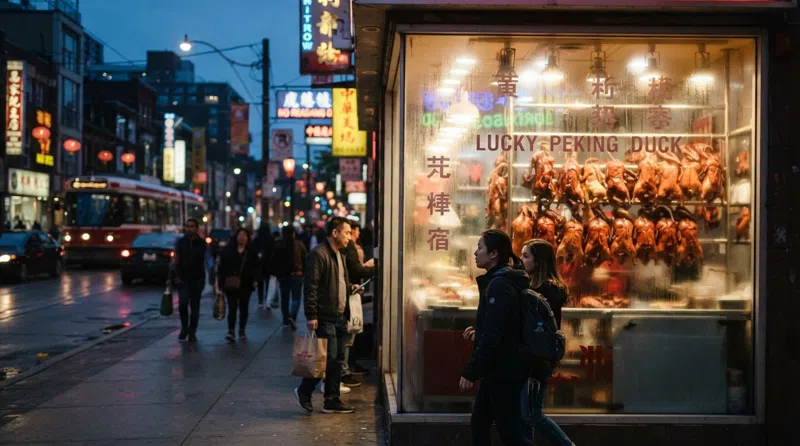
The canyon is narrow and the tenements run five storeys, with fire escapes zig-zagging above awnings of hanging roast duck. New York City Chinatown (Mott Street core) is open public street, and these three blocks are the ones nearly every cultural tour walks. Guided parties assemble at Canal and Mott or at Chatham Square, clear of the shopfront queues.


Eastern States Buddhist Temple of America (64 Mott Street) is a storefront shrine behind a glass door. Hundreds of golden Buddha statuettes are packed on tiered red shelves, incense hangs over banked trays of flickering candles, and a Thousand-Arm Guanyin stands at the back. It opened in 1962, the oldest Chinese Buddhist temple on the East Coast. Entry is free, 8:30 a.m. to 6 p.m. daily. The room holds only a handful of people at once, and parties of more than six go in waves.
Mahayana Buddhist Temple (Canal Street) fills a former cinema behind two gold guardian lions. A 16ft gilded Buddha sits on a blue lotus throne, lit by rows of red paper lanterns, with a wall of small gold Buddha niches behind it. This is Chinatown's largest temple and the biggest Buddha in the city. Entry is free, 8:30 a.m. to 6 p.m. daily, and a paper fortune slip is the only thing you pay for. Keep your voice down inside; the Sunday service from 10 a.m. to 12 p.m. is worship time.

Planen Sie Ihre Reise nach New York
Aktuelle Preise unserer Buchungspartner.
Kostenlose Stornierung bei vielen Zimmern. Bei einer Buchung erhalten wir möglicherweise eine Provision.
Doyers Street and the bend
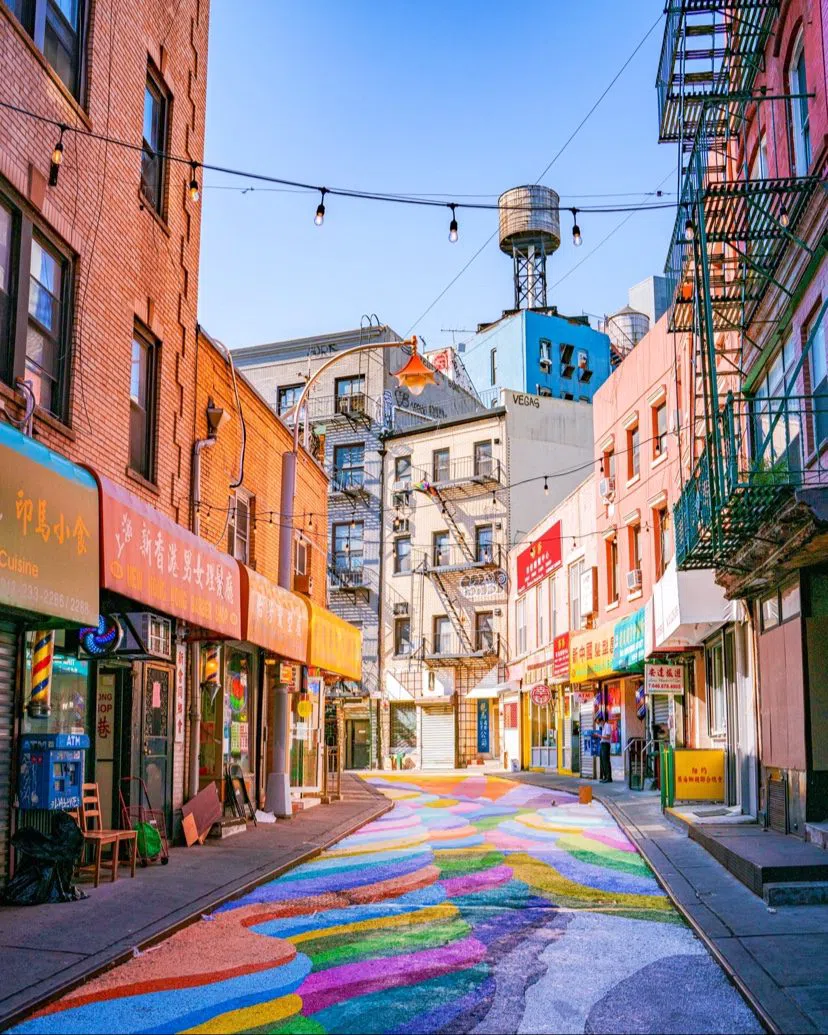
The lane runs 200ft and dog-legs sharply mid-block, the asphalt painted underfoot in dragon and flower colours. Doyers Street (off the Mott core) now carries planters and café tables where cars drove, between barber poles and basement doorways. Guides stop here for the tong-war history of the Bloody Angle more than anywhere else in Chinatown, and with the cars gone you can stand and listen without blocking traffic.
Nom Wah Tea Parlor (Doyers Street) is Chinatown's oldest dim sum room and keeps its 1920s fittings: red vinyl booths, chrome-edged counter stools, a tin ceiling, and a red neon-lit tiled facade under a hanging sign. It serves 11 a.m. to 9 p.m. daily. Small parties walk in, and the limited online reservations cover parties of three to five.

Columbus Park in the morning
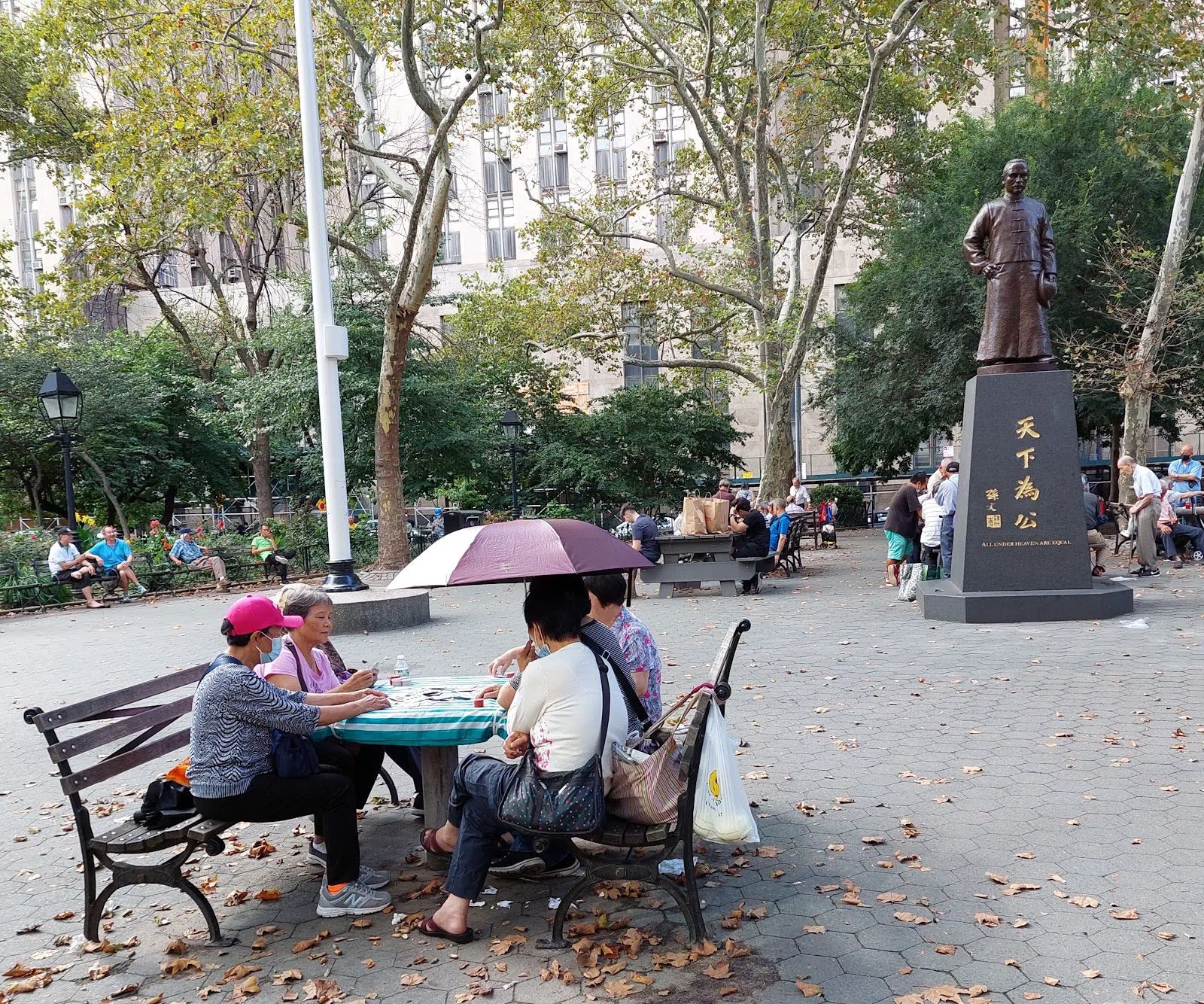
Columbus Park dates from the 1890s and sits ringed by courthouse towers. Elders play xiangqi and mahjong at folding tables under a yellow-brick pavilion, and erhu players and Cantonese opera singers perform beside the chain-link ballcourt. It is free and unticketed, 6 a.m. to 10 p.m. None of it is put on for visitors, so keep to the paths and ask before you film the card tables or the musicians.
Mei Lai Wah Bakery (41 Mott Street) opens its counter at 8:30 a.m. daily, with trays of glossy baked roast pork buns behind glass and paper bags on a steel counter. The bakery has traded since 1968 and moved up from Bayard Street in late 2024. There is almost nowhere to sit, so carry the buns to Columbus Park and eat them there.

Eating between Elizabeth Street and Division Street
Deluxe Food Market (entrances on Elizabeth and Mott) runs block-through, with lacquered roast ducks and crisp pork belly hanging in a lit glass case, steam-table counters, a ticket queue and fish on crushed ice. Roast meats are sold by weight and eaten standing up. It is the cheapest lunch in Chinatown and better value than the souvenir stalls on Canal Street, open 7 a.m. to 7:30 p.m. daily. The market is wheelchair accessible and has an ADA restroom.

Fong On (Division Street) has made tofu in the same family since 1933 and reopened in 2019 at the old factory address. The pale storefront holds a marble counter of warm silken tofu pudding dusted with brown sugar, with bottles of fresh soy milk in a glass fridge. Hours are 11 a.m. to 7 p.m., Tuesday to Sunday. Seating is minimal, so treat it as a quick stop.


The Original Chinatown Ice Cream Factory (Bayard Street) has been family-run since 1978, under a yellow dragon mascot sign. The hand-lettered board lists black sesame, lychee and durian, and the queue trails out of the door onto the pavement. It opens 11 a.m. to 10 p.m. daily, counter only, with no seating.
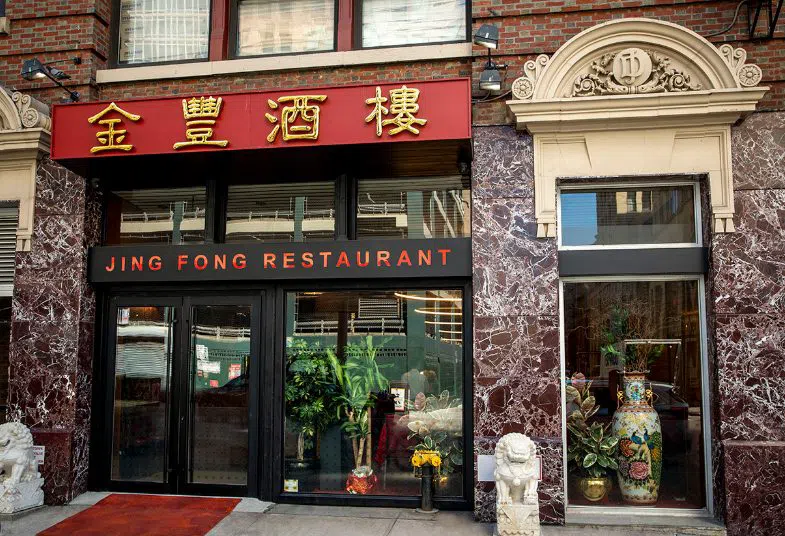
Jing Fong (Centre Street) keeps cart service alive in a big bright dining room, where staff push stainless-steel steam carts of bamboo baskets between round banquet tables under red lanterns. Those tables seat 10 and more, which makes it the best large-group room in Chinatown. It opens 10:30 a.m. to 9 p.m., Monday to Saturday. The separate Upper West Side branch has closed, so check the address before you set out.
Indoor stops for a wet October day
Museum of Chinese in America (MOCA) is built by Maya Lin around a skylit central courtyard, a circular well of light in grey industrial walls, with immigrant luggage and laundry-shop artefacts in glass cases. It is the indoor stop to fall back on when the rain sets in. Admission is $15 adult and $10 for seniors, students and visitors with a disability. Under-12s go free, and New York City residents pay what they wish. Reservations are required for any third-party guided tour.

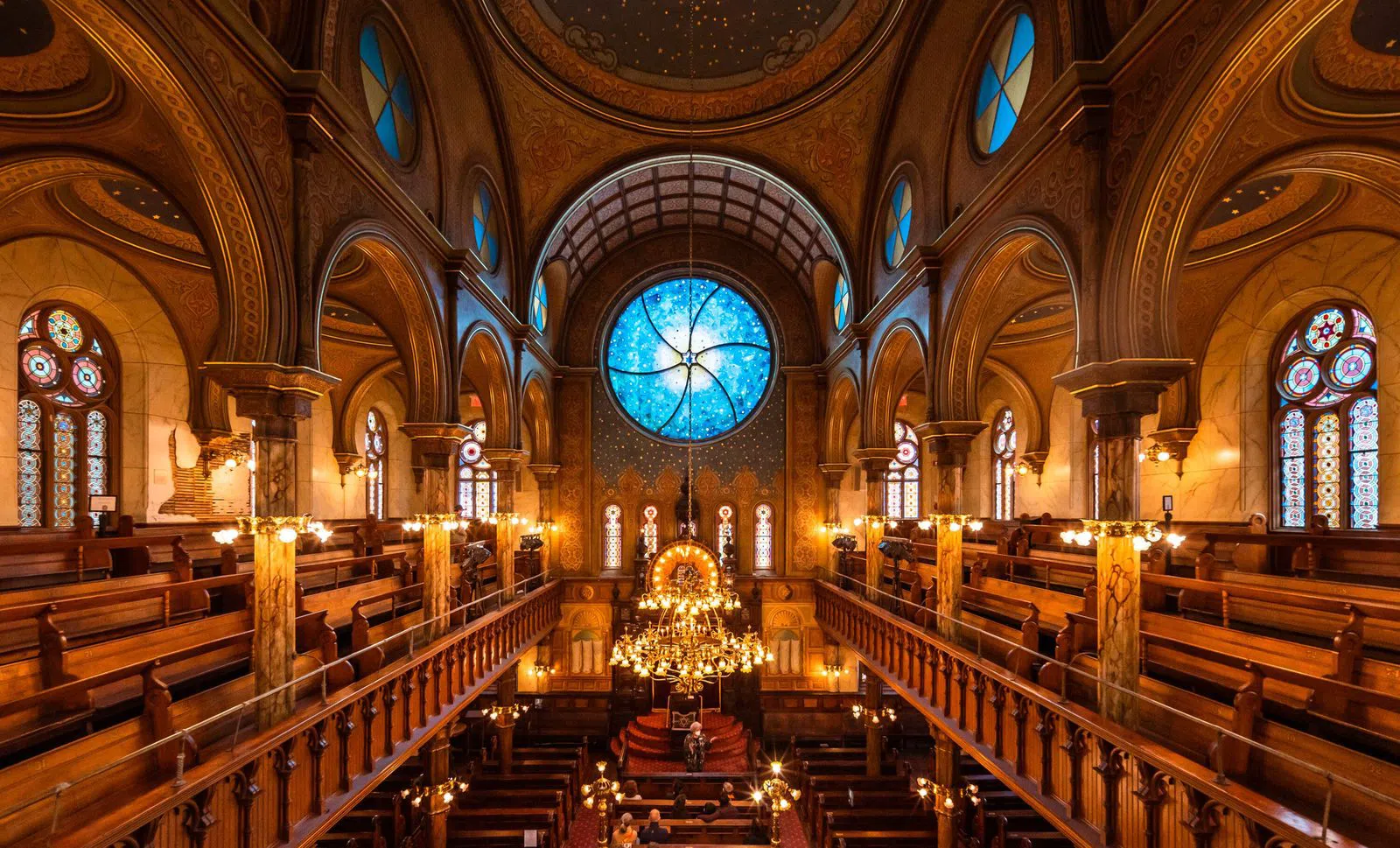
Museum at Eldridge Street is an 1887 Moorish-revival synagogue standing between Chinese grocers, with a 70ft barrel vault, brass chandeliers and a modern rose window in blue stained glass by Kiki Smith. No other building inside Chinatown's footprint explains the layered immigration of these streets as well. The interior is guided-access only, on hourly tours from 10 a.m. to 5 p.m., and group bookings are taken in advance. Tickets are $15 adult and $10 student or senior. A child ticket is $8 and covers ages 5 to 17, and Mondays and Fridays are pay-what-you-wish.
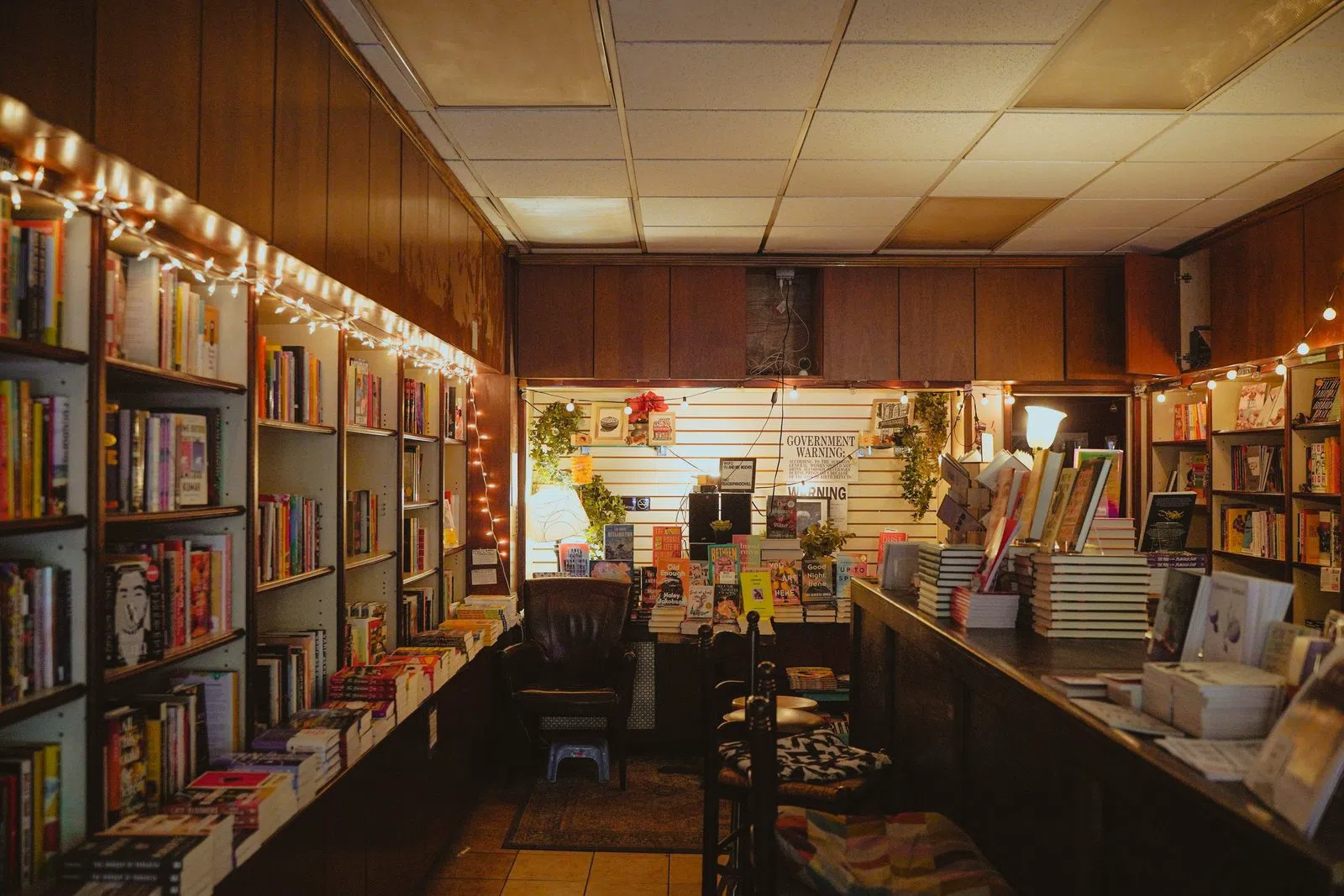
Yu & Me Books (44 Mulberry Street) is New York's first bookshop centred on Asian-American and immigrant writing, reopened in January 2024 after the 2023 fire. Timber shelves run floor to ceiling with immigrant-story fiction, a café counter sits at the front, and the back space is cleared and set with chairs for a reading. Browsing is free. The author talks and book clubs run through autumn 2026 as RSVP events, so book onto a listed date.
Walks led from inside Chinatown
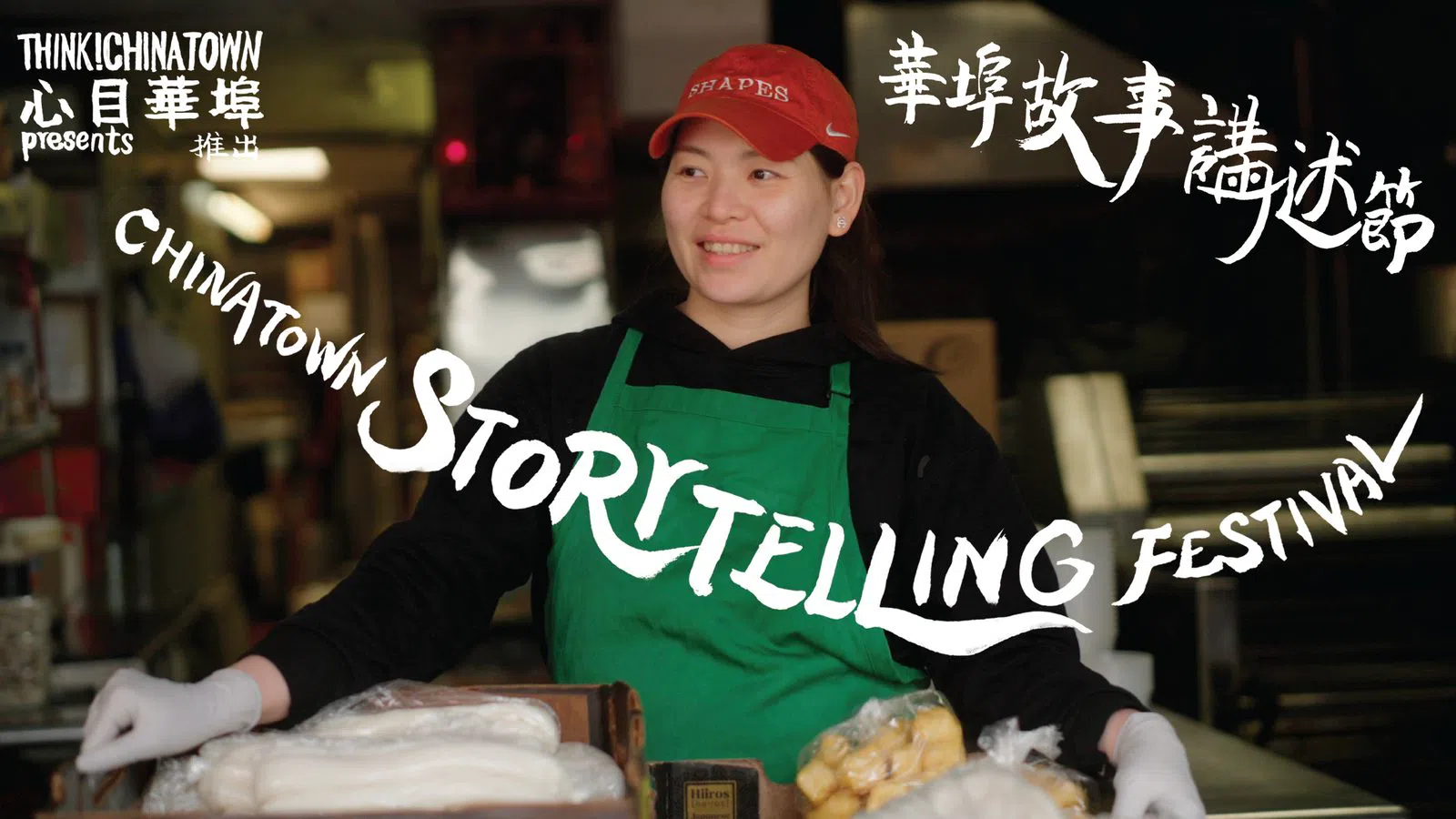
Think!Chinatown Studio (1 Pike Street) occupies a ground-floor storefront under the Manhattan Bridge approach, white walls hung with bilingual posters and oral-history photo panels, folding chairs set out for a story slam. It is the area's own cultural organisation, and its walks are the locally-led alternative to a commercial tour. Its public programmes are free or low-cost with RSVP. The history walks run as scheduled small-group departures, alongside the exhibitions and the autumn festival programming.
Big Onion Walking Tours sends historian guides out with a raised umbrella to a semicircle of visitors on Lower East Side corners outside Essex Market, tasting samples passed round in paper napkins. Its Multi-Ethnic Eating Tour crosses Chinatown, Little Italy and the Jewish Lower East Side with 10 tastings, and the dates run through autumn. It costs $45 adult and $35 senior, student or active military, food included. Public departures run several times a month, private groups and school field trips are bookable, and bookings close one hour before the start.
Other guided walks and bus routes through Chinatown run seven days a week, from $84 per person. Their season runs from Oct. 25, 2026 to Oct. 24, 2027.
Best time to go in October
Start in Columbus Park before 9 a.m., when the tai chi is on, and come back mid-afternoon for the music and the board games. Reach Nom Wah by 10:30 a.m. on a weekday or 9:30 a.m. at a weekend; the pavement wait after that is long. The ice cream counter moves faster before midday, and weekend lines out of its door are normal.
Wednesday to Friday is the only stretch that finds every door open. The Eldridge Street interior closes on Saturdays, MOCA gives Mondays and Tuesdays to booked group tours only, and reservations there are required for parties of eight or more.
Who it suits
The best of this walk is the free part: open street at any hour, a park and two temples that charge nothing. It suits a visitor with one morning and an appetite. Pay for the museums and a tasting walk when the October weather turns, or when you want the history said out loud.
Planning notes
Reserve the guided interiors and the organised walks before you travel, and hold a weekday for them; the streets, the park and both temples need no booking at all.
See the New York guide and the New York hotel search.
Vor der Reise
Is New York's Chinatown worth a visit in October 2026?
Yes, and the street half costs nothing: Mott Street between Canal and Worth is public street at any hour, and Columbus Park and both Buddhist temples are free. October also brings fixed dates: Think!Chinatown's autumn festival events, author talks at Yu & Me Books through autumn 2026, and Big Onion walking tours on set dates through the autumn.
What does a Chinatown visit cost?
The streets, Columbus Park, the Mahayana Buddhist Temple and the Eastern States Buddhist Temple of America cost nothing, and so does browsing Yu & Me Books. MOCA is $15 adult and $10 for seniors, students and visitors with a disability, with under-12s free and pay-what-you-wish for New York City residents. The Museum at Eldridge Street is $15 adult, $10 student or senior and $8 for ages 5 to 17. Big Onion's eating tour is $45 adult and $35 senior, student or active military, food included.
Which days close doors on this walk?
The Museum at Eldridge Street closes on Saturdays, and you can only see the interior on a guided tour. On Mondays and Tuesdays MOCA opens only for booked group tours. Fong On opens Tuesday to Sunday, Jing Fong Monday to Saturday. That leaves Wednesday to Friday as the only days when everything is open.
How do I avoid the dim sum queue at Nom Wah Tea Parlor?
Arrive by 10:30 a.m. on a weekday, or 9:30 a.m. at a weekend, because the pavement queue builds after that; it serves 11 a.m. to 9 p.m. daily. Small parties can walk in, and the few online reservations are for parties of three to five.
Where can a large group eat in Chinatown?
Jing Fong on Centre Street: the round banquet tables seat 10 and more, and the steam carts work for a mixed group. It opens 10:30 a.m. to 9 p.m., Monday to Saturday. Deluxe Food Market takes a group too, as long as people split between the barbecue, hot-food and grocery counters rather than queueing together.