
The wind that comes off New York Harbour in November has nothing to slow it down between the Statue of Liberty and the railing you are leaning on, and that is exactly why this is the month to walk the Brooklyn Heights Promenade. The summer haze has gone, the light turns gold at four in the afternoon rather than eight, and the crowd that stands three deep along the balustrade in July has thinned to dog walkers, a few photographers and people simply going home. For about six weeks you get the best free view in the city on something close to your own terms.
What you are actually looking at
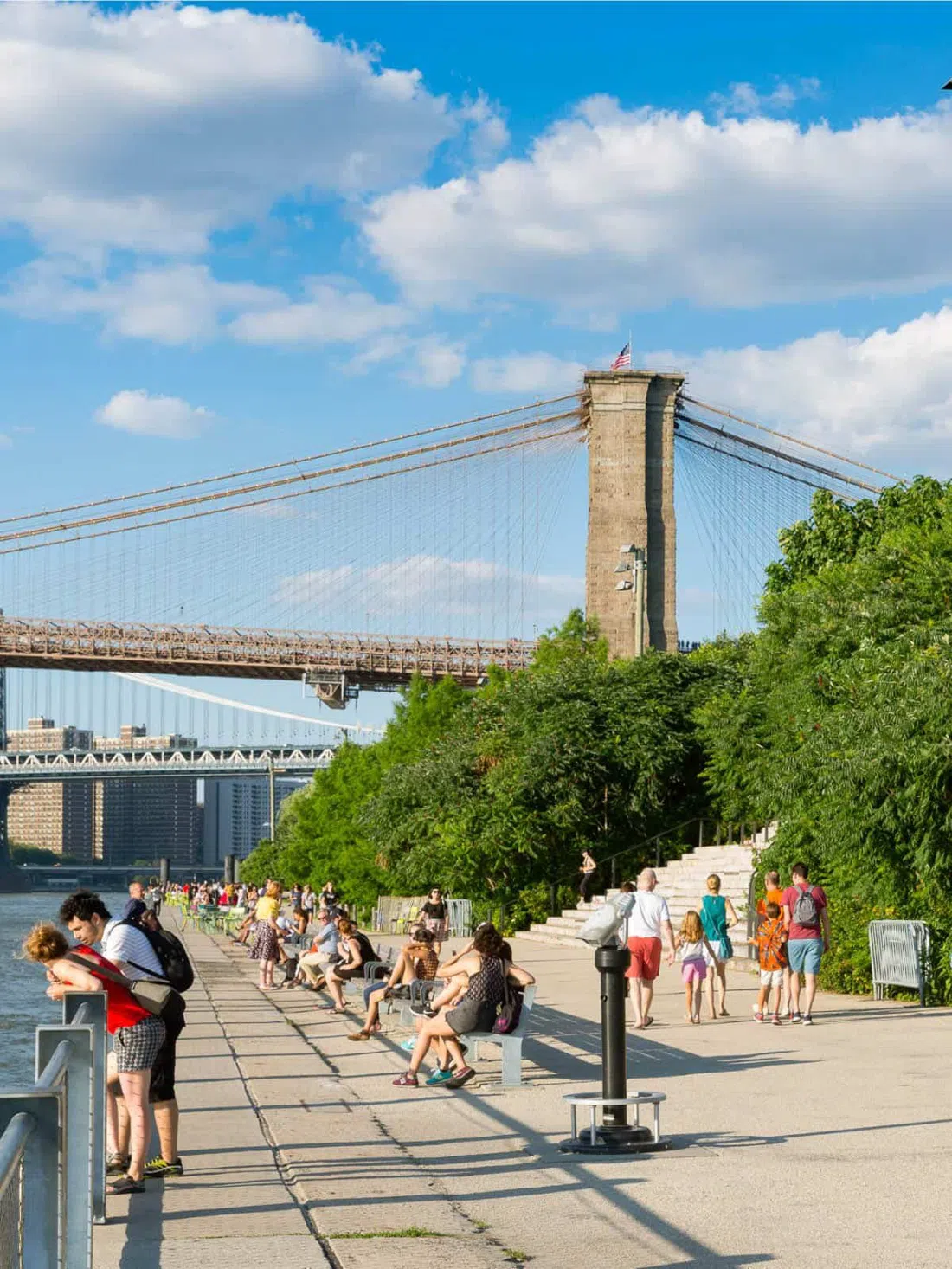
The Promenade is a third of a mile of paved terrace with benches, plane trees and a single continuous railing, hung off the edge of Brooklyn Heights about ten metres above the water. It was never planned as a park. It was compensation. When the Brooklyn-Queens Expressway was driven through this part of Brooklyn in the 1940s, the road was stacked in three cantilevered tiers against the bluff and the neighbourhood was handed the top deck as a public walkway, which opened in 1950. Stand still for a moment and you can feel the trucks under your feet. That tension is the whole character of the place: a motorway you can hear but not see, carrying a view most cities would sell tickets for.
What you see, from left to right facing the water: the cranes and container yards of Red Hook, Governors Island squat in the channel, the Statue of Liberty small and unmistakable in the middle distance, the orange Staten Island ferries grinding back and forth, then the full wall of Lower Manhattan rising straight out of the East River, and finally the Brooklyn Bridge with the Manhattan Bridge stacked behind it. Behind you, on the other side of the path, are the garden backs of nineteenth-century brownstones and carriage houses. Brooklyn Heights was New York City's first designated historic district, protected in 1965, which is why the streets one block inland look the way they do rather than the way most of the waterfront does. There is more on the wider city in our New York guide, but the Heights rewards being walked rather than read about.
How long the walk takes and when to do it
The Promenade end to end is ten to twelve minutes at a stroll. That is the honest number, and it is why treating this as a standalone destination disappoints people. Built out properly (Promenade, down into Brooklyn Bridge Park, along the DUMBO waterfront, a warm room and a meal) it is a comfortable three to five hours and one of the better half-days in the city.
In November the timing question answers itself. Clocks go back at the start of the month, so sunset lands between roughly 4.30pm and 4.50pm for the whole of November. The half hour before that is when Lower Manhattan's glass goes copper and the towers start switching their lights on while the sky is still blue. Arrive at 3.45pm and you have the light, the emptying path and a reason to be indoors and warm by five. The alternative is early: before 8.30am the Promenade is joggers and prams and nobody else, and the low sun is behind the Manhattan skyline rather than on it, which some photographers prefer.
Down Squibb Bridge into the park
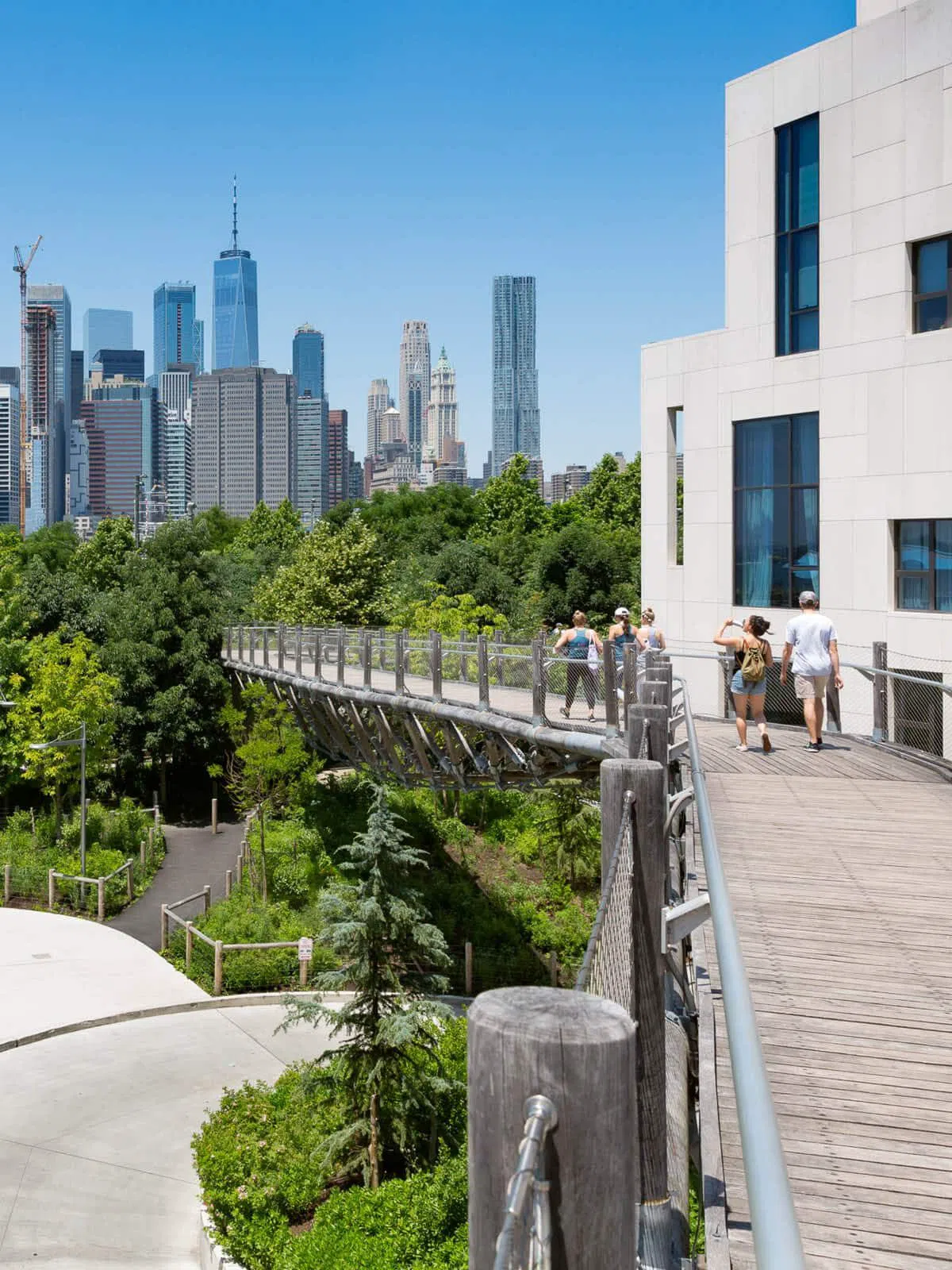
The single most useful piece of infrastructure here is Squibb Park & Bridge (Brooklyn Heights), the slim timber-and-steel footbridge that drops from the north end of the Promenade area down the bluff into Brooklyn Bridge Park. It is free, open 8am to 10pm, and it replaced the notoriously bouncy original that was closed for years. Without it you walk a long detour around by street; with it the two halves of this day trip are joined in four minutes. It narrows to single file in places, so a group naturally strings out rather than moving as a block.
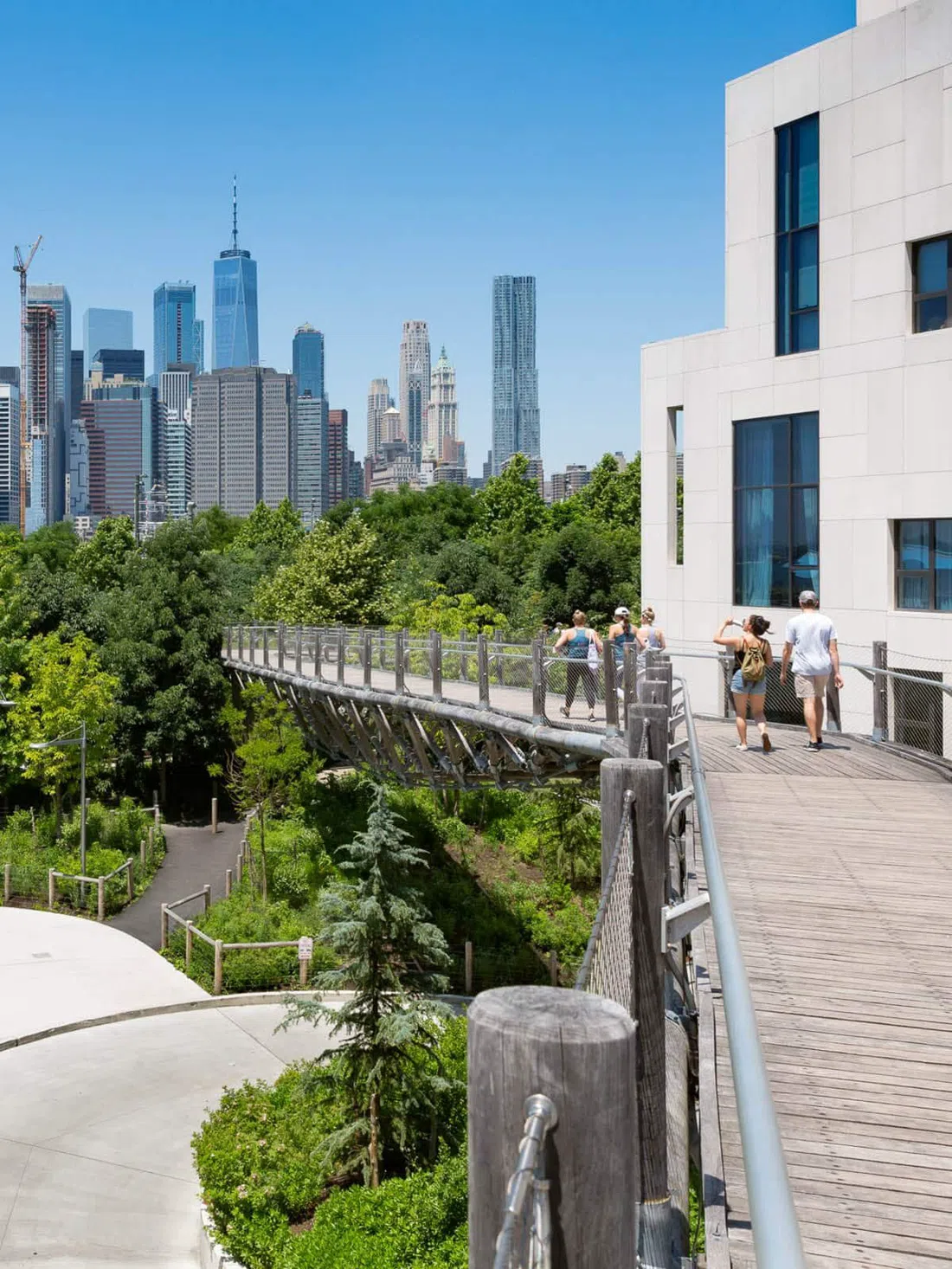
At the bottom you land at Brooklyn Bridge Park — Pier 1 and Granite Prospect (Brooklyn Bridge Park), where the view you have been looking at over a railing becomes something you can sit down inside. Granite Prospect is a broad flight of salvaged granite steps facing the harbour, free, and the best sunset seat in Brooklyn. Bring a cushion or a folded coat in November, because cold granite is cold. Two honest caveats for a 2026 visit: the 334 Furman building on the park's edge is under renovation until spring 2028, so there is scaffolding in the frame from certain angles, and Tom Fruin's stained-glass Watertower 3, a favourite photograph, has been temporarily removed. The park itself is open 6am to 1am and costs nothing.
DUMBO, the carousel and the corner everyone photographs
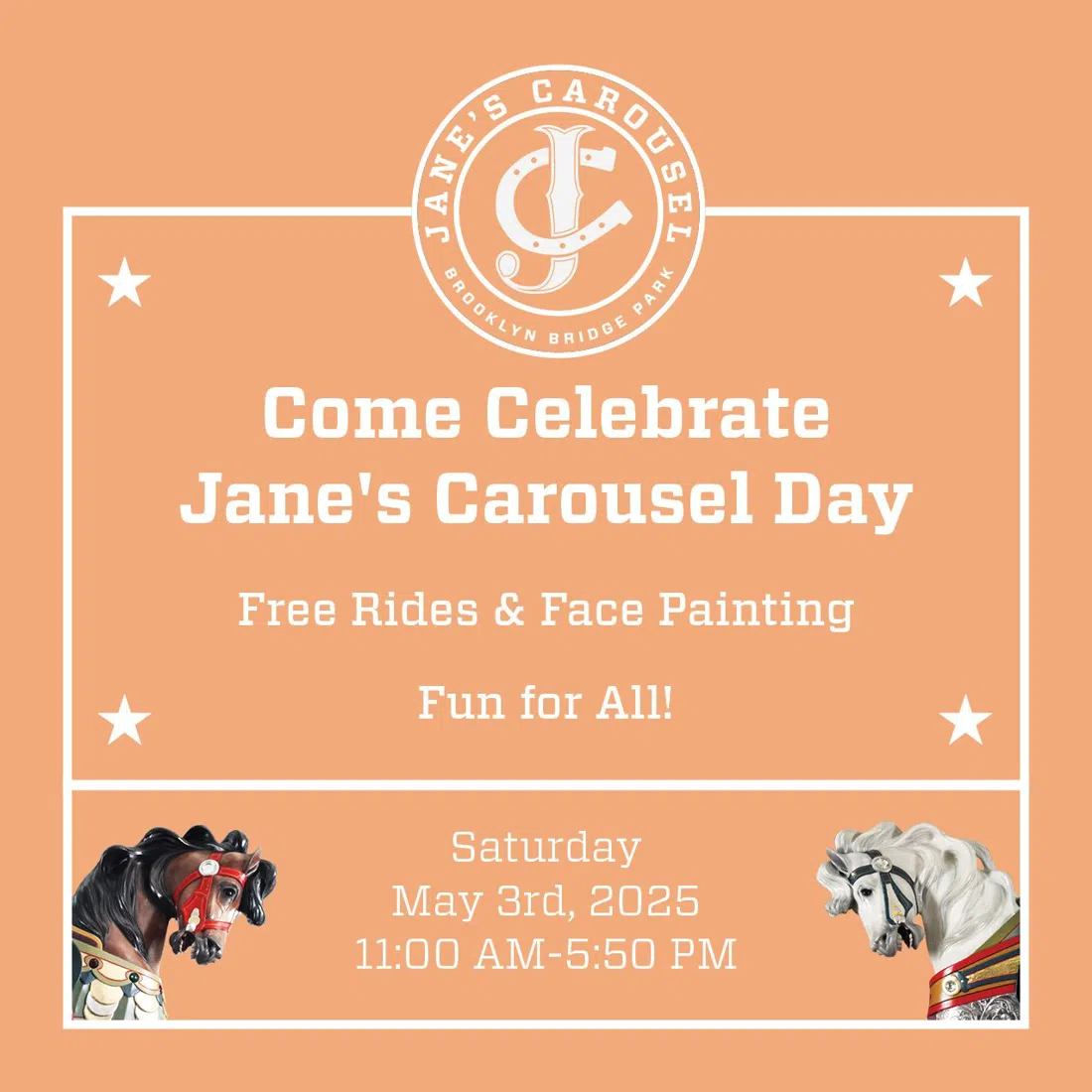
Walk north along the water and you are in DUMBO within ten minutes. Jane's Carousel (DUMBO) is a restored 1920s carousel sitting in a glass pavilion right at the water's edge, and at $4 a ride it is the best-value photograph in Brooklyn, with the horses, the bridge and the skyline all in one frame. There is no advance booking; you queue at the booth like everyone else, and capacity per ride is limited, so a large party should expect several rotations. Autumn and winter hours run roughly Wednesday to Sunday, 11am to 5.50pm, and they do vary, so confirm the day you are going rather than turning up on a Monday in the cold.
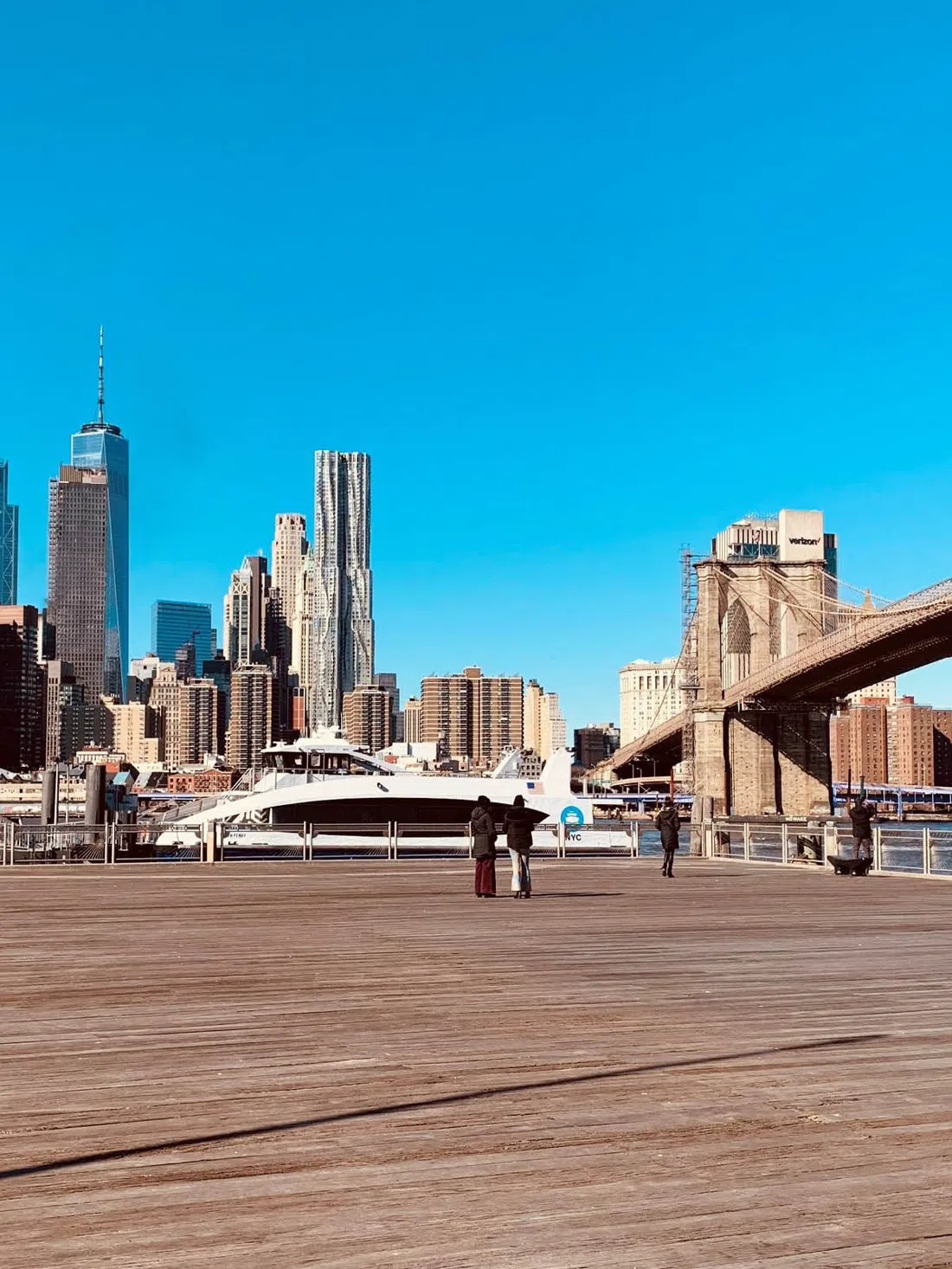
Fulton Ferry Landing (DUMBO) is the small wooden pier just beyond, on the site of the crossing that made this whole shoreline matter long before the bridge existed. It is free to walk and NYC Ferry boards here on the East River route at $4.50 a ride, which is the most enjoyable way to leave. One flag for November specifically: marine structural maintenance is scheduled here from August to December 2026, so check the pier and ferry status before you build an itinerary that depends on boarding a boat at this particular landing.
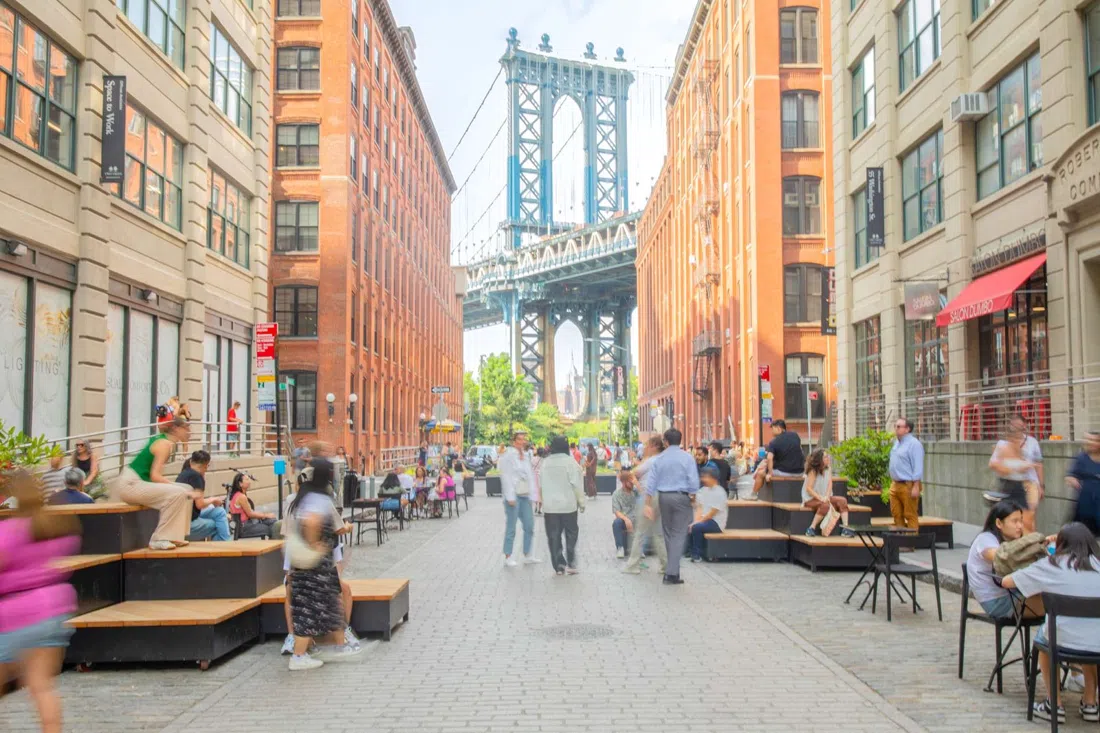
Washington Street Manhattan Bridge View (DUMBO) is the cobbled street where the Manhattan Bridge tower frames itself between two brick warehouses. It is five minutes from the Promenade and it is worth doing once, but be clear about what it is: a live public street with moving traffic, and at midday dozens of people are standing in it taking turns. Go before 9am and you will have it. Go at 1pm and you are photographing other people's shoulders, and someone is going to step backwards into a van.
The bridge itself, if you want it
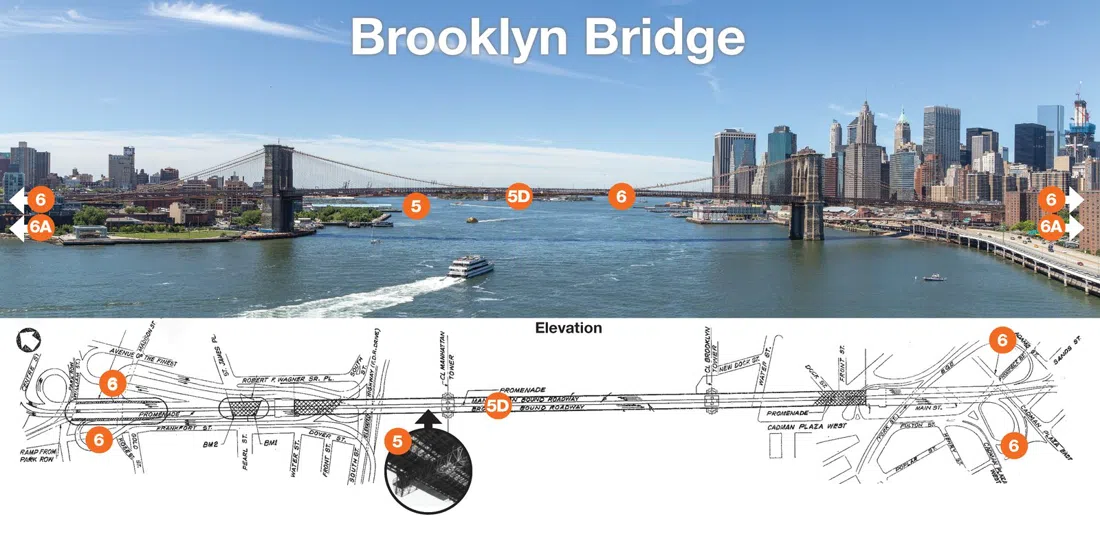
The Brooklyn Bridge pedestrian promenade (Downtown Brooklyn to Manhattan) pairs naturally with the Heights in a single loop. It is free and open around the clock, and cyclists now have their own protected lane on the roadway below, which has made the wooden deck pedestrian-only and considerably calmer than it was. It is still the most congested stretch in this whole area between about 11am and 4pm. Walk it Manhattan to Brooklyn so the skyline is ahead of you rather than behind, and go before 8am if you want the towers to yourself. In November, add gloves: the deck is exposed on both sides and the river wind is a different proposition from the street.
Warm rooms when the harbour wins
You will want an indoor stop, and there are four good ones within walking distance. Center for Brooklyn History (Brooklyn Heights) is the one that explains what you have just been looking at, a free walk-in archive and museum in an 1880s building on Pierrepont Street, open Wednesday to Sunday, 12pm to 5pm, donations welcome. The restored Othmer Library alone justifies the detour. It is a working archive and genuinely quiet, so contact them ahead for group or school visits rather than arriving as a party of fifteen.

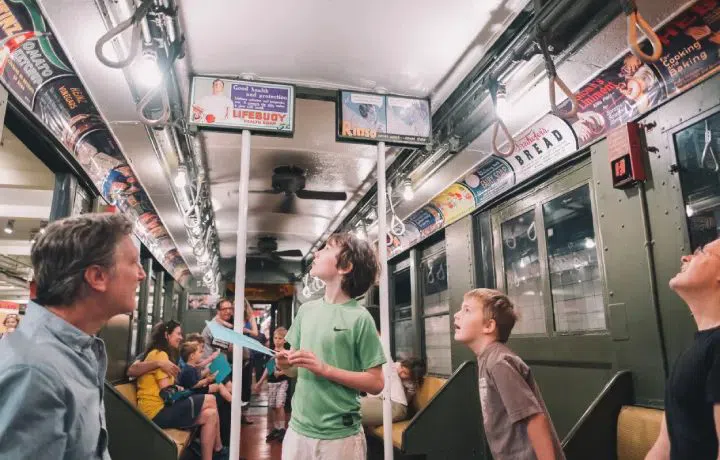
New York Transit Museum (Brooklyn Heights) occupies a decommissioned subway station, and the platform of vintage cars downstairs is a proper piece of theatre. Entry is $10 for adults and $5 for children aged 2 to 17 and seniors, Wednesday to Sunday, 10am to 4pm. The group rule is strict: parties of nine or more adults must book a staff-led tour in advance, and unscheduled school, youth and camp groups are not admitted at all.
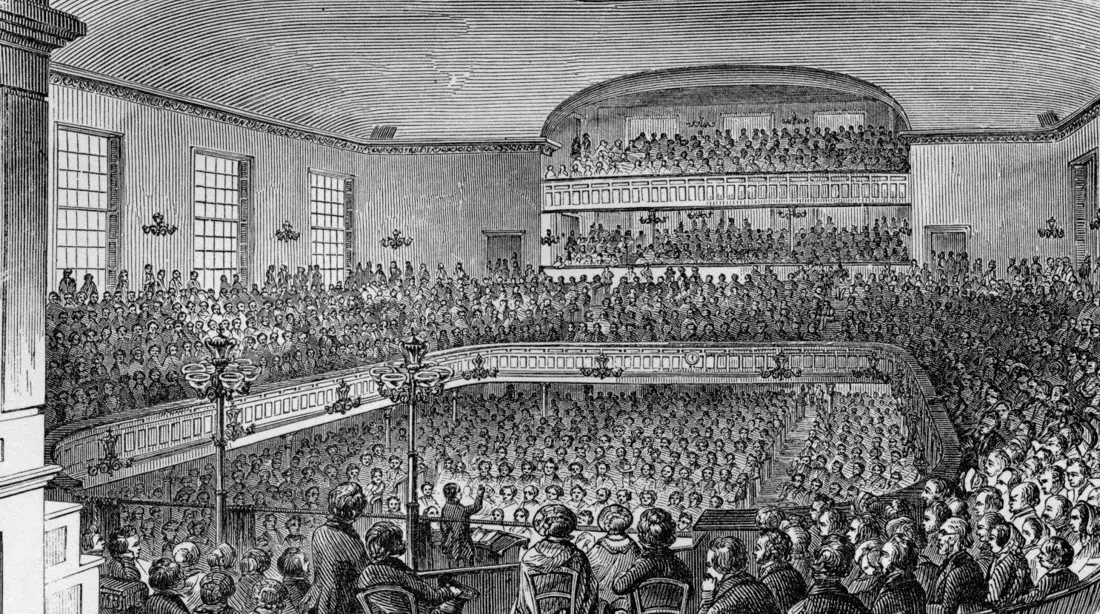
Plymouth Church (Brooklyn Heights) is the most substantial history in the neighbourhood, one of the few Underground Railroad congregations still in its original building. It cannot be walked into. Tours are by request only via the online form, submitted around a month ahead, with a suggested donation of $5 for adults and $1 for students; weekday slots run Monday to Friday, 9.30 to 11am or 1 to 2.30pm, and most Sundays at 12.30pm. School groups need one adult per twelve children. Plan it or miss it.
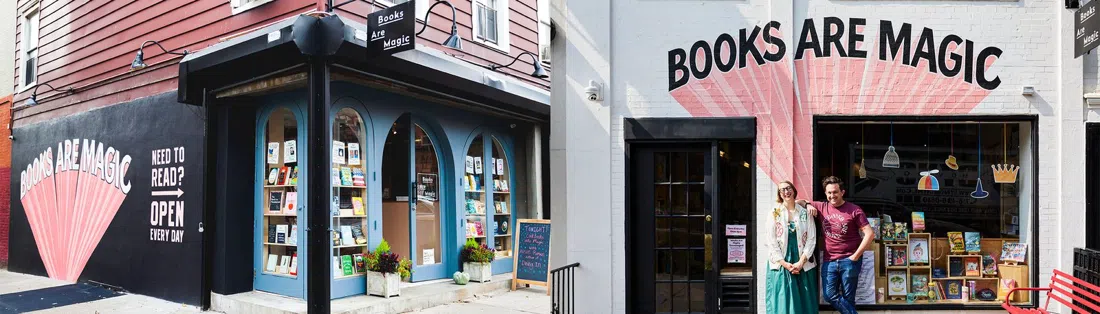
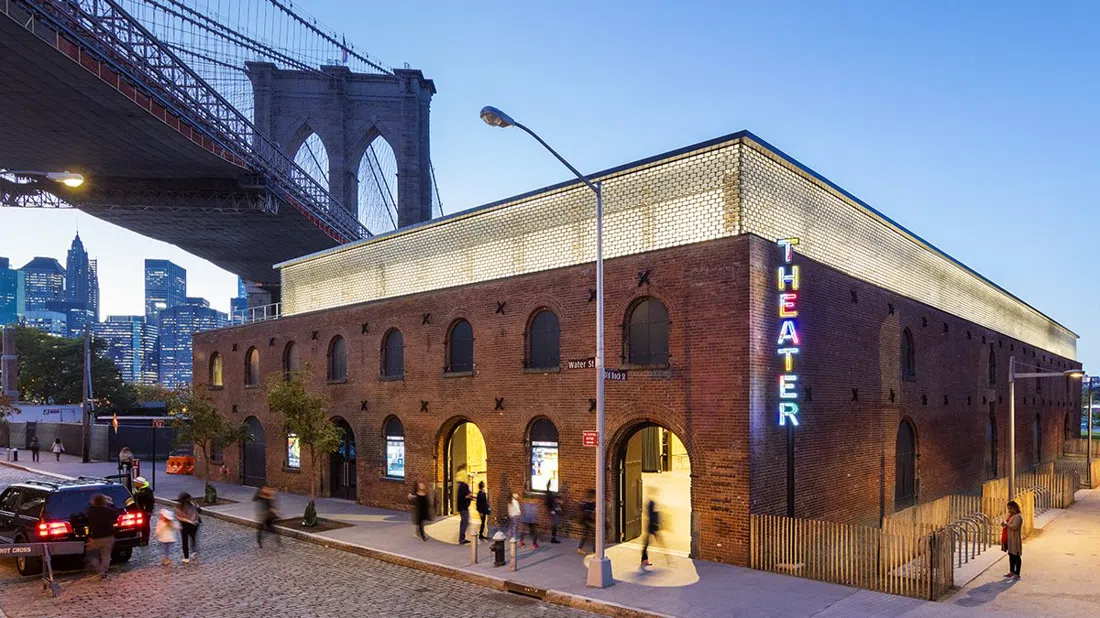
Books Are Magic (Montague Street, Brooklyn Heights) is the natural warm-up when the wind comes off the harbour, a small, open-door independent on a high street that has lost several of its kind, with ticketed author events most weeks. The floor is compact: fine for a couple or a few friends, awkward for a coach party. And for a cold evening after the Promenade, St. Ann's Warehouse (DUMBO) is the right answer, with tickets running roughly $35 to $95 depending on the production, group sales available, and a 2026-27 season that includes Tristan & Yseult. Its walled garden, built into the ruins of the old tobacco warehouse, is free and open to anyone with or without a ticket.
Eating around the walk
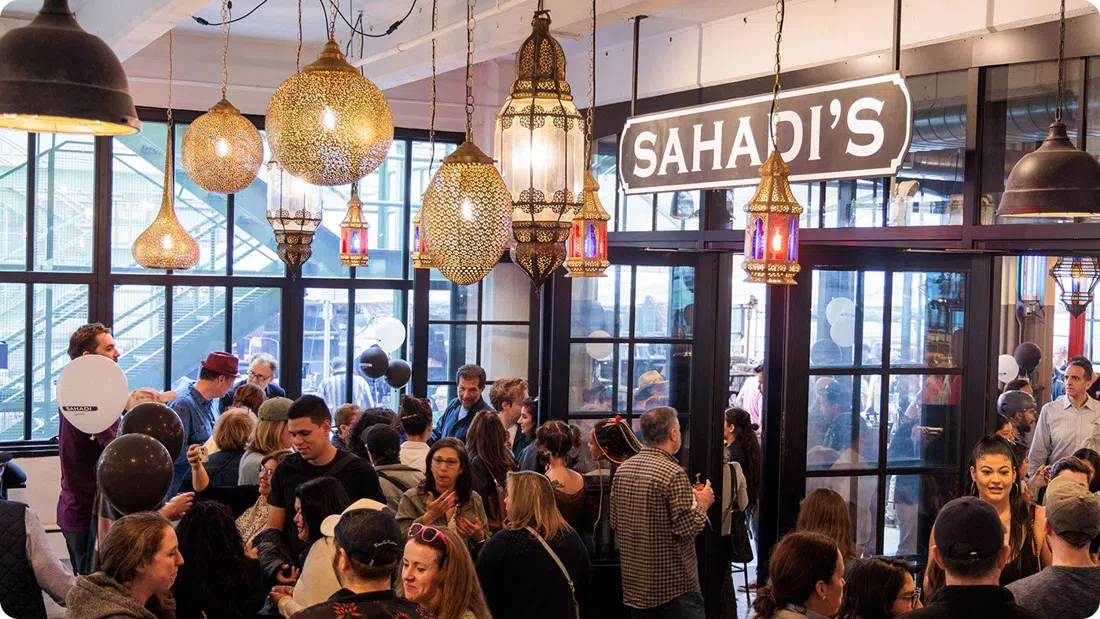
The best-value move is a picnic. Sahadi's (Atlantic Avenue) is a James Beard-winning family food shop with ticket-number service at the counter, where a few dollars buys bulk snacks and $10 to $15 builds a proper mezze spread for two. It is busy and handles crowds well, but a group should expect to wait for its number. Take it to the Promenade benches or the Granite Prospect steps.
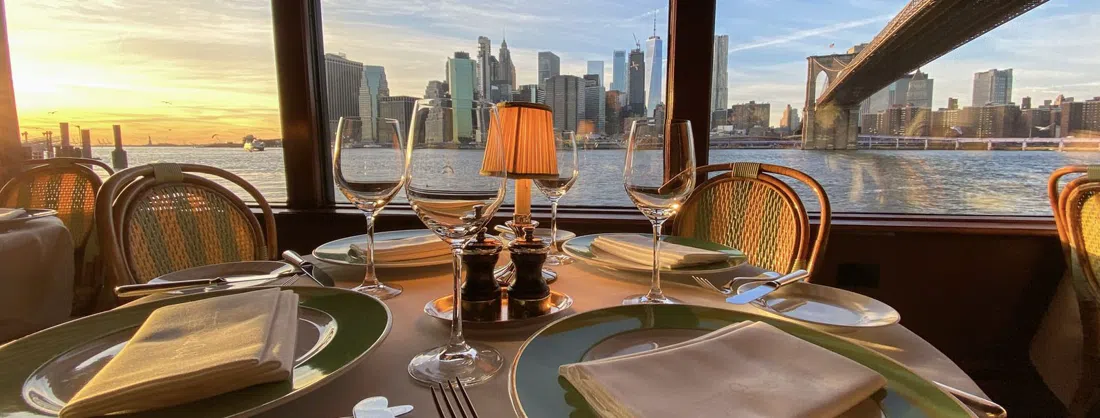
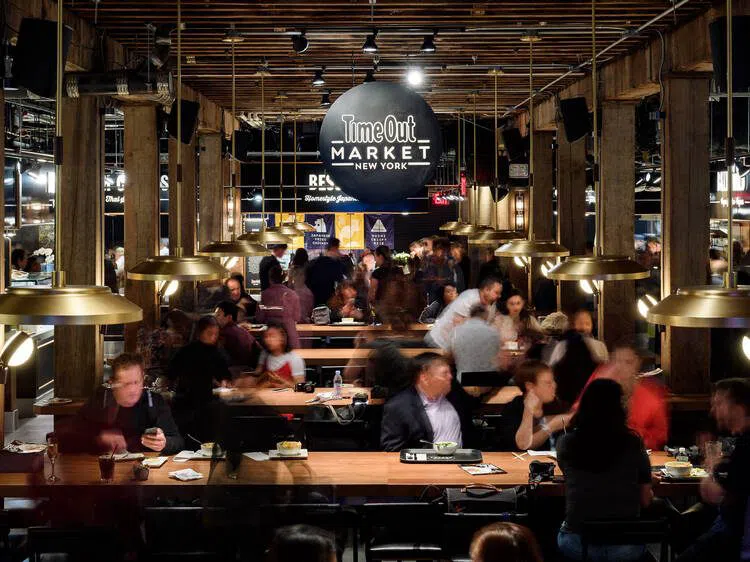
For a sit-down, Juliana's Pizza (Old Fulton Street, DUMBO) is walk-in only with a genuine queue at peak hours. Arrive at the 11.30am opening or after 8pm if there are more than four of you, and budget $25 to $35 a head. It was founded by Patsy Grimaldi after he sold his own name, and its stall at the food hall has closed, so the Old Fulton Street room is now the only place to eat it. Time Out Market New York (DUMBO) is the practical November fallback: no reservations, communal seating, multiple counters, $15 to $30 a head, and a rooftop that hands you the Promenade's view from the opposite bank. At the other end entirely, The River Café (Fulton Ferry Landing) is the Michelin-starred counterpoint to the free view, at around $195 a head for the three-course dinner, reservations Wednesday to Sunday evenings and bookable up to a year ahead, often deposit-backed, with jackets required for men. It is not a drop-in and not a casual group option.

Tickets at the door versus booking ahead
The Promenade itself has no ticket, no gate and no queue, and neither do the park, the bridge or the ferry landing. Nothing in this walk needs to be booked except Plymouth Church, a theatre seat, and a table at the fine-dining end.
Guided options do exist and are attached to this page separately. Read them with clear eyes. There are 375 traveller reviews across the bookable tours here, and the top-rated one holds 4.8 out of 5 from 166 reviews, so the quality is real, but that top tour starts from 775 USD per person, which buys a private vehicle and a driver rather than access you could not otherwise get. A guide earns their fee here if you want the Underground Railroad history, the shipping history and the bridge engineering narrated by someone who knows it, or if mobility makes the hills and the bridge deck hard work. If you simply want the view, you already have everything you need: a coat and a pair of shoes.
Access, rules and walking it with a group
The Promenade is flat, paved and step-free along its length, with benches roughly every thirty metres. The elevation change is between the Heights and the waterfront, and that is where Squibb Bridge helps, though it is a ramped-and-stepped descent rather than a lift, so anyone using a wheelchair should route down via Old Fulton Street instead, which is a longer but fully paved approach. Clark Street subway station depends entirely on its elevators; if they are out, it is a long stair climb, and Borough Hall or York Street are safer bets on a bad day.
There is no charge, no closing time on the Promenade and no restriction on photography. Dogs are common and leashed. The one social rule worth stating: the benches face private gardens as well as the harbour, and people live here. This is a residential terrace rather than a viewing platform, and at 8am it is somebody's commute.
Best time to go in November
Early November still has leaves on the plane trees and daytime temperatures that make an hour outside pleasant; by the last week you are in genuine cold with wind chill off the water, and the walk becomes a forty-minute proposition punctuated by warm rooms. Either works, but pack for the second.
Weekday afternoons are the sweet spot: Tuesday to Thursday, arriving around 3.15pm, walking the Promenade into the light, dropping down Squibb Bridge for sunset on the granite steps, and being in DUMBO for dinner by six. Avoid the Saturday and Sunday midday window between 11am and 3pm, when the bridge deck and Washington Street fill regardless of temperature. Thanksgiving week brings a noticeable jump in visitors across the whole waterfront; if your dates are flexible, the week before is quieter. And do not write off rain, because the skyline under low cloud with the towers half-dissolved is a better photograph than a flat blue afternoon, and the walk is short enough to do soaked.
Is it worth it
Yes, without qualification, and it is free. But calibrate: the Promenade is a twelve-minute walk with a spectacular view, not an attraction that fills an afternoon on its own. Judged as the spine of a half-day that also includes the park, the carousel, a bookshop and a food hall, it is one of the strongest things you can do in New York for under $30 a head. It suits couples and solo walkers best, and photographers most of all. It suits families well provided the carousel is open on your day. Large groups work fine on the open sections and badly in the bookshop, the archive reading room and the transit museum without a booking. The people it disappoints are those who arrive expecting an experience rather than a view, and those who come at midday in August, which is precisely why November is the answer.
Practical notes
Getting there. The 2 and 3 trains to Clark Street put you two minutes from the Promenade's northern end, the 4 and 5 to Borough Hall and the R to Court Street are five to eight minutes away, the A and C to High Street land you between the Heights and DUMBO, and the F to York Street drops you in DUMBO itself. The NYC Ferry East River route at $4.50 a ride is the best arrival by water when the landing is operating.
Money. The Promenade, the park, Squibb Bridge, the bridge deck, the church garden at the theatre and the Center for Brooklyn History are all free. Contactless tap works on the subway and the ferry, and in every shop and restaurant here; you need no cash at all, though a few dollars is handy for the carousel booth and for the suggested donation at the church.
Timing and budget. Allow three to five hours for the full loop. A frugal version runs about $15 a head with a picnic and a carousel ride. A comfortable version with the transit museum, lunch at the food hall and a drink is $50 to $70. Add a theatre ticket at $35 to $95, or the harbourside tasting at around $195, if you want the evening to be the point. For somewhere to sleep within walking distance of all of it, start with our New York hotel search, since staying in Brooklyn Heights or DUMBO rather than midtown is what makes the 7am version of this walk actually happen.