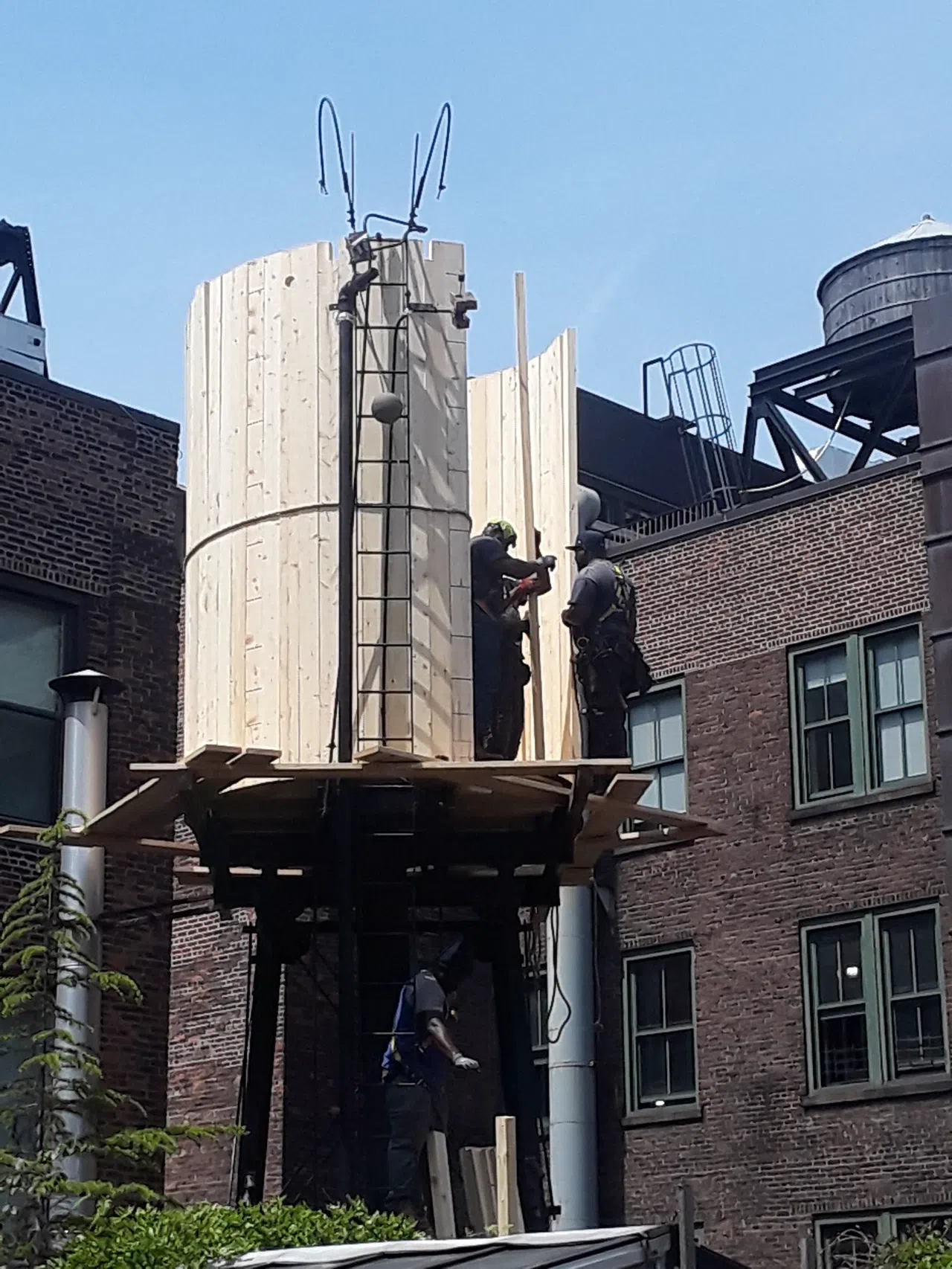

Stand anywhere on a Manhattan cross street, tip your head back, and start counting: the wooden barrels on the rooftops will outnumber almost everything else up there. They are neither relics nor decoration. Most were raised within the last thirty years, by hand, in a single working day, by crews from three family firms who cut nothing on site and glue nothing at all. They stack cedar staves, drop steel hoops over them, and let the water do the sealing. New York is the last major city on earth running its upper floors on gravity and timber, and once you can read the skyline you will see the barrels everywhere.
The 1872 ancestor you can still climb
Before the barrels there was masonry, and the best place to begin is the Highbridge Water Tower (Highbridge Park, Washington Heights), the only water tower in New York you can actually walk inside. It went up in 1872 as part of the Croton system, a granite octagon on the Manhattan bluff above the Harlem River whose job was exactly the job the rooftop tanks do today: hold water high enough that gravity, not machinery, pushes it back down into the pipes. The physics has never changed; only the scale and the material.
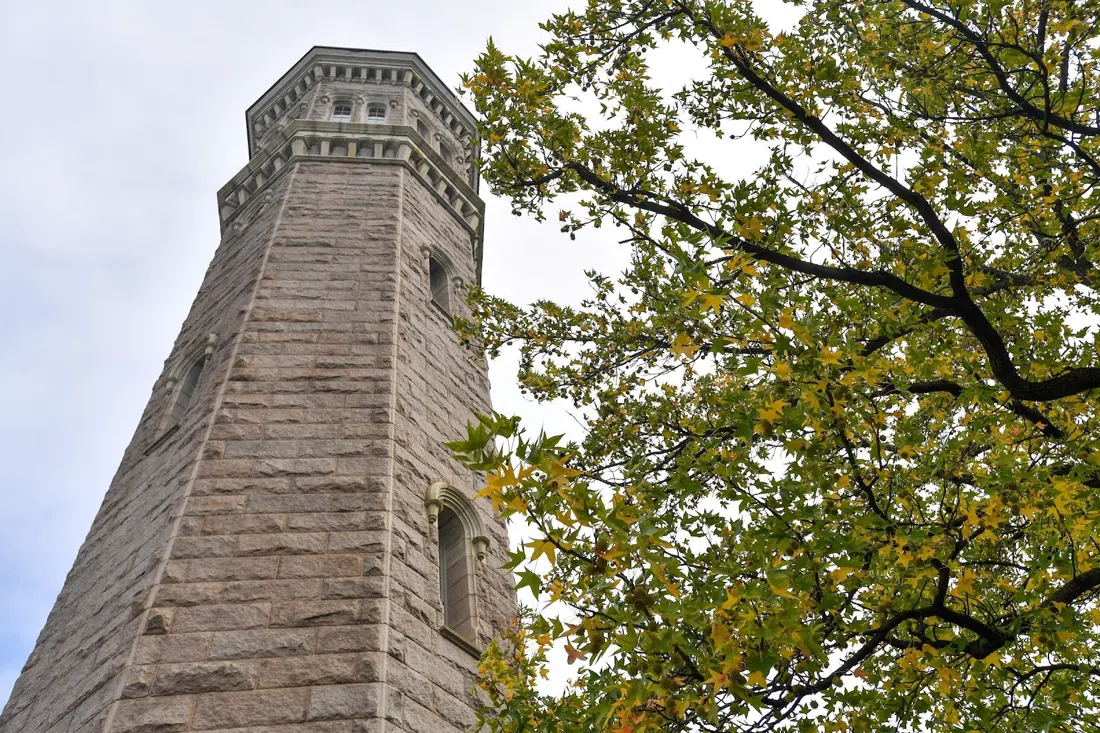
Urban Park Rangers run free drop-in tours on scheduled days, with no registration and no ticket. You arrive between 1:00pm and 2:45pm and join one. Because there is no booking system, a group of ten will not be turned away but will be split across tours, so plan to reconvene at the bottom rather than expecting to climb together. The ground floor is step-free; the climb to the top is one staircase with no lift, which rules it out for anyone who cannot manage stairs. The tower also opens for the Open House New York festival on 16 to 18 October 2026, first-come first-served and busier than a normal Ranger day. Give it ninety minutes including the walk through the park, and treat the view north over the aqueduct as part of the story rather than a bonus.
The six-storey problem that put tanks on the roofs
The reason the barrels exist is a threshold, and the sharpest short explanation of it in the city is at The Skyscraper Museum (Battery Park City), free, rigorous and mercifully small. Municipal water pressure reliably serves about six storeys. The elevator made buildings routinely taller than that in the 1880s and 1890s, and the fix, codified and still in force, was to pump water to a tank on the roof and let it fall back down under its own weight, with the bottom of the tank reserved for firefighting and the top for domestic supply. That is why the tanks sit where they do, why they are shaped as they are, and why a glass tower from 2019 next to a loft building from 1910 can both wear one.
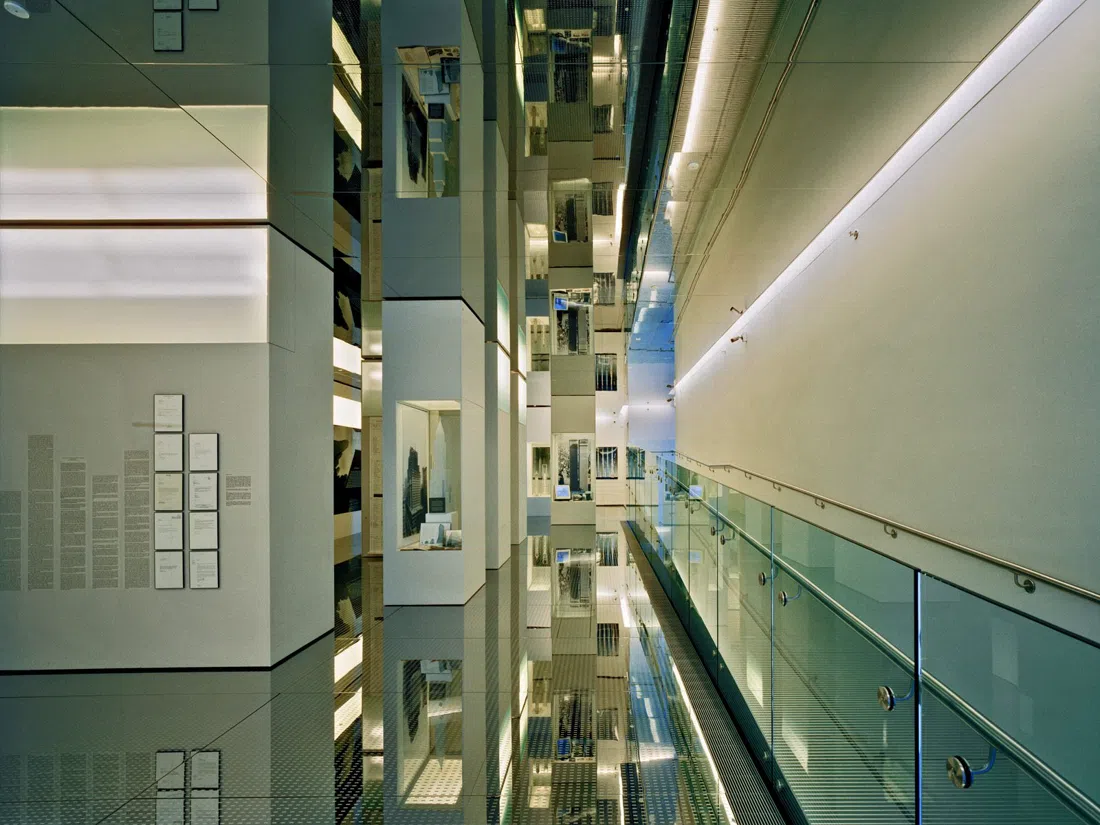
The museum runs Wednesday to Saturday, 12pm to 6pm, last entry 5:30pm, on free timed tickets with walk-ins accepted. The rooms are genuinely small, so a group of more than six should book ahead rather than arrive hopeful. Forty minutes is enough. Pair it with the harbour walk outside and you have the physics settled before you spend money on anything with a view.
The three firms that still build them
Only three houses build and maintain New York's rooftop tanks, and none of them is a visitor attraction. Say that plainly before you plan anything: these are working contractors with insurance requirements and roof access agreements, not workshops with a gift counter.
Rosenwach Tank Co. (no public premises; trade and press enquiries by phone only) is the giant of the trade, responsible for well over half the tanks standing today, and the one that gives you the best game in New York: every Rosenwach tank is topped with the firm's signature 'R' rosette, a small cast finial on the cone of the roof. Spot one and you know the maker. Correct one myth while you are at it. The old Williamsburg cedar mill was sold in 2013 and milling moved across the river to New Jersey, so do not go looking for a working mill on North 9th Street. There is nothing there for you.
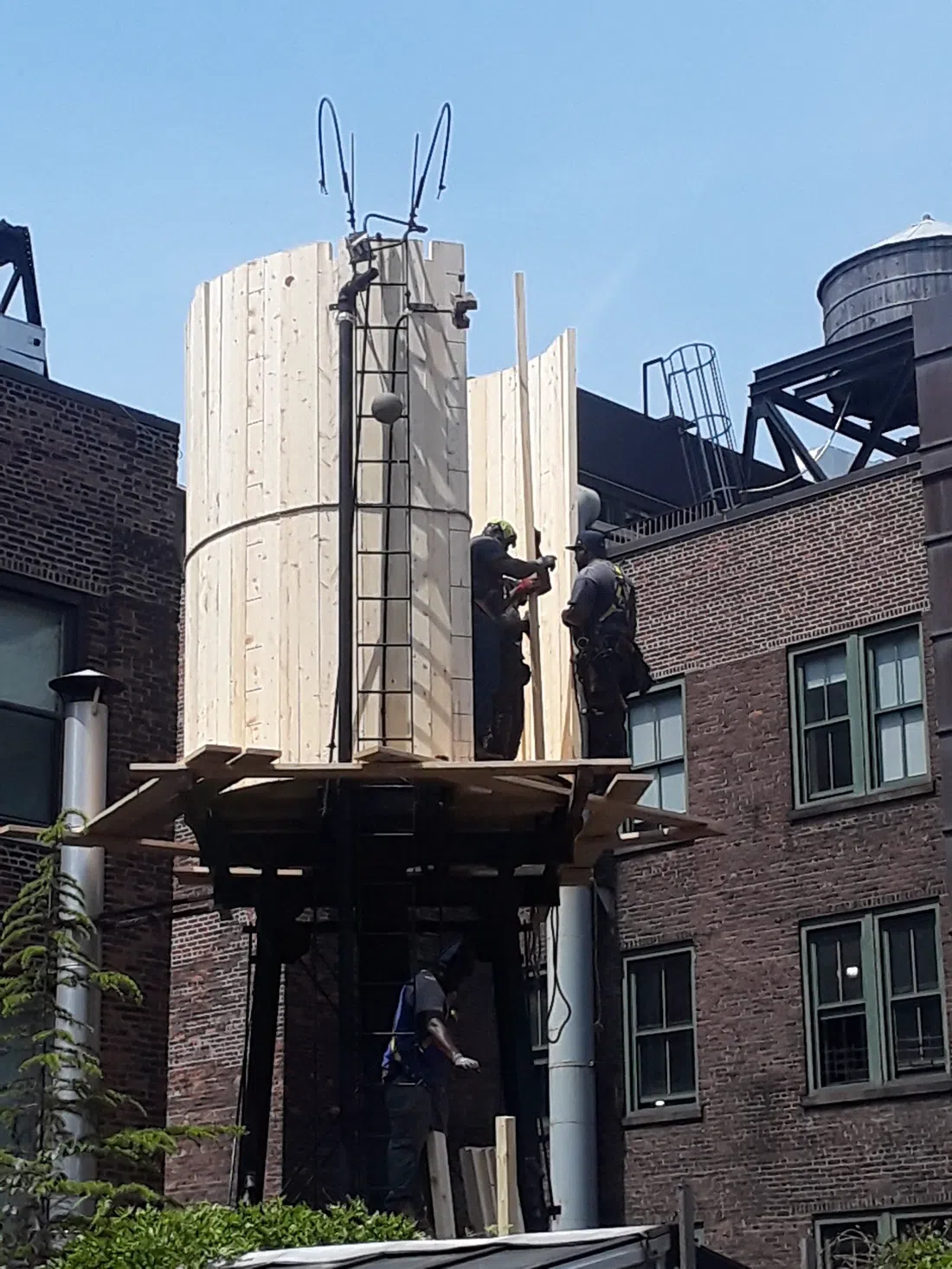
Isseks Bros. Inc. (no public premises; a working contractor) was founded in 1890 and is still family-run into a fourth generation, with Rockefeller Center, the Empire State Building and One World Trade on the job sheet. The honest footnote is that their work today is largely steel tanks rather than the wooden ones tourists photograph. Steel lasts longer, costs more, and is what a great many new towers specify. American Pipe & Tank (no public premises; contractor) is the third house, over a century old, still running fathers and sons on the same crews, and the clearest illustration of the trade's actual present tense because they build in both wood and steel depending on what the building wants.
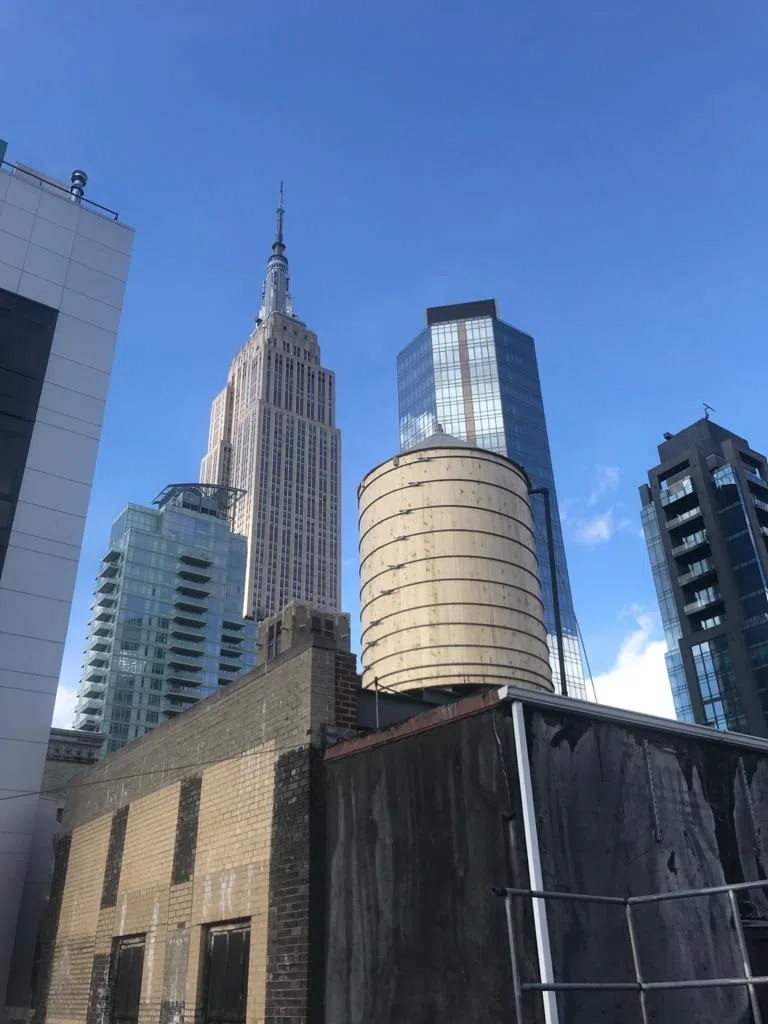
The economics are worth carrying with you. A tank costs a building somewhere in the region of $30,000 to $60,000 and up, installed, and a well-maintained wooden one has a working life measured in decades before the staves need replacing. That is why the wooden tank survives: it is the cheapest way to solve the problem, and the crews who raise them are the reason a nineteenth-century solution is still a twenty-first-century line item.
Reading a roofline from the street
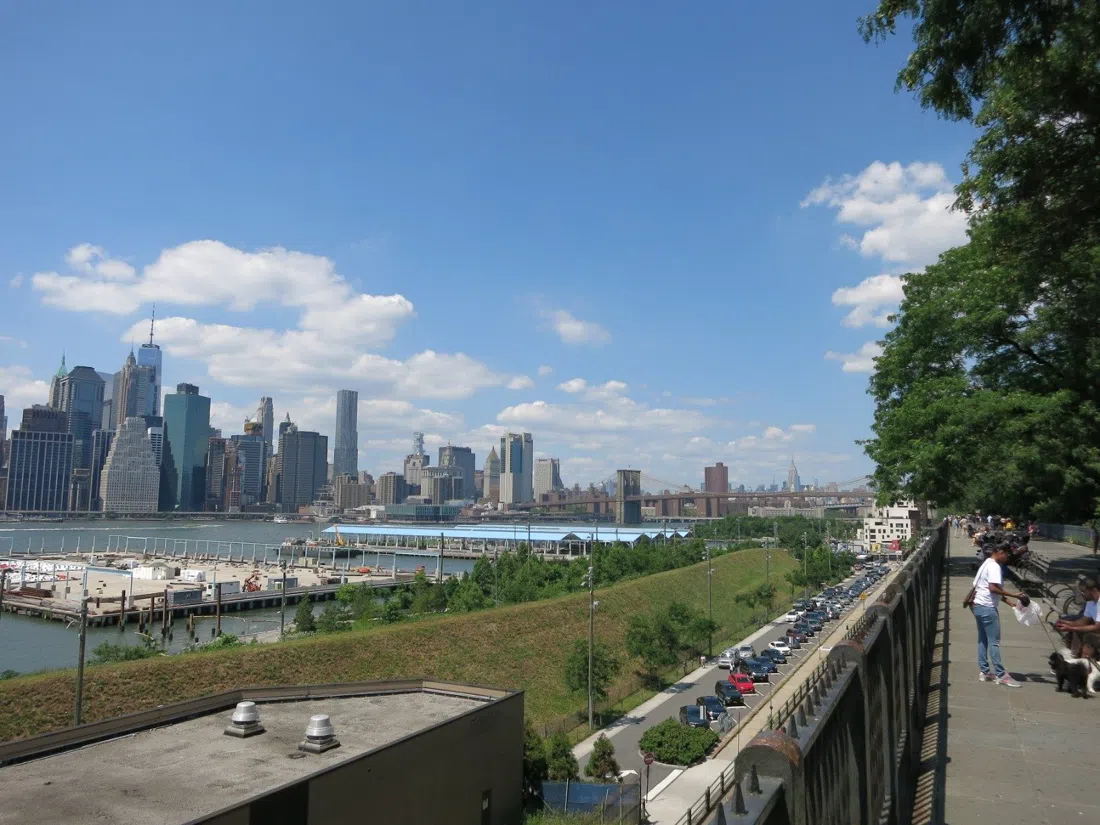
The best of this story is free and at eye level. Start on the Brooklyn Heights Promenade (Brooklyn Heights), an open public walkway with no gate, no hours and no charge, and the finest single composition in the whole subject: a foreground of low brick roofs wearing weathered cedar, a middle distance of Lower Manhattan glass, and the harbour underneath. Anyone worried about the long-running BQE works below can relax. The 2026 city plan spares the Promenade itself, construction does not start until 2030, and at least one section is to be kept open throughout.
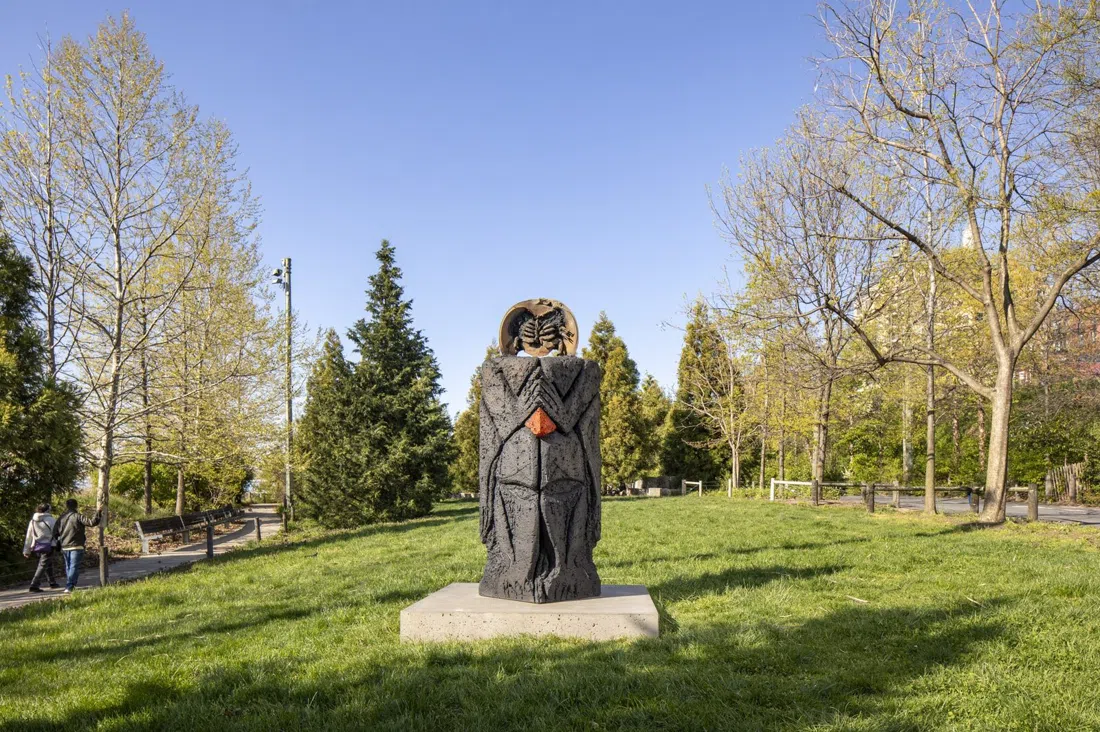
From the same railing, or better from the Pier 5 uplands below, you can see Tom Fruin's 'Watertower' at Brooklyn Bridge Park (Brooklyn Bridge Park), a permanent sculpture in stained glass and salvaged steel that answers the wooden originals in colour. It is free, outdoors, unbookable and fine for any size of group. There is no public access to the roof it stands on and no way inside, so you look at it and photograph it from below. In the last hour of daylight it is worth the walk on its own.
The most underrated vantage in the city costs one subway fare. The Roosevelt Island Tramway (boarding at Second Avenue and 59th Street) runs from 6am to 2am on weekdays and later at weekends, takes OMNY or a MetroCard for about $3, and carries you slowly through the tank line at its own altitude rather than above it. No booking, no group limit, and the ride back at dusk with the East Side lit behind you is the best value in New York for this subject. Cross the river afterwards to Domino Park (Williamsburg), free and open daily, where the preserved industrial tanks and machinery sit at ground level and the elevated walkway puts you at roof height without a ticket. It is a five-minute walk from there to the evening's payoff.

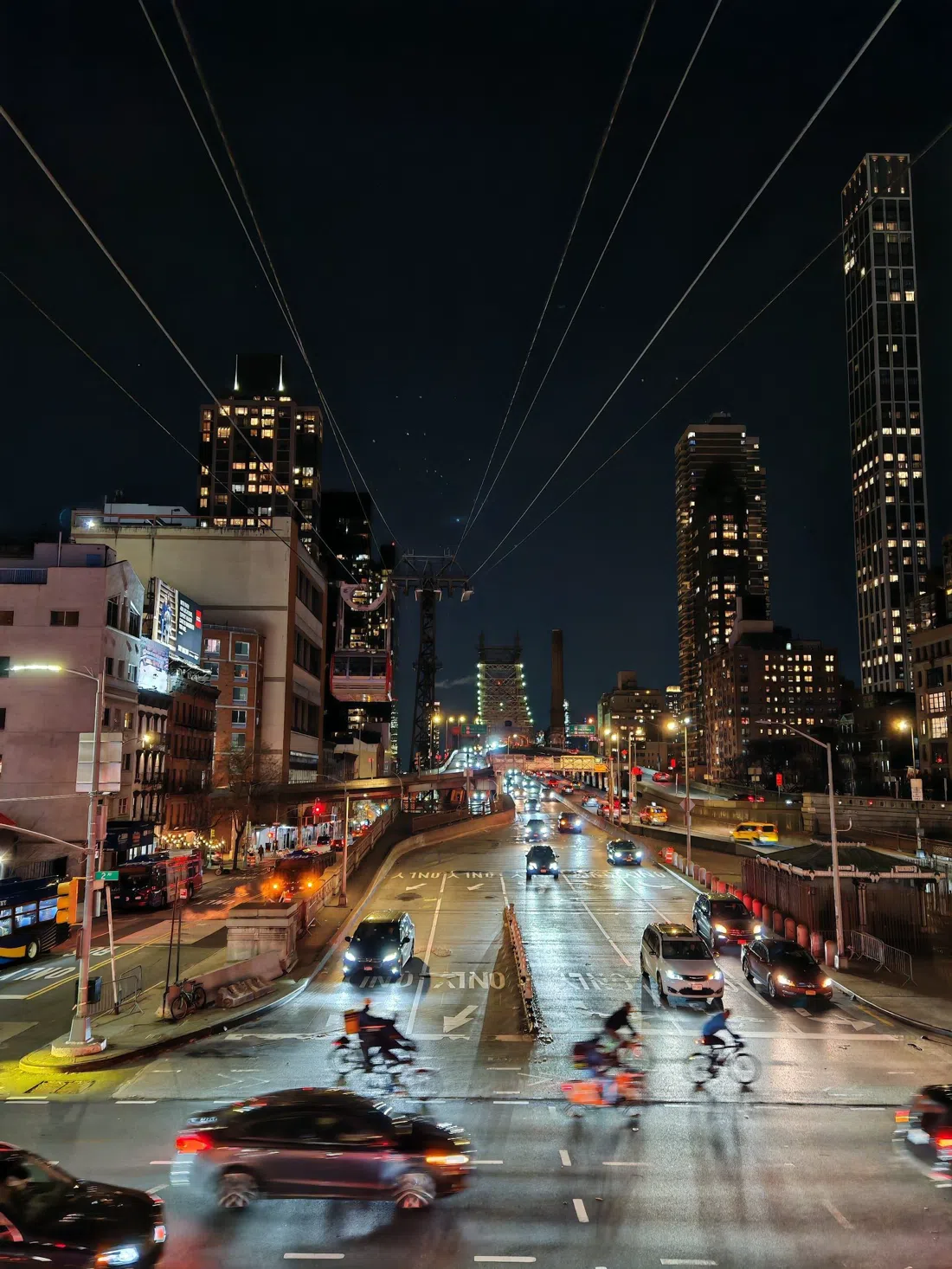
For the guide to the rest of the city around these stops, the New York guide covers the neighbourhoods this route strings together.
Looking down on the tanks instead of over them
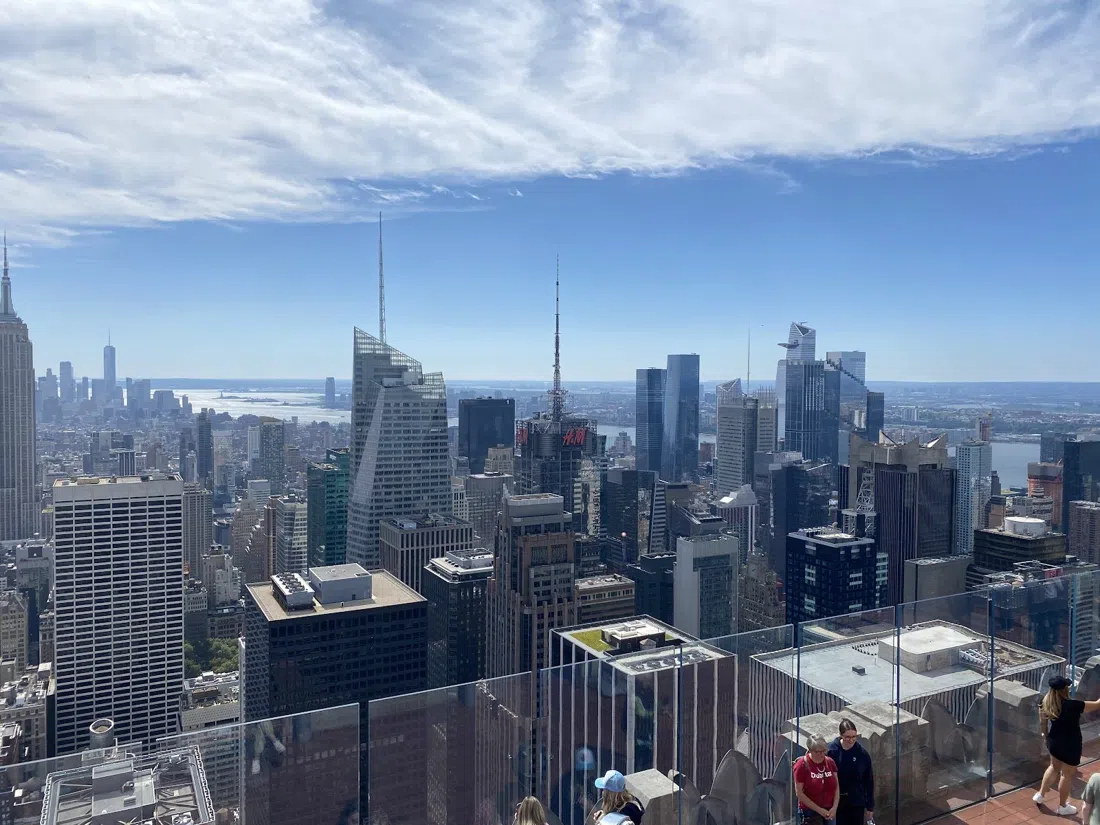
Angle matters more than height here. The best deck for this piece is Top of the Rock (Rockefeller Center, Midtown) at 70 floors, high enough for the full panorama and low enough that you are looking down onto the tank tops rather than straight over them, which the taller decks lose entirely. Timed tickets from about $42 for an adult, open daily 8am to midnight, group enquiries through the box office, and the Skylift or The Beam add roughly $15 each if you want them. You do not need them for this.
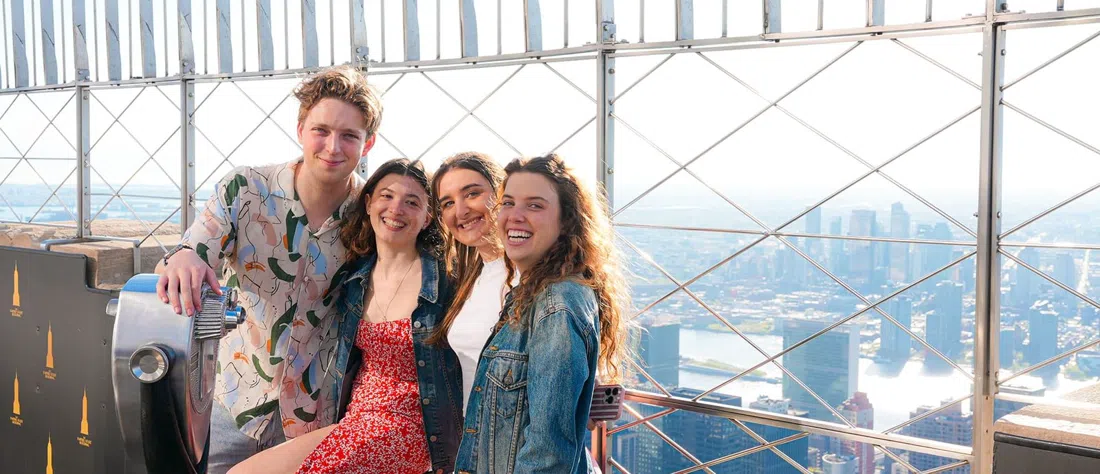
The Empire State Building 86th Floor Observatory (Midtown) is the other one worth the money, from about $44 for an adult, open 365 days, timed reservations required and genuinely worth booking well ahead because it is the busiest deck in the city. The open-air deck is the entire reason to go: you hear the street, you feel the wind that those crews work in, and the tank-covered roofs directly below read far more clearly than they do from the enclosed 102nd floor. If you are choosing one deck only and you have already ridden the tram, choose this.
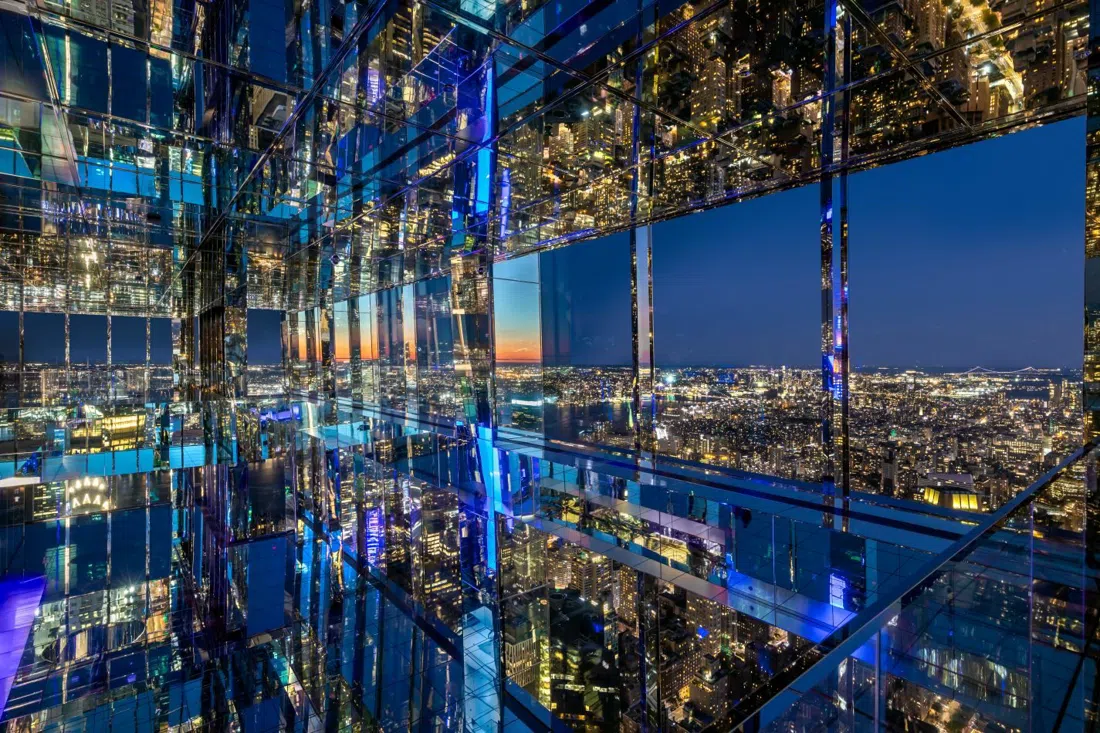
SUMMIT One Vanderbilt (Midtown East, beside Grand Central) is the contemporary counterpoint, from about $49, timed entry, open until midnight with last entry at 10:30pm, and combination tickets sold everywhere. Its mirrored rooms reflect the same nineteenth-century wooden barrels this guide is about, which is a genuinely good joke. It is also a scene: phones up, queues for the photogenic corners, cocktail tiers priced accordingly. Skip it if you want quiet.
Sitting inside the timber
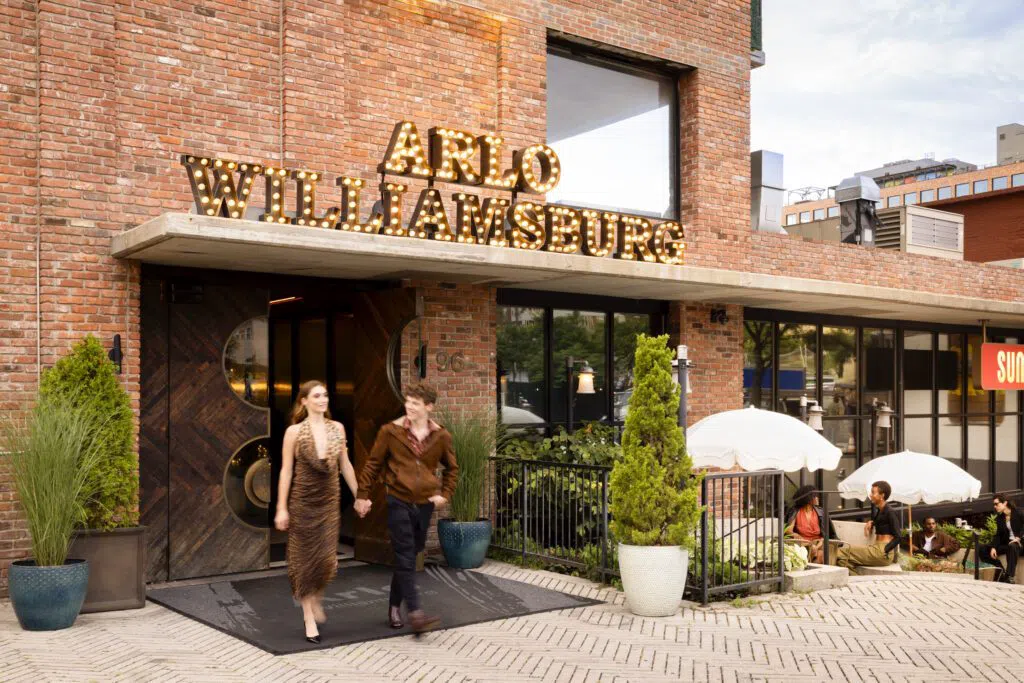
The literal payoff is in Williamsburg. Water Tower (Arlo Williamsburg, 96 Wythe Avenue, Williamsburg) is a cocktail bar built inside a water tower on the hotel roof, on the site of Rosenwach's old Williamsburg yard. Use the current name, because the building rebranded from The Williamsburg Hotel in September 2023 and older listings will send you looking for something that no longer exists by that name. Walk-ins work for small parties, the room holds about seventy for private hire and does full buyouts, cocktails run roughly $20 to $26, and it is closed on Mondays. It turns clubby late, so a couple wanting the room and the view should arrive early in the evening and a group wanting the atmosphere should arrive late. Both are valid; know which one you are.
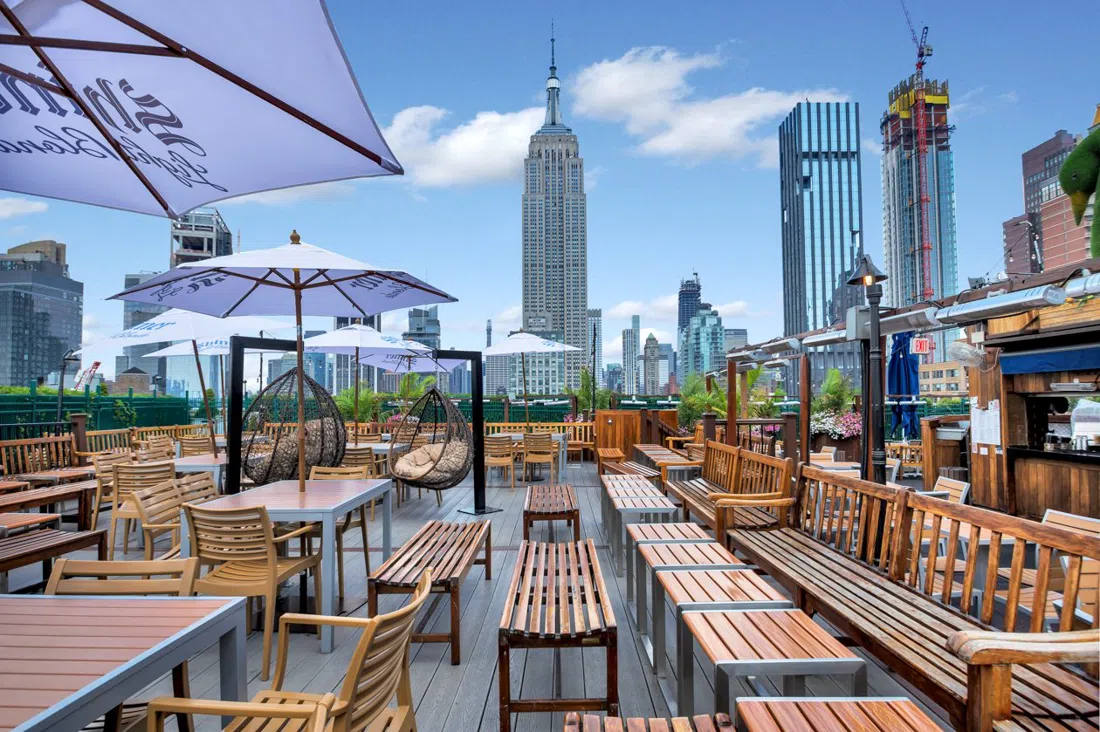
In Manhattan, the best interior for this story is Refinery Rooftop (Garment District), where you sit under reclaimed timber from the very tank that once stood on that roof, with the Empire State Building framed beyond the glass. Open seven days, all seasons, cocktails around $20 and mains $28 to $45; it takes groups well and runs private events, but book ahead for anything over six. 230 Fifth Rooftop Bar (NoMad) is the reliable large-group option: walk-ins always welcome, no reservation needed under six, private areas bookable while the main roof stays open, open all year including holidays, cocktails roughly $18 to $24, and the classic Empire State foreground shot. It is a mainstream party crowd rather than a design destination, the right answer for twelve people and the wrong one for a quiet second date.
The other life on the roofs
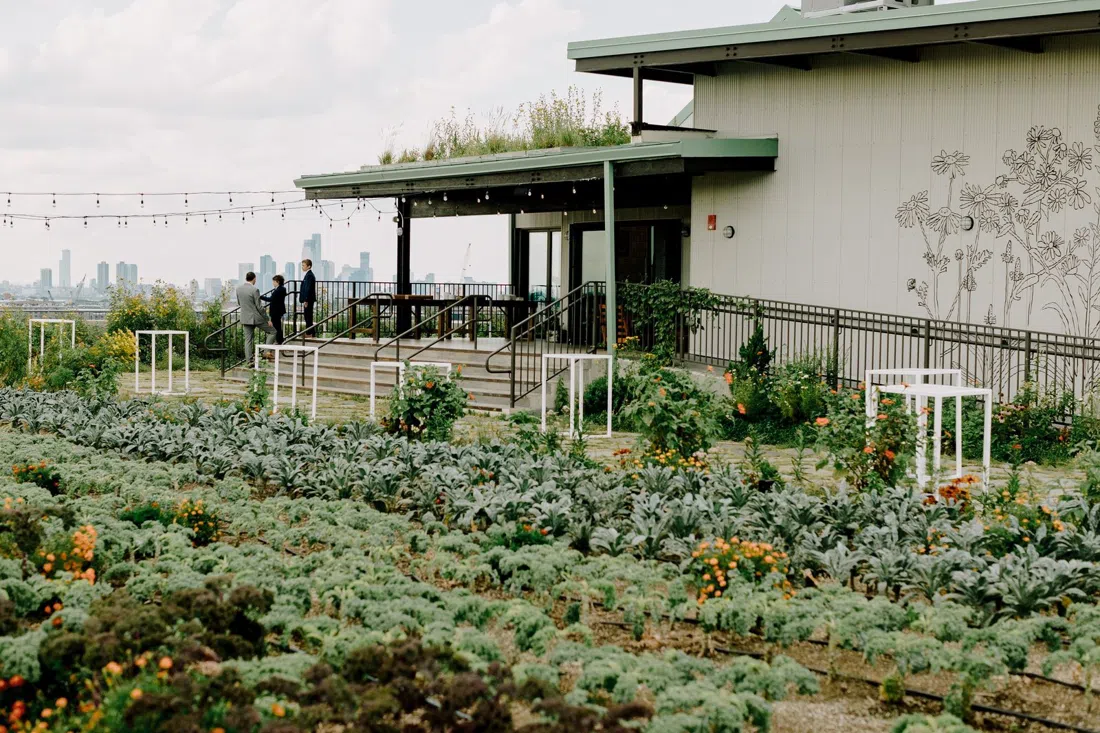
Tanks are not the only thing living up there. Brooklyn Grange (rooftop farm, Brooklyn) runs ticketed tours, seasonal Sunday open houses and farm markets, plus yoga, dinners and private hire, with groups and school trips catered for by advance booking. Tours are modest in price, ticketed dinners considerably more. Programming is seasonal and the farm you visit depends on the event, so check the ticket page before you plan a route around it. It belongs here because it makes the same argument the tanks do from a different direction: New York's vertical layer is inhabited and worked, not merely plumbed.
Planning the day
Two days does this properly. Day one in Manhattan: Skyscraper Museum at opening, Highbridge in the early afternoon on a Ranger day, the tram at dusk, then Refinery or 230 Fifth. Day two in Brooklyn: the Promenade in the morning light, Fruin's tower and Pier 5, Domino Park in the afternoon, the Water Tower bar in the evening. Slot a deck into whichever day the forecast is clearest, because haze ruins the tank-spotting more than cloud does.
Everything moves on the subway and the tram on the same fare, about $3 a ride, tapped with OMNY or a contactless card; you do not need a MetroCard. New York is effectively cashless and cards work everywhere including the park kiosks, but carry a little for tipping, and budget 20% on bar tabs on top of the menu prices above. Rooftop bars in winter run heated and enclosed rather than closed, so this is a year-round subject. Book the Empire State and SUMMIT in advance, walk into Top of the Rock off-peak, and reserve nothing at all for the free stops. Base yourself in Midtown for the decks or Williamsburg for the bars and the ferry; the New York hotel search covers both sides of the river. And do not write to the three tank firms asking for a rooftop visit: they are working contractors, the roofs are insured job sites, and the respectful version of this pilgrimage is done from the street, the promenade and the deck.