
On a weekday at ten past seven in the evening, the lift bank in a Midtown tower runs to something like a tide table. Cars go down empty and come back up loaded with grocery bags, bike helmets and gym kit, everyone pressing a button somewhere in the thirties or the fifties. Visitors to New York buy the view by the ticket; the people who live here hold it by lease, and after a month they stop looking at it altogether. What follows is the vertical city from the resident's side of the glass: the lifts and sky lobbies, the public cable car, the cooperative in the Bronx with its own zip code, plus the small number of bars, tables and rooms above the twentieth floor where a visitor can borrow that life for an evening.
Twenty free minutes that reframe every tower
Start at ground level, oddly enough. The Skyscraper Museum (Battery Park City) is a single small gallery devoted to the one question nobody asks on an observation deck: why these buildings are shaped the way they are, and what it costs to stack people a quarter of a mile into the air. It is free, on a timed ticket, and walk-ins are welcome. The trap is the calendar rather than the price. It opens Wednesday to Saturday only, noon to 6pm, with last entry at 5.30. Plan it for a Wednesday or Thursday afternoon and the rest of your week reads differently; turn up on a Monday and you will stand in front of a locked door with the Hudson behind you. Because the room is small, a group of more than about eight should book and go in waves rather than arrive as a block.
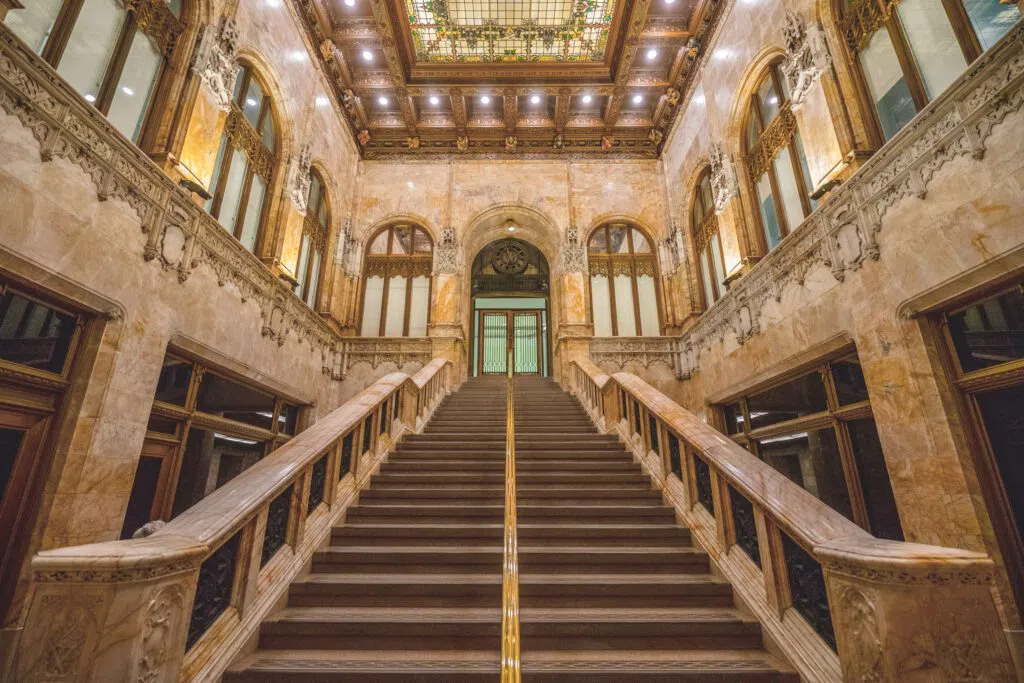
From there, walk north to the building that makes the whole argument at one address. Woolworth Tours NYC (Tribeca) is the authorised operator for the Woolworth Building, and the lobby is closed to the public, so this is the only legal way past the security desk. Scheduled tours of 30, 60 and 90 minutes run daily from $25 to $45, with longer and special-access options priced higher, and private groups are taken on request. The point for this story is what happened upstairs: the top thirty floors of what was built as an office cathedral are now the Woolworth Tower Residences. Commerce moved out, people moved in, and the mosaic ceiling that once impressed clerks now sits beneath somebody's kitchen.
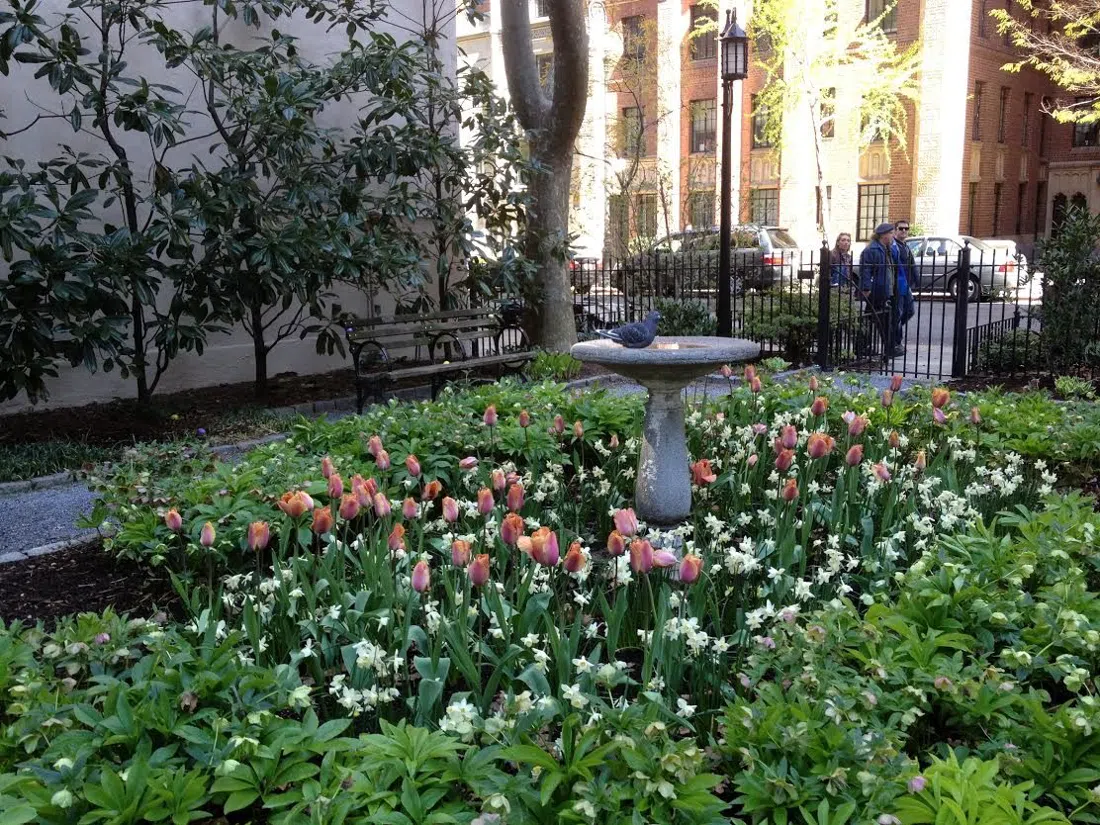
Then go and stand in the place where the idea first got built for ordinary people. Tudor City Greens (Tudor City, Midtown East) is a pair of small private parks, free and open daily from 7am to 10pm, inside the first purpose-built high-rise district in the city aimed squarely at the middle class. Built between 1927 and 1932, its roughly 3,000 apartments were deliberately turned away from the East River. That had nothing to do with snobbery about water views: the slaughterhouses and power plants were down there, and nobody wanted to open a window onto them. In 1997 the residents bought the parks back from developers, and they still run them. Walk a group of any size through, but remember you are standing in somebody's front garden and keep the volume down.
The commute is the best view in the city
The cheapest high view in New York is not sold as a view at all. The Roosevelt Island Tramway (Upper East Side to Roosevelt Island) is a commuter cable car on the subway fare system: $3.00, paid with OMNY or a MetroCard, with no cash accepted at the turnstile. Cabins take 110 passengers, there is no reservation and no group limit, and they run every 7.5 minutes in the rush hour and every 15 the rest of the day. Ride it eastbound around six in the evening and you are pressed in with people coming home from work, rising to roughly the height of a twentieth-floor apartment, looking straight into the lit windows of the Queensboro Bridge corridor. It costs about the price of a coffee and beats most paid decks on atmosphere, if not on altitude.

For the honest demographic picture of high-rise life here, though, you have to leave Manhattan. Co-op City (Baychester, the Bronx) is the largest housing cooperative on earth: 15,372 apartments, around 50,000 residents, its own zip code, its own power plant, its own shopping centres and library. There are no tours and no building access; it is simply a neighbourhood, so walk it freely in any size group and treat the retail plazas, the library and the greenways as the public parts. Getting there takes about 45 minutes from Midtown, either the 6 train to Pelham Bay Park and then a bus, or Metro-North to the Co-op City station. Any truthful account of living above the twentieth floor in this city is mostly about places like this rather than about the thin towers on Billionaires' Row, and an hour walking it will teach you more than any amount of time on a glass floor.

Bars inside buildings where people actually live
Overstory (Financial District) shows you what a New Yorker's window really looks like, because it is a bar inside a residential supertall. Seventy Pine Street was an office cathedral that got converted into apartments, and Overstory sits high up in it with about thirty seats, no reservations, and a view out of three sides. It is walk-in only, which makes the door a genuine variable: come early on a weekday and you will get in, come at nine on a Friday and you will queue on the street. Groups above six will not fit, so split into twos and threes and accept that you may not sit together. Cocktails run $25 to $30, which is the going rate for the altitude, and the two-Michelin-starred SAGA sits one floor below under the same ownership if you want to make a night of it.
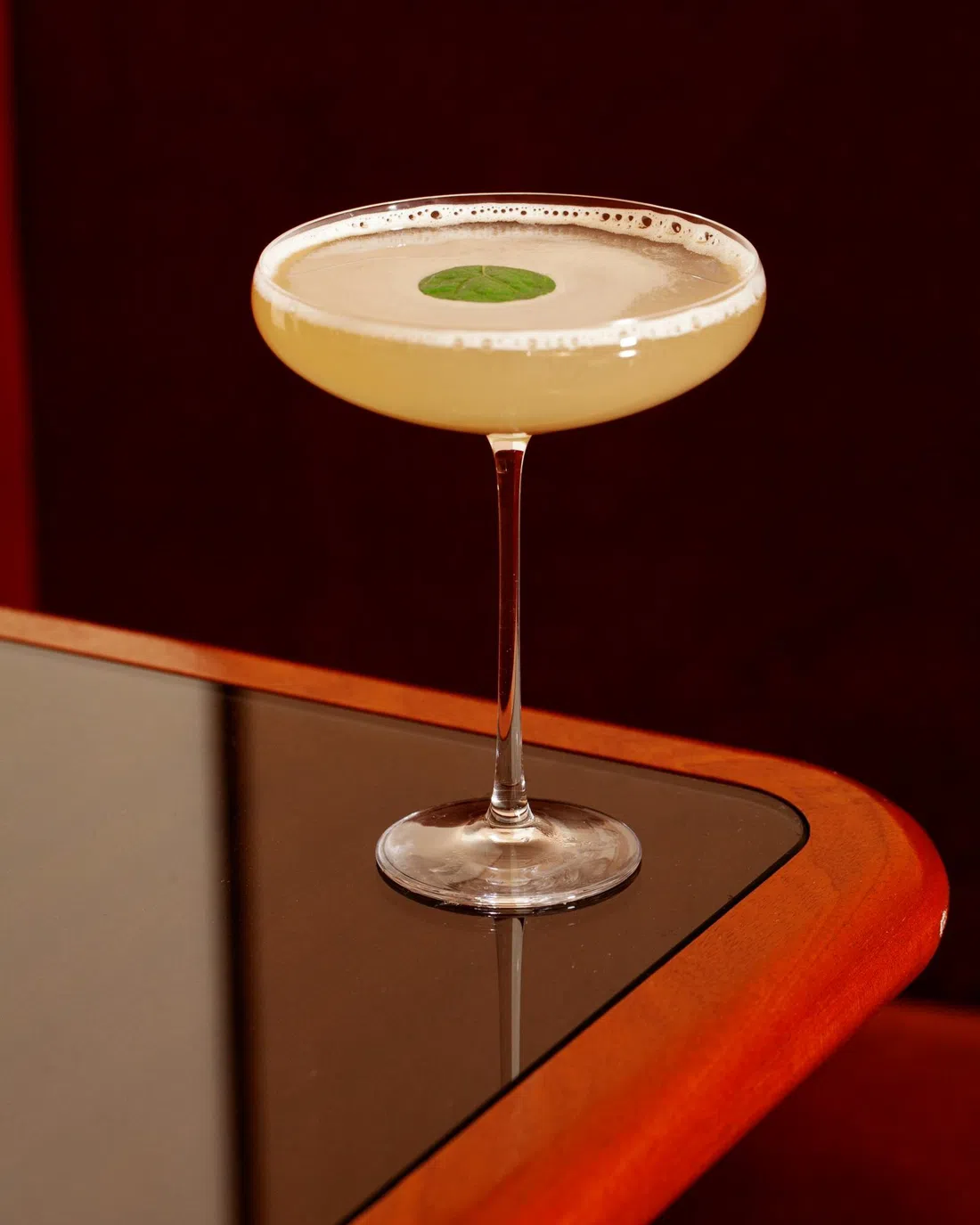
Ophelia Lounge (Turtle Bay) has the best backstory of any bar in this guide. Beekman Tower was built as the Panhellenic Tower, a residential hotel for university women arriving in the city on their own, and one of New York's first serious experiments in stacking people up and giving them a lift instead of a staircase. The Deco detail survived, the view runs east over the river, and the room feels like a private club that forgot to be unwelcoming. Reservations go through OpenTable and the full floor can be taken for corporate and private events. Smart dress is expected; cocktails are $22 to $28. It suits couples and groups of four to eight better than a crowd of twelve.

Nubeluz by José Andrés (NoMad) is the most composed room at this height, the closest thing in the city to a well-mannered living room that happens to be fifty storeys up, with terraces that put you level with the Empire State Building's shoulders rather than craning up at them. The cocktail dress code is enforced rather than suggested, so leave the trainers and shorts at the hotel; this is the one door in this guide most likely to turn you away on clothing alone. OpenTable handles parties up to eight and beyond, with private events booked separately. Cocktails are $26 to $32 and small plates $20 to $40, so a relaxed two hours here is a proper night out rather than a quick drink.
The weekday bar that vanishes at the weekend
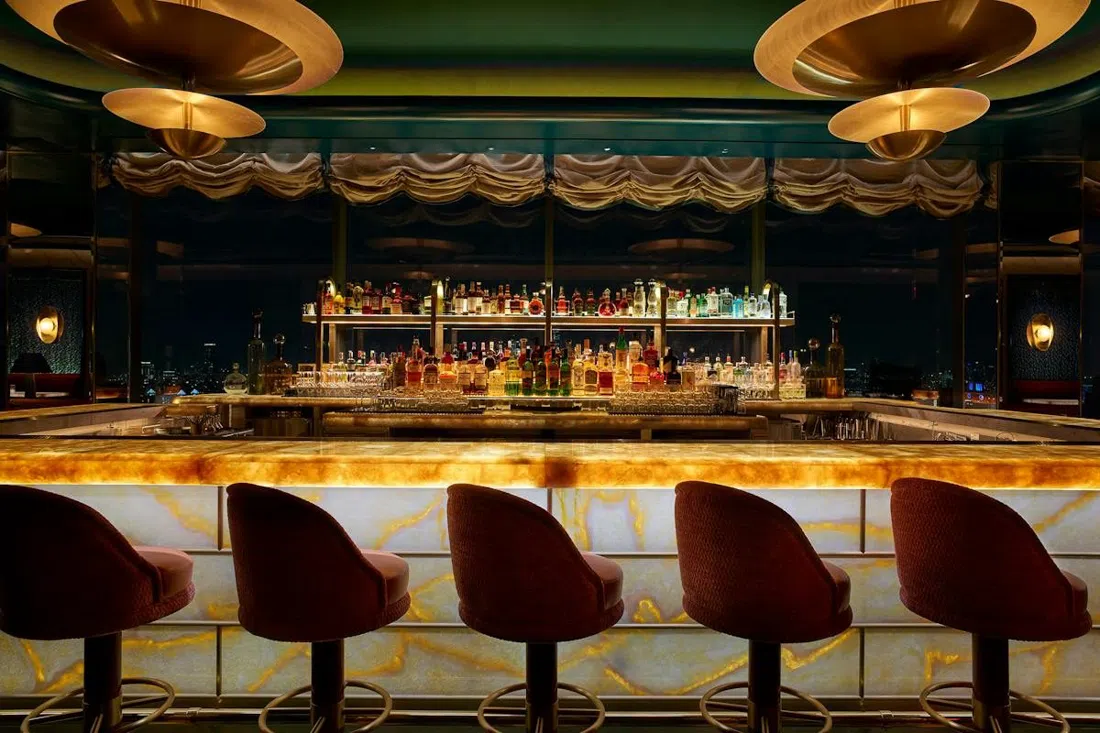
The Skylark (Garment District) is the right texture for a resident's-eye story precisely because the building around it is unremarkable: an ordinary office tower full of people doing ordinary work, with a bar on top that opens from 5pm on weekdays. Cocktails are $20 to $26, the cheapest of the staffed high rooms here, and the terrace looks straight down the side streets rather than across a postcard. It is also the strongest pure group venue on this list for size, at 80 seated and 250 standing, with partial or full buyouts available and minimums attached. The catch is absolute and worth writing in your calendar: Saturdays and Sundays are private-rental only. Turn up on a weekend without a booking in your name and you will be turned away at the lift, politely and finally.

Two tables where the height is the setting rather than the show
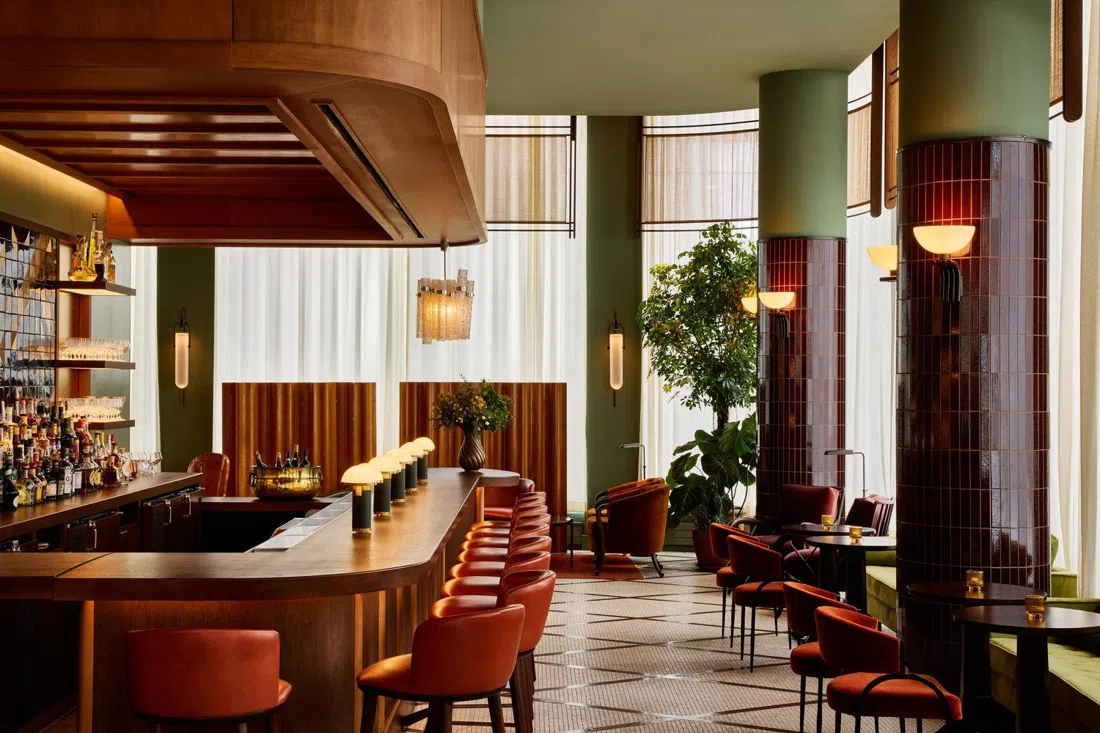
Manhatta (Financial District) is where the altitude stops being the point. Danny Meyer's Union Square Hospitality relaunched it in January 2025, and in April 2026 the Michelin Guide listed it among New York's best restaurants with a view, a phrase that usually means the food is forgiven. Here it does not. Dinner runs roughly $100 to $150 a head; the prix-fixe lunch is markedly cheaper and comes with the same windows in better light, which makes it the value pick of this entire guide. It is also the easiest high room in the city for a real group, since private dining rooms sit on the same floor and large parties are handled as routine rather than as a favour.
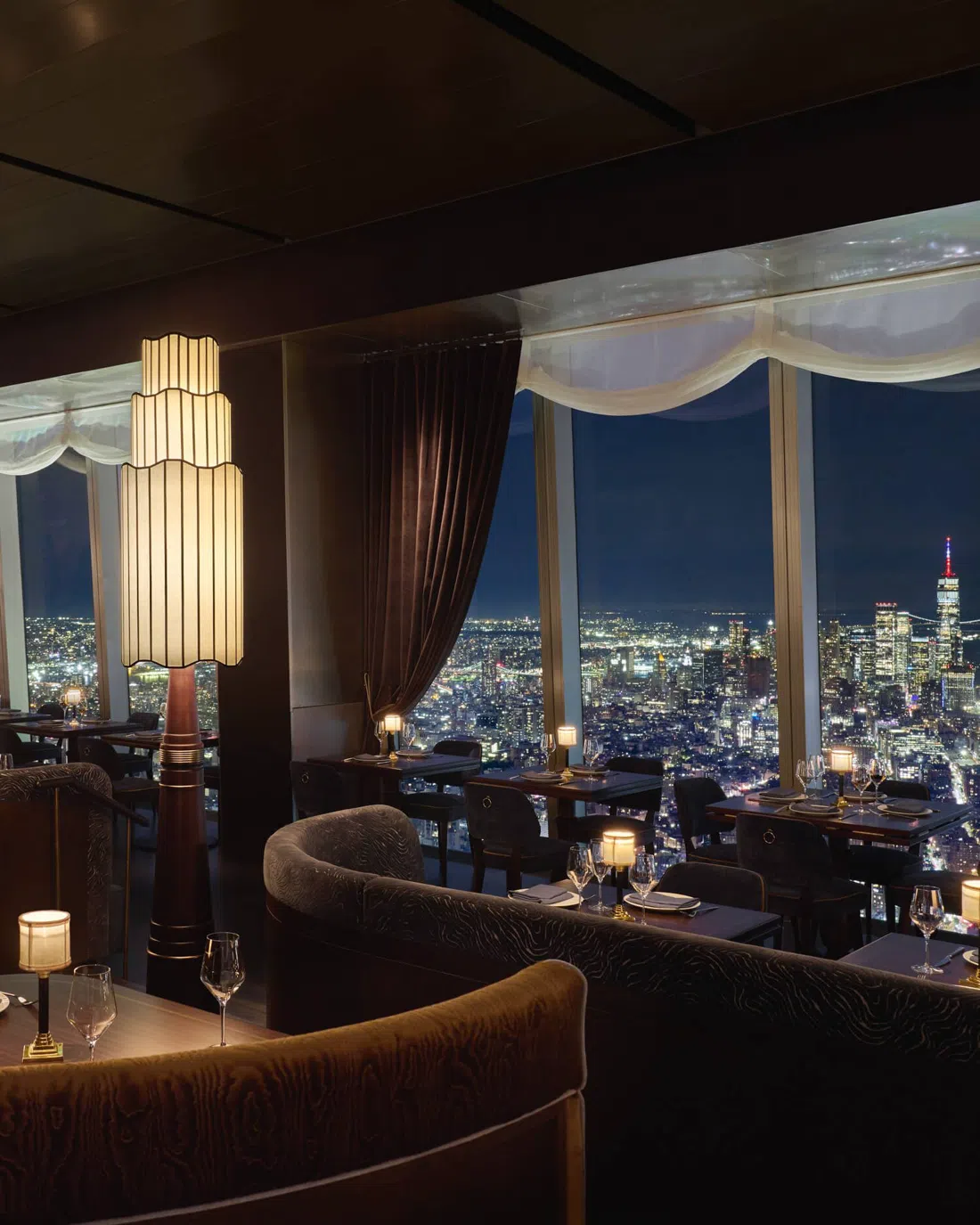
Peak with Priceless (Hudson Yards) is the highest proper restaurant in the western hemisphere, and that is the current name: booking under the old plain "Peak" will get you confused looks. Mains and menus land around $80 to $140 a head with cocktails from $26, and it is built for scale, with Tao Group events handling large parties and buyouts and the adjoining event floors taking hundreds. What makes it relevant here is physiological rather than culinary. Above the hundredth floor the air thins, the sway of the building becomes something you half-sense, and weather happens at eye level. Residents of towers like this describe that same thing, the strange quiet of being above the weather on a bad afternoon, rather than the view.
Sleeping on a resident's schedule
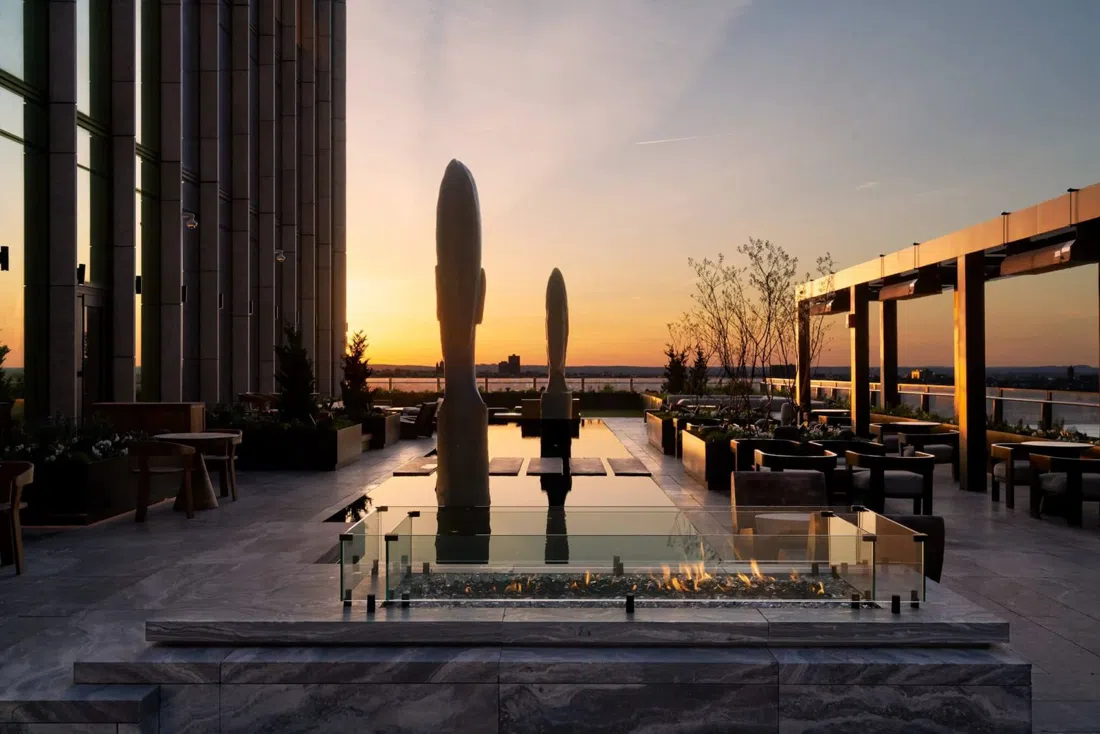
The most direct way to understand vertical life is to adopt its daily pattern for a few nights. At Equinox Hotel New York (Hudson Yards), check-in happens 25 storeys up, which sounds like a gimmick and is actually the whole experience: lift, sky lobby, second lift, home. There are 212 rooms including 48 suites, substantial meeting and event floors, and group rates through the sales team; expect $650 to $1,200 and upwards per night. After two days the double-lift journey stops registering, and that is the point at which you have started living here rather than visiting.
Park Hyatt New York (Billionaires' Row, Midtown) goes one step further by putting you inside the stack itself. The hotel occupies floors 3 to 30 of One57, with 94 condominiums above it rising to the ninetieth floor, so you share the lifts, the pool, the gym and the doormen with people who own a piece of the sky. It has 210 rooms, handles large groups and events, and the concierge will take multi-room bookings as a matter of course; rates start around $900 and climb past $1,500. If you only splurge once in New York, this is the splurge that teaches you something. For everything below that tier, or for a tower room at a sane price in a less photographed part of the grid, run a New York hotel search and filter for high floors rather than for brands.
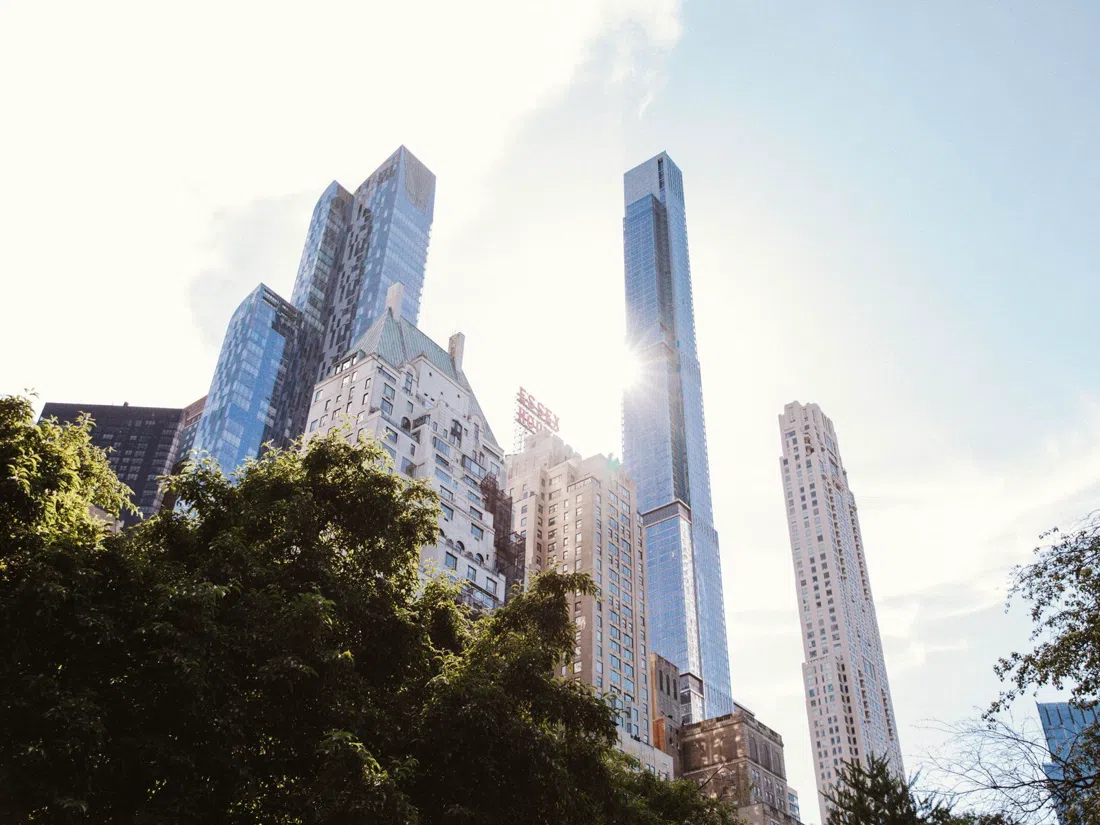
Two towers you can only stand underneath
Be honest with yourself about these two, because both are homes and neither sells tickets. The Copper (Murray Hill), formerly the American Copper Buildings, is residents and leasing appointments only, with rents from roughly $3,700 a month. Photograph it from the East River esplanade or the East 34th Street ferry landing, where you can see the skybridge slung between its two leaning towers. It holds the only swimming pool in New York you can walk underneath, and it is the image that launched a thousand "vertical city" headlines. Look at it from the pavement and keep walking.

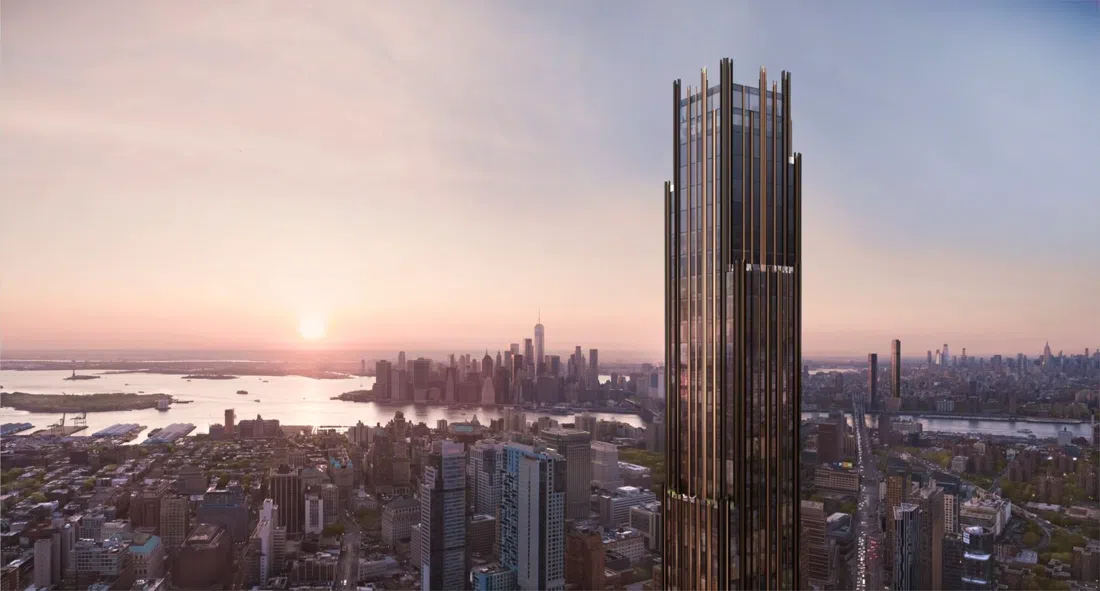
The Brooklyn Tower (Downtown Brooklyn) is the borough's first and only supertall, occupied since autumn 2023, and proof that the stacking has jumped the East River. There is no public interior access, and the retail podium is still being finished, so do not plan an evening around it; rents start near $3,900 a month. View it from DeKalb Avenue for the street-level shock of its black-and-bronze base, or better, walk the Manhattan Bridge pedestrian path at dusk, when it stands black against the Brooklyn sky with the Manhattan towers behind you. That walk is worth the twenty minutes.
The one observation deck that earns its ticket
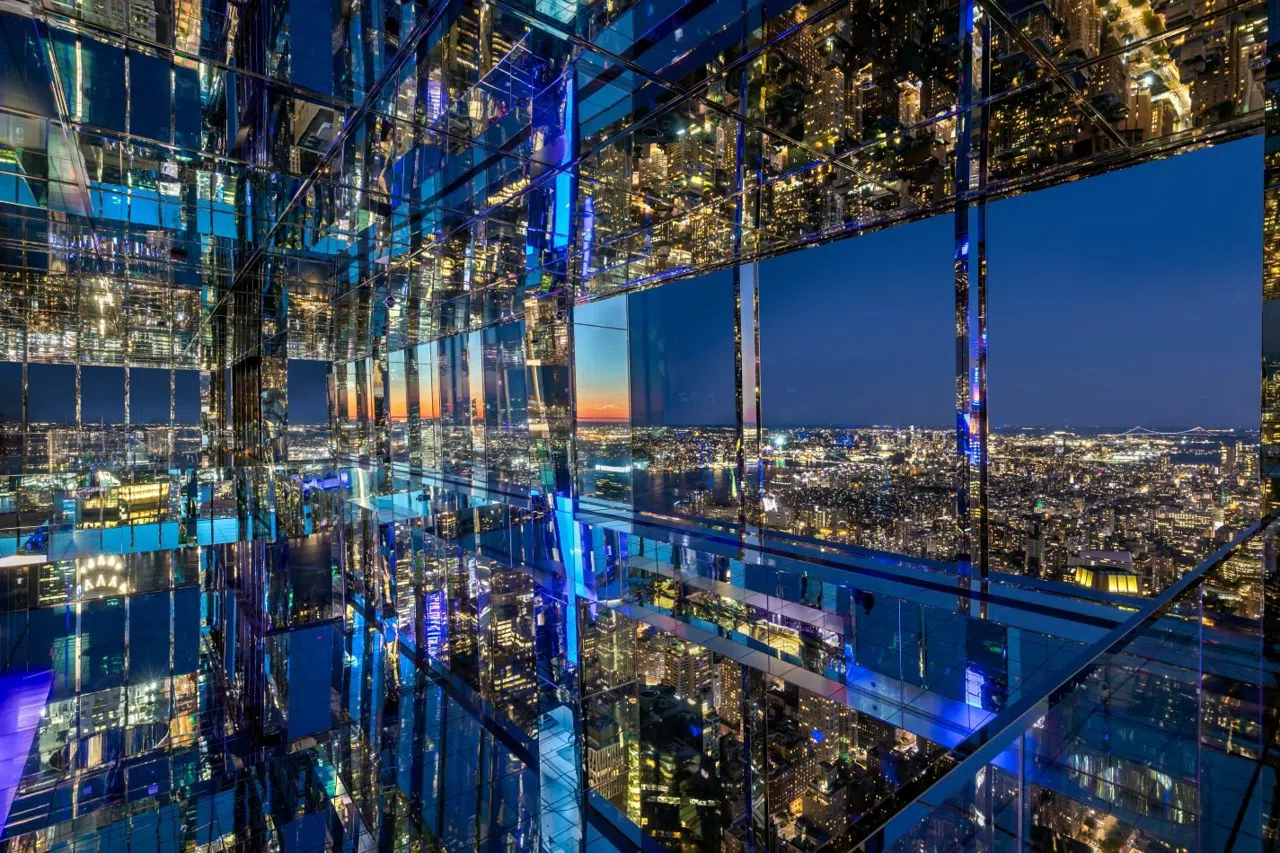
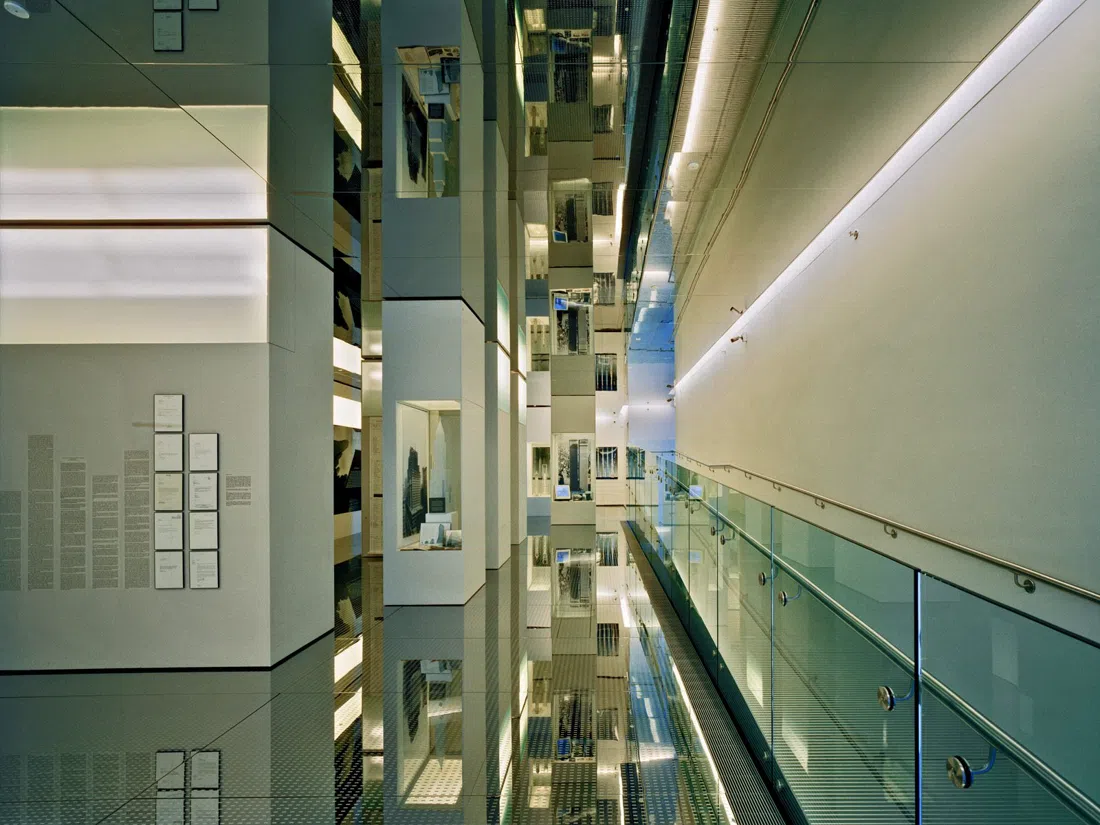
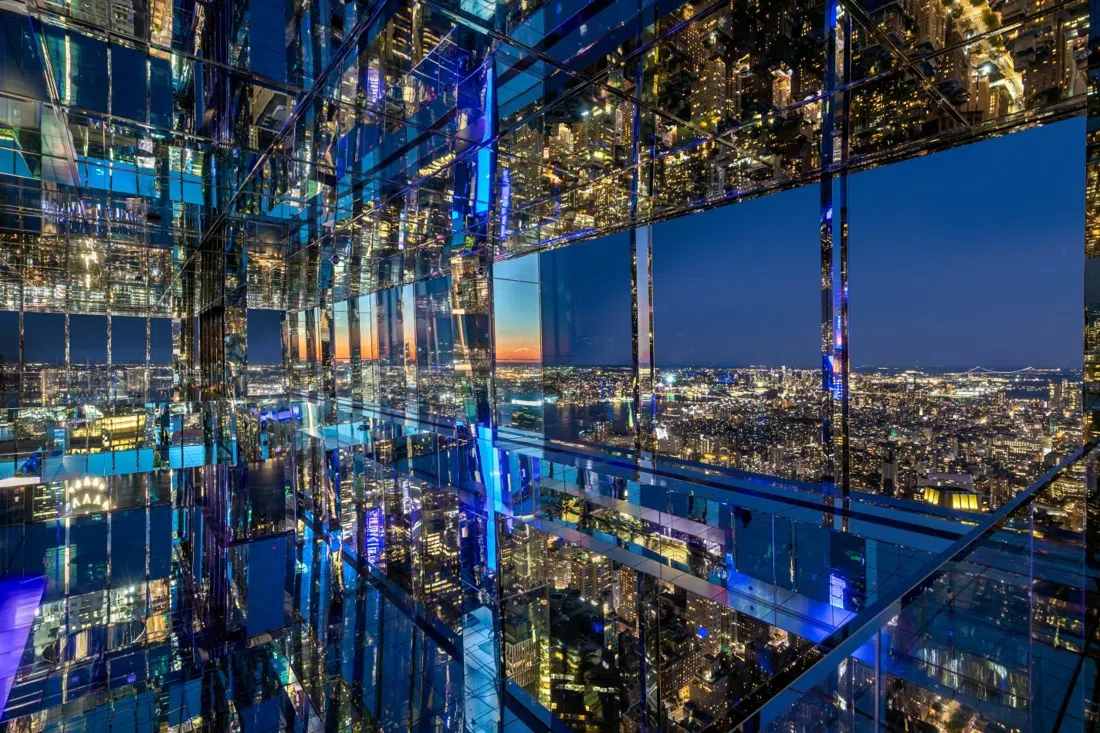
Most of the city's paid decks sell the identical photograph at an identical price, and you only need one. Take SUMMIT One Vanderbilt (Midtown East, directly above Grand Central), because its mirrored floors and glass boxes make visitors behave the way residents do, looking at the city sideways, in reflections and fragments, rather than straight down at it. General admission is $44, $58 with a cocktail, $68 for the Ascent glass elevator on the outside of the building, and $162 for a guided tour. Everything is timed entry, so book a slot in advance; there is a dedicated desk for parties of 15 or more and bundle pricing from four people up. Book the last slot before sunset on a weekday and you will catch the switch from daylight to lit windows, the moment the view turns from a landscape into several hundred thousand apartments.
Getting around, paying, and timing the week
Use OMNY by tapping a card or phone at any subway turnstile, bus reader or the tram gate. The tram takes OMNY or a MetroCard and no cash at all, and a single ride is $3.00. Almost everything above is reachable on foot plus one train: the downtown cluster of the museum, the Woolworth Building, Overstory and Manhatta sits inside a twenty-minute walk; Hudson Yards is a straight 7 train; Tudor City and the tram are both a short walk from Grand Central. Co-op City is the only genuine excursion at about 45 minutes each way, and it is best done on a weekday morning when the plazas are busy.
On timing, build the week around two fixed constraints and the rest falls into place: the Skyscraper Museum is Wednesday to Saturday only with last entry at 5.30, and The Skylark is weekdays only because weekends are private hire. Overstory rewards an early weekday arrival because it will not take your name. On money, a realistic day runs $3 for the tram, free for the parks and museum, $25 to $45 for the Woolworth tour, $44 and up for SUMMIT, $25 to $32 a cocktail in any of the high bars, and $100 to $150 a head for dinner at Manhatta, so a full day of the vertical city, drinks and one serious dinner included, lands somewhere around $250 a person. Carry a card rather than cash; tipping is 18 to 20 per cent at every bar and table here and is not optional in practice. Dress for the doors rather than the weather: Nubeluz enforces cocktail dress, Ophelia expects smart, and the rooftops are five to ten degrees colder and considerably windier than the street, so bring a layer even in summer. For the rest of the city at ground level, start from the New York guide.