
The High Line does what it was built to do — it moves forty thousand people a day through a strip of reclaimed railway, and on a Saturday afternoon it can feel less like a garden than a queue with plants either side. What almost none of those visitors know is that New York, underneath its own noise, has spent the better part of a century quietly building somewhere to hide from itself: a scatter of community plots, medieval-style cloisters, rooftop farms, and pocket parks small enough that most tourists walk straight past the gate. None of them will show up on a first-timer's list. All of them are better than the thing everyone came for.
The East Village and Nolita: Gardens Hiding in Plain Sight
Liz Christy Community Garden on the corner of Bowery and Houston in the East Village is where this entire movement started. In 1973, a group of guerrilla gardeners cleared a rubble-strewn lot and planted it without permission — the first act of what became New York's citywide community garden network, now numbering in the hundreds. The garden that resulted is small, dense, and unpolished in the best way: fruit trees, a pond, beehives, and volunteers who still run it exactly as a neighbourhood plot rather than a civic attraction. It keeps limited hours — Tuesday and Thursday evenings, weekend afternoons — which is precisely why it stays uncrowded. There's no formal tour and no booking system; if you turn up on an open day, find a volunteer at the gate and ask before wandering the beds. It suits a couple or a pair of friends far better than any kind of organised group, and it's free.
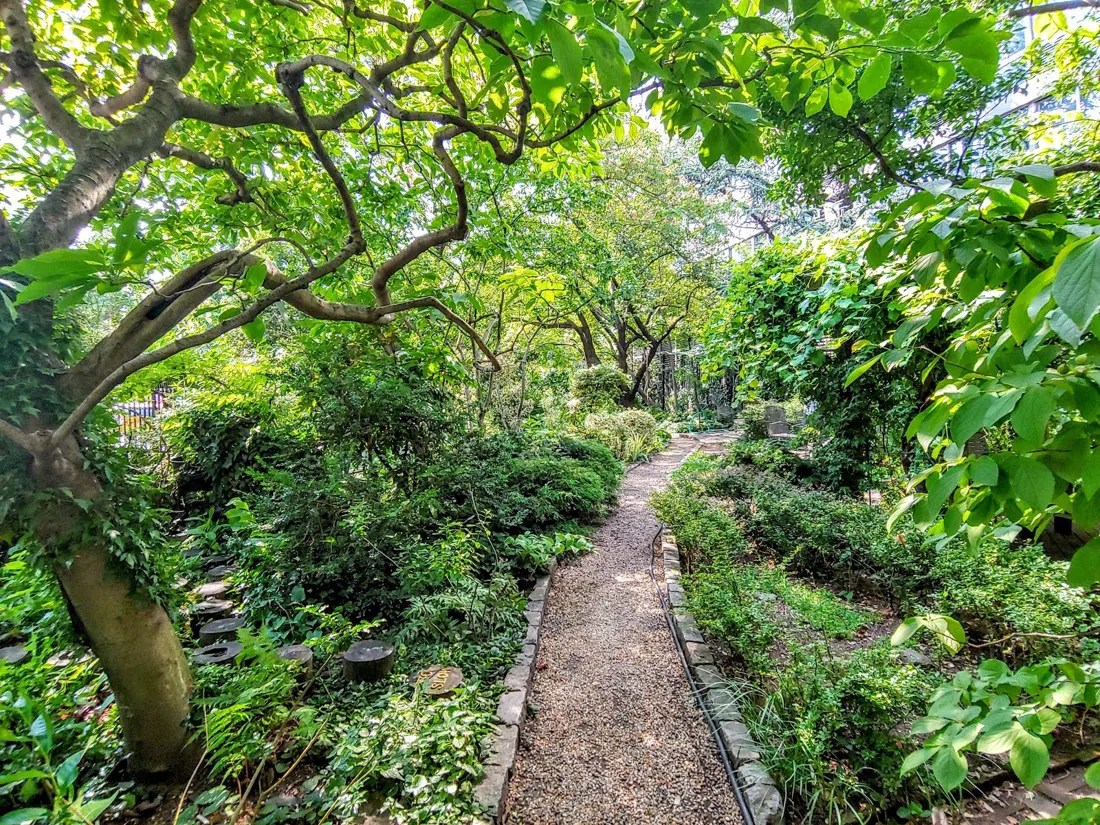
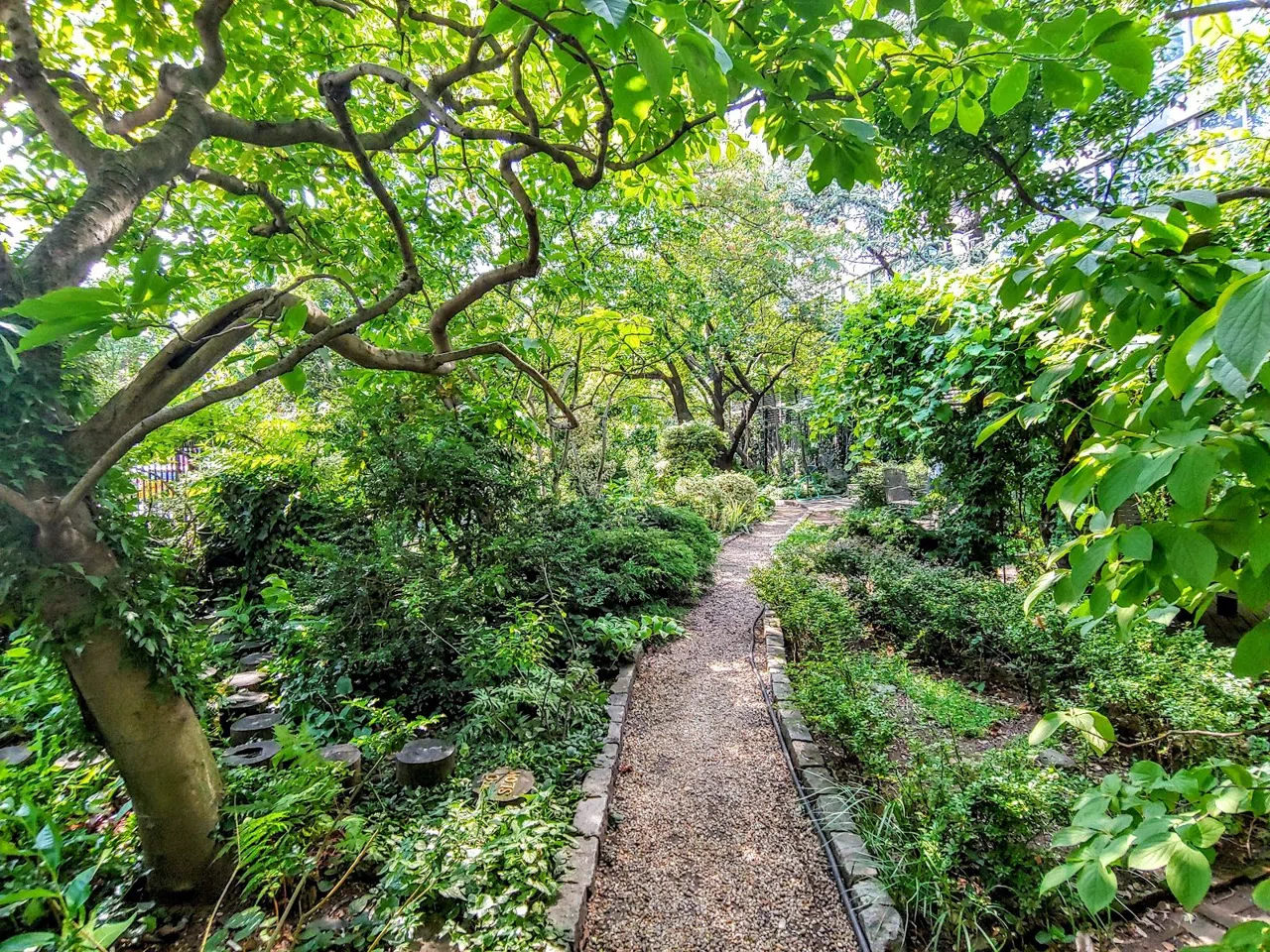
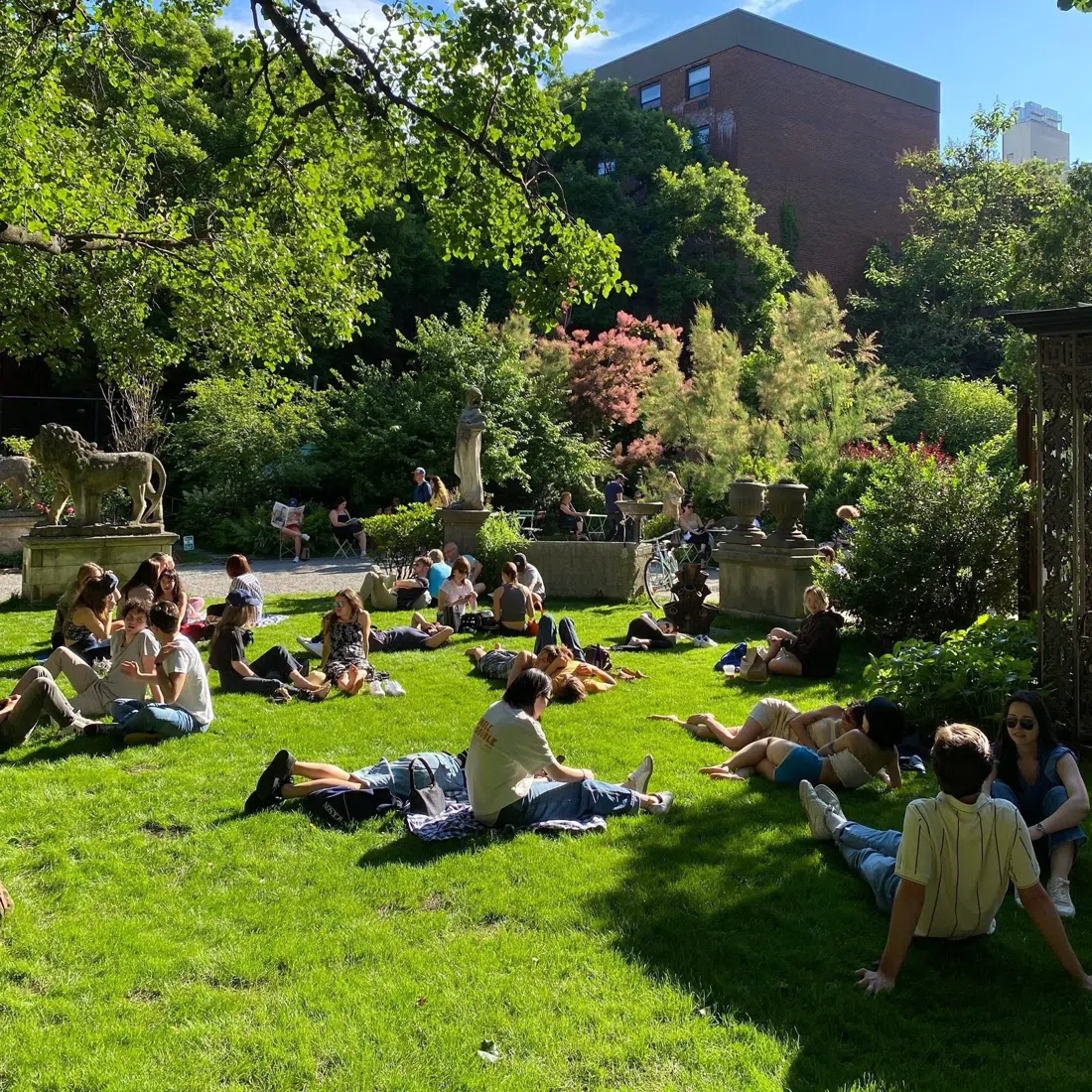
A fifteen-minute walk south into Nolita, Elizabeth Street Garden is a different kind of curiosity altogether — a sculpture garden built from reclaimed architectural salvage: classical statuary, stone urns, iron gates, arranged as if a demolition yard had been asked to become beautiful. It spent years fighting off redevelopment before a 2025 city preservation deal secured its future, which gives a 2026 visit an added layer of relief rather than nostalgia. It's free, welcomes groups through its public programming, and private group visits can be arranged via the garden's RSVP page — one of the few entries on this list that's genuinely set up to handle a party rather than just tolerate one.
Manhattan's Pocket Parks: The Ones the UN Crowd Walks Past
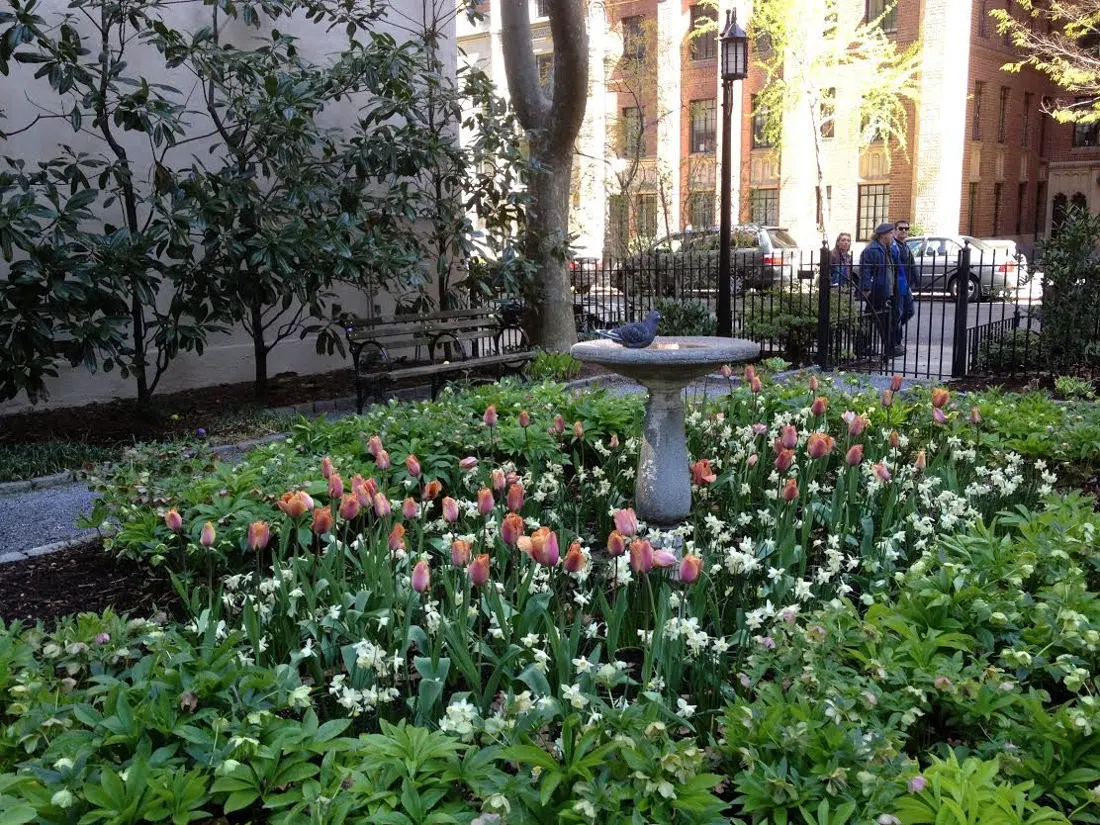
Tudor City Greens, just west of the United Nations in Midtown East, is the strangest entry on this list purely because of how it's built: a privately maintained, landmarked park constructed directly over East 42nd Street, reached by a staircase most pedestrians heading to the UN never think to climb. It's open, free, and fine for small groups, though it's worth remembering that people actually live in the apartment blocks ringing it, so this isn't the place for a loud picnic. The reward for the climb is silence that has no business existing two blocks from one of Manhattan's busiest crosstown streets.
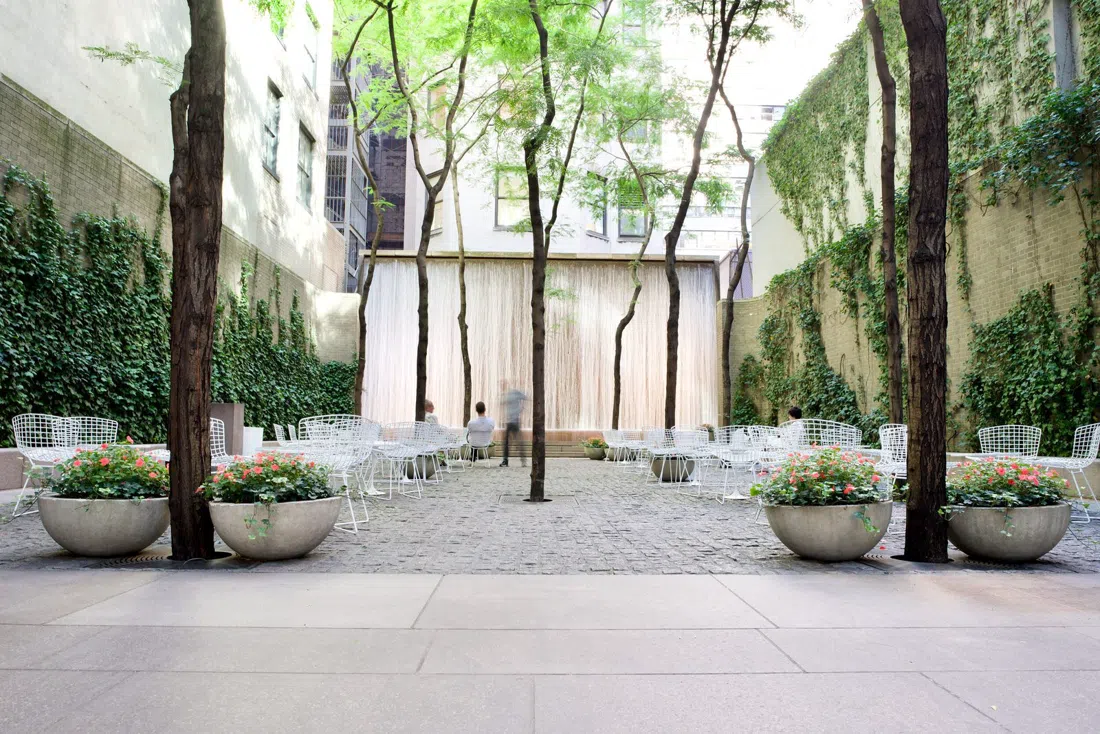
Paley Park, tucked between office towers on East 53rd Street, is smaller still — under twenty chairs, no formal booking, and absolutely not suited to anything resembling a group. What it does have is one of the best-engineered pieces of urban acoustic design anywhere in the city: a twenty-foot waterfall, running continuously since the park opened in 1967, that genuinely drowns out the traffic behind it. Sit at one of the little ivy-walled tables and the difference is almost physical — the street noise doesn't fade, it's simply masked. It's free and it's a couple's spot, not a tour stop.
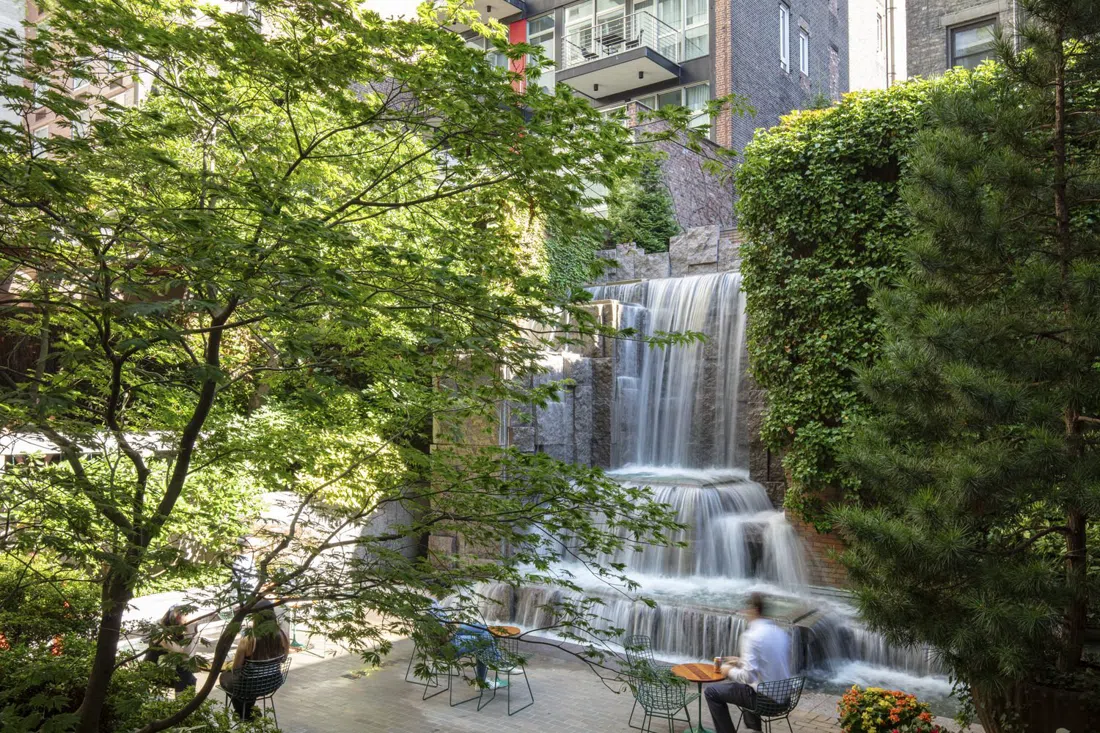
A short walk east, Greenacre Park on East 51st Street is Paley's less-visited sibling — same idea, taller waterfall, similarly tight seating that rules out formal groups. The catch is that it's seasonal, open April through December, so a winter visit means checking before you go rather than assuming. Both parks are free, and both are proof that New York's best green spaces are sometimes the size of a living room.
Uptown: The Cloisters and Central Park's Forgotten North
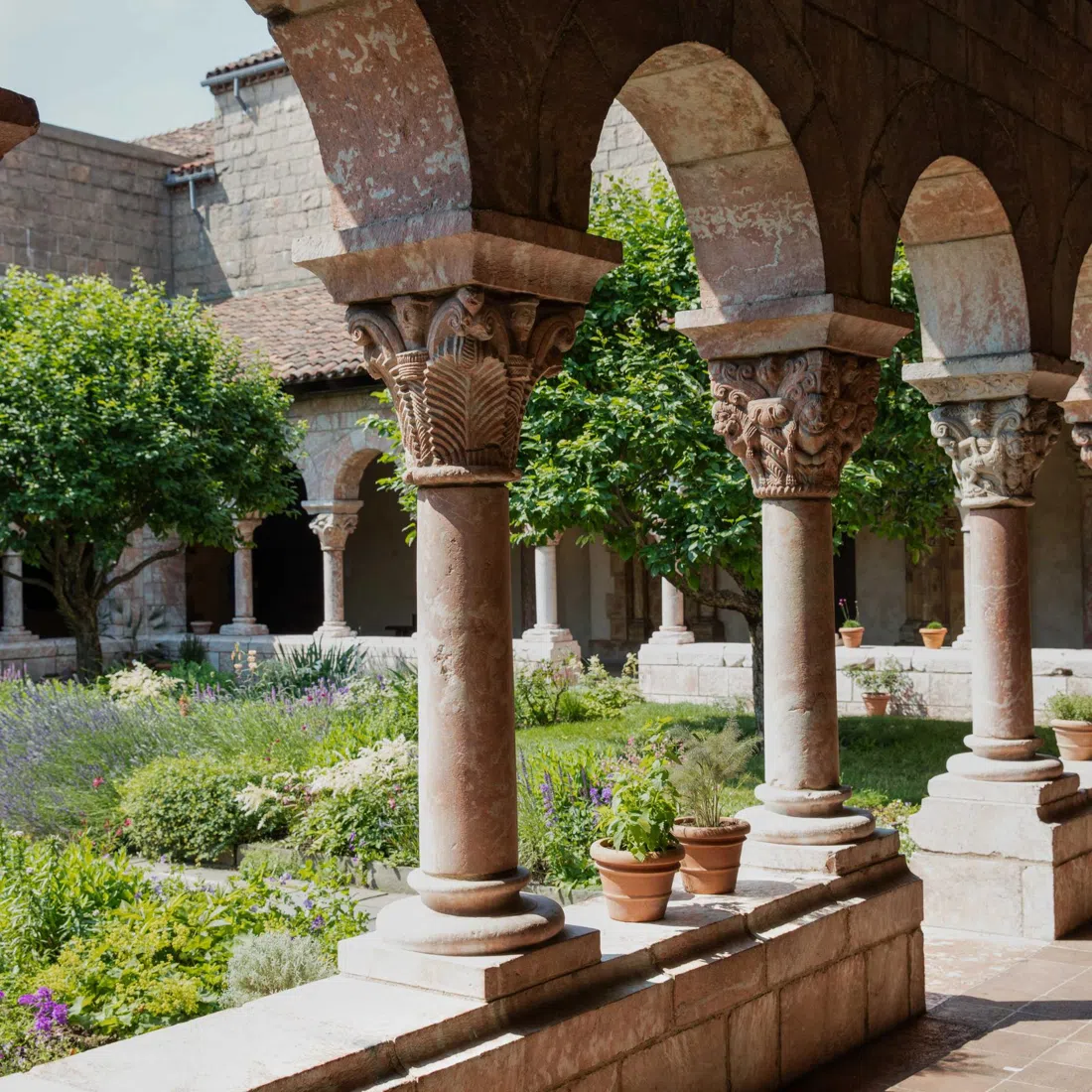
At the northern tip of Manhattan, The Cloisters Gardens in Fort Tryon Park hold three separate medieval-style gardens, each planted from period manuscripts and monastic records by the Met's horticulturists — not a recreation for effect, but a genuine attempt at historical accuracy in what grows where. The museum building itself is assembled from fragments of actual medieval European cloisters, so the gardens read as an extension of the architecture rather than a landscaped afterthought. General admission is $30 (New York tri-state residents can pay what they wish), and it covers most smaller parties without any need to book ahead; groups of ten or more should go through the Met's dedicated group-visit process instead of turning up cold. It's a fifteen-minute ride from Midtown on the A train to 190th Street, and the walk up through Fort Tryon Park afterward is worth doing slowly.
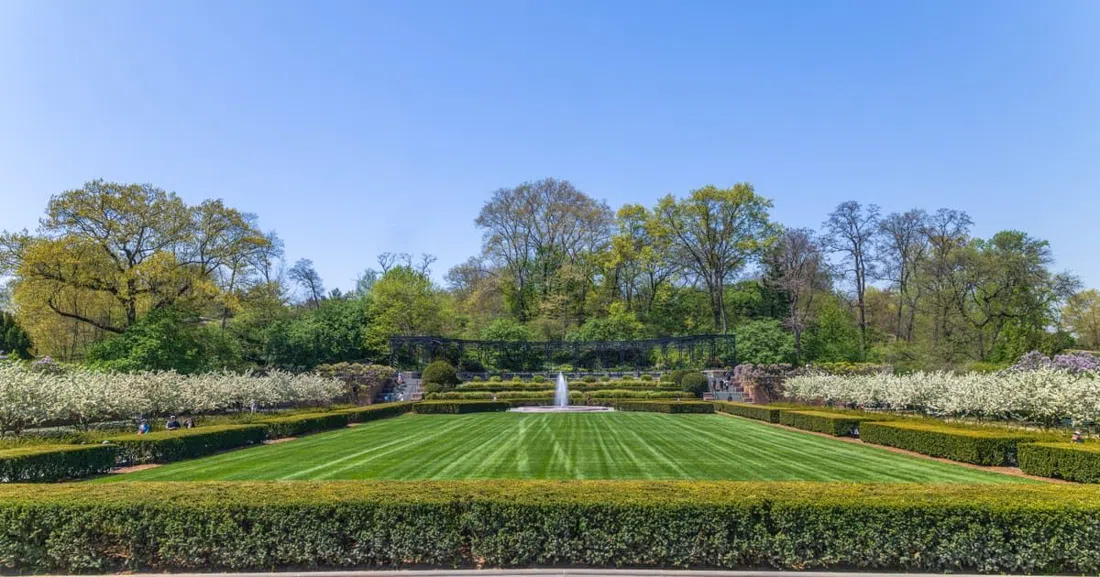
Back down at 105th Street, Conservatory Garden is Central Park's only formal garden and, by a wide margin, its quietest corner — the vast majority of visitors never make it this far north past the reservoir. It's laid out in three distinct styles (Italian, French, English), it's free, open to groups, and the one thing worth knowing before you go is that it's a favourite backdrop for wedding photography, so don't be surprised to share the wisteria pergola with a bridal party on a Saturday.
Brooklyn's Green Underground
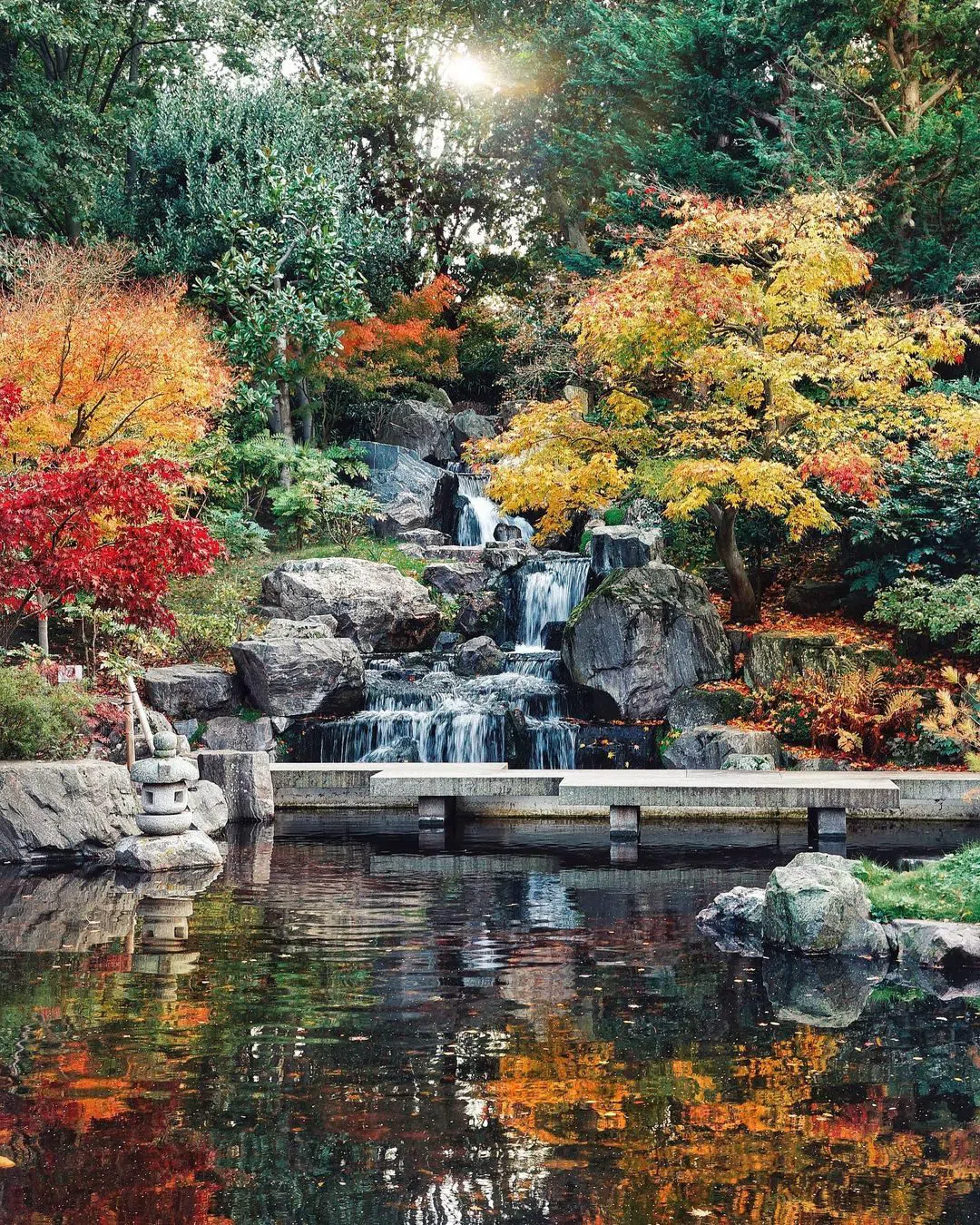
Inside the Japanese Hill-and-Pond Garden at the Brooklyn Botanic Garden, the trick is timing rather than location. Everyone knows the BBG for Sakura Matsuri and the cherry blossom crowds it brings each spring; almost nobody thinks to visit this century-old garden — built around a pond with stone lanterns and a torii gate — in autumn color or under winter snow, when it's genuinely contemplative rather than photographed to death. General admission runs about $18, with discounts for New York City residents and free entry on some weekday mornings; groups of fifteen or more need to go through BBG's group-visit booking form rather than just showing up.
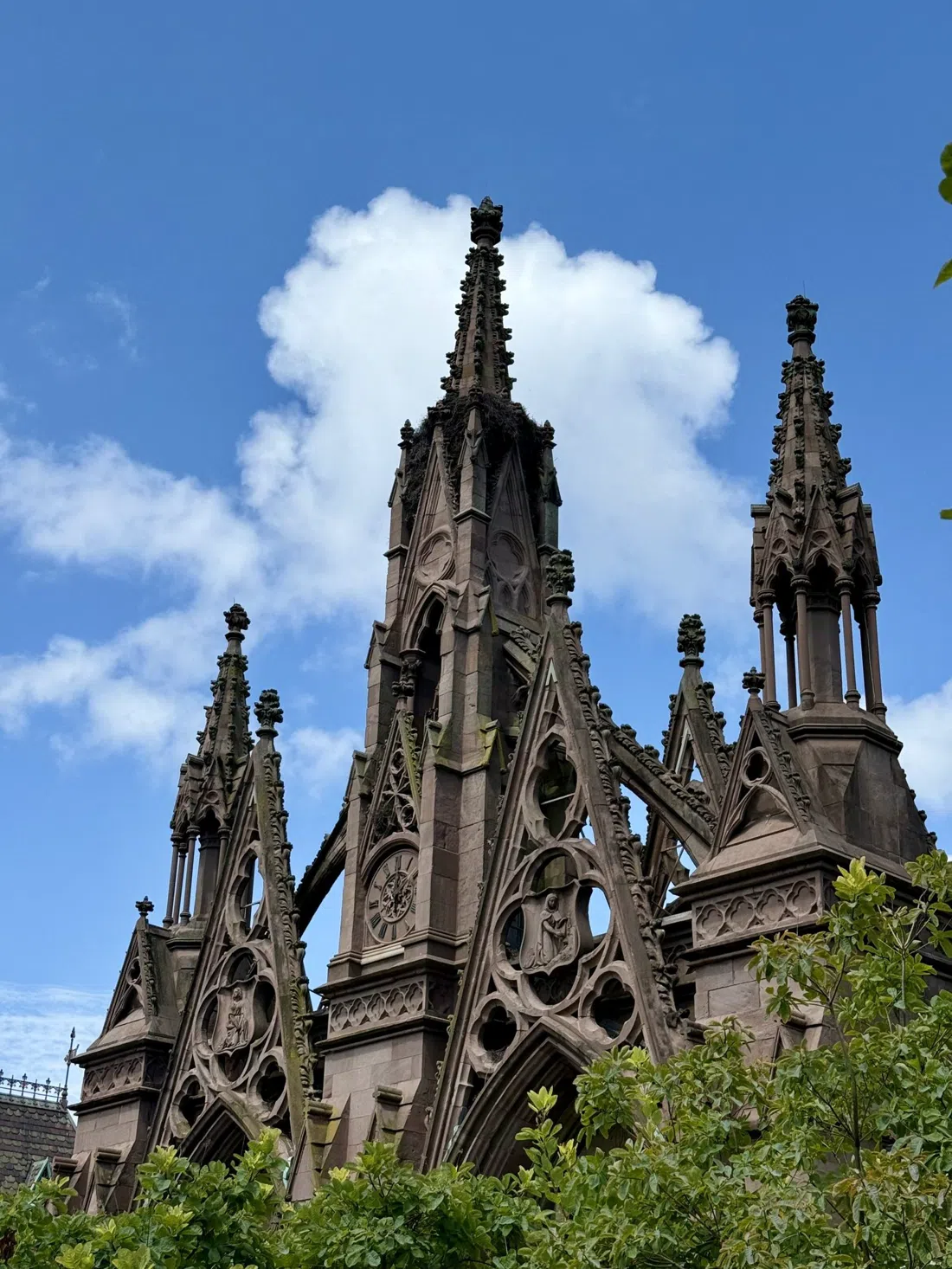
Further into Brooklyn, Green-Wood Cemetery isn't a garden in the technical sense, but its 478 landscaped acres predate Central Park itself and were designed with the same Romantic-era intent — rolling hills, ponds, and sightlines meant to be walked, not just visited for a grave. Entry is free; independent guides can bring groups in for a $5-per-person fee, and the cemetery's own tours start around $20. The new Green-House visitor center, which opened in April 2026, has made the place noticeably easier to navigate — a genuine improvement rather than a marketing line, since the grounds are large enough to get pleasantly lost in without it.
Queens by the Water: Sculpture, Sunsets, and a Master's Garden
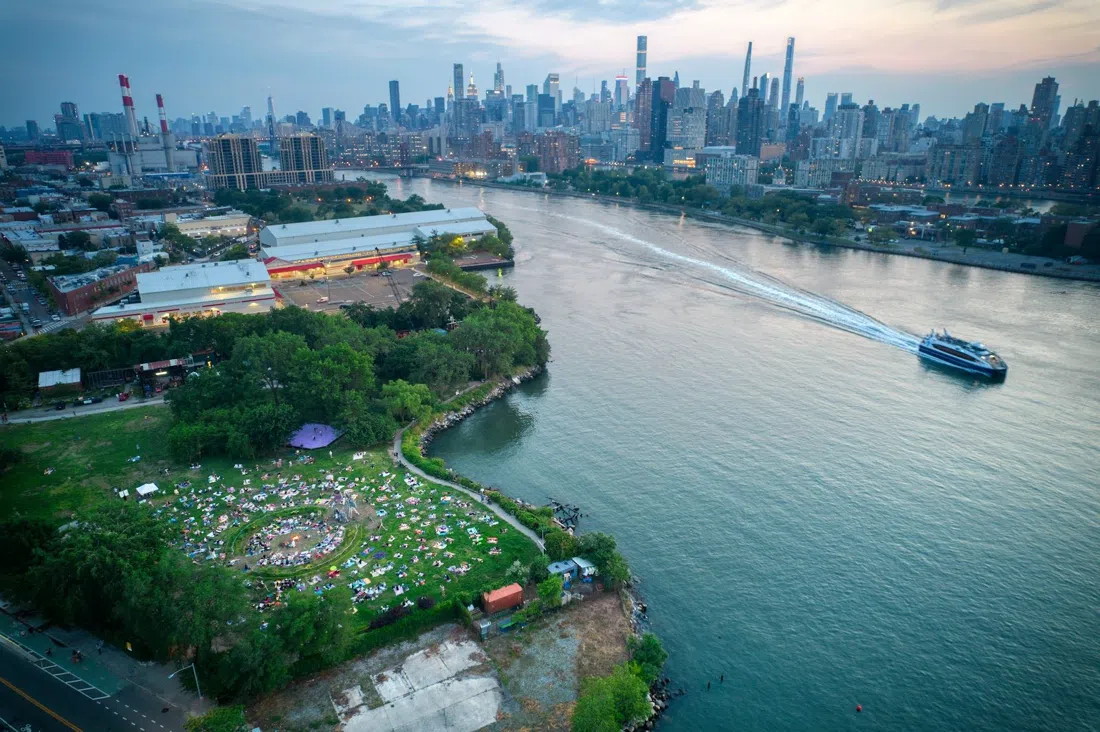
Socrates Sculpture Park in Long Island City has one of the more unlikely origin stories on this list — a former illegal dumping site and landfill on the East River, reclaimed by local artists in the 1980s and now the only park in New York built specifically to exhibit large-scale sculpture. It's free, fully open, and welcomes groups without restriction, though it's worth checking the events calendar first since installations and public programs can crowd the schedule. Come for late afternoon and you get one of the best skyline views in the city that isn't in Manhattan, watching the sun go down behind the towers across the water.
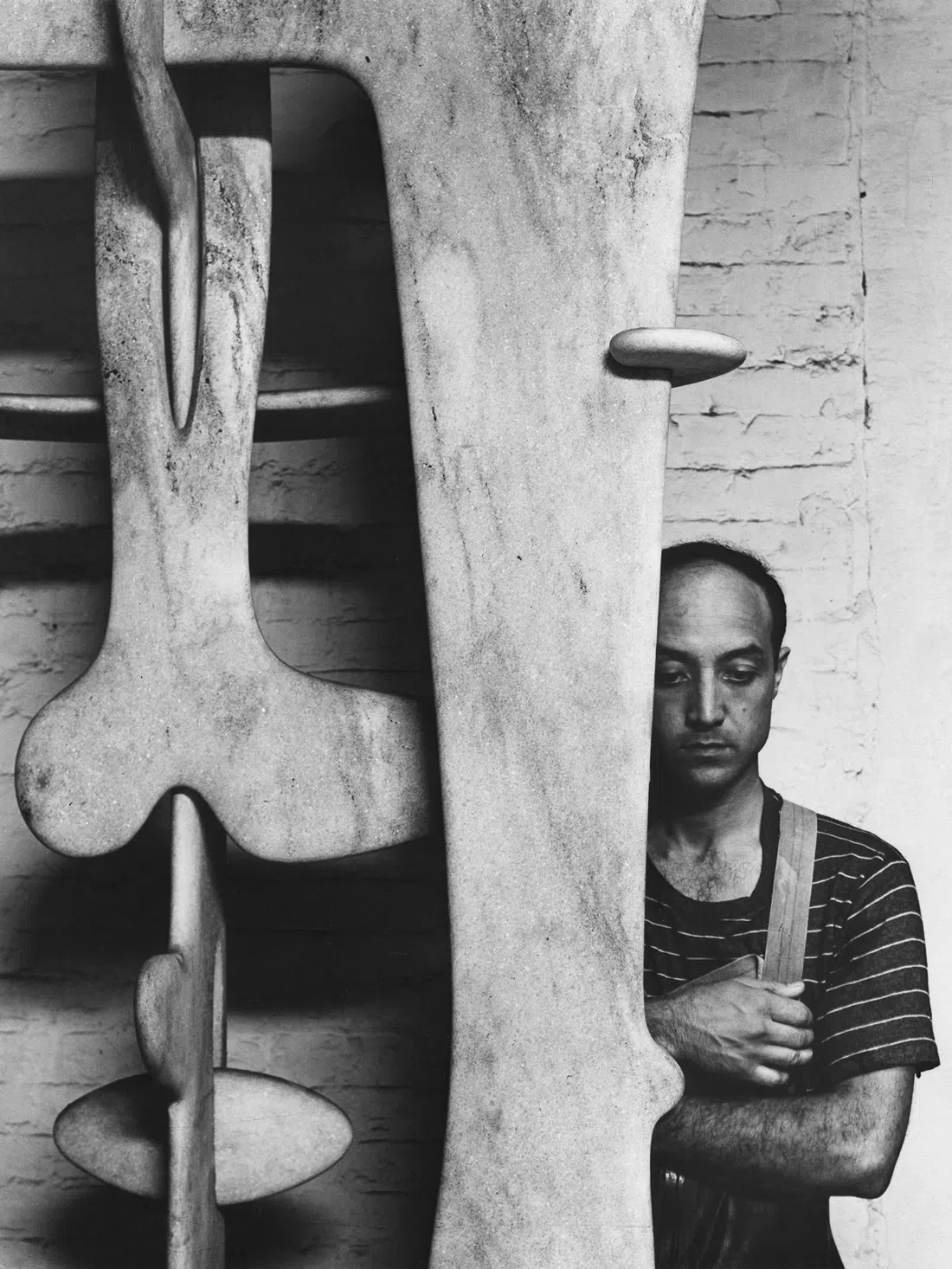
A few minutes' walk away, The Noguchi Museum is sculptor Isamu Noguchi's own building and garden, designed by the artist himself as a single integrated space rather than a museum with a garden attached. It's one of the most genuinely meditative small museum spaces in the city — deliberately undervisited compared to the big Manhattan institutions. General admission is $10; groups of ten or more should book ahead, though educator-led tours run Wednesday through Sunday and are open to any visitor who turns up.
Greenpoint's Secret: A Working Farm on a Roof
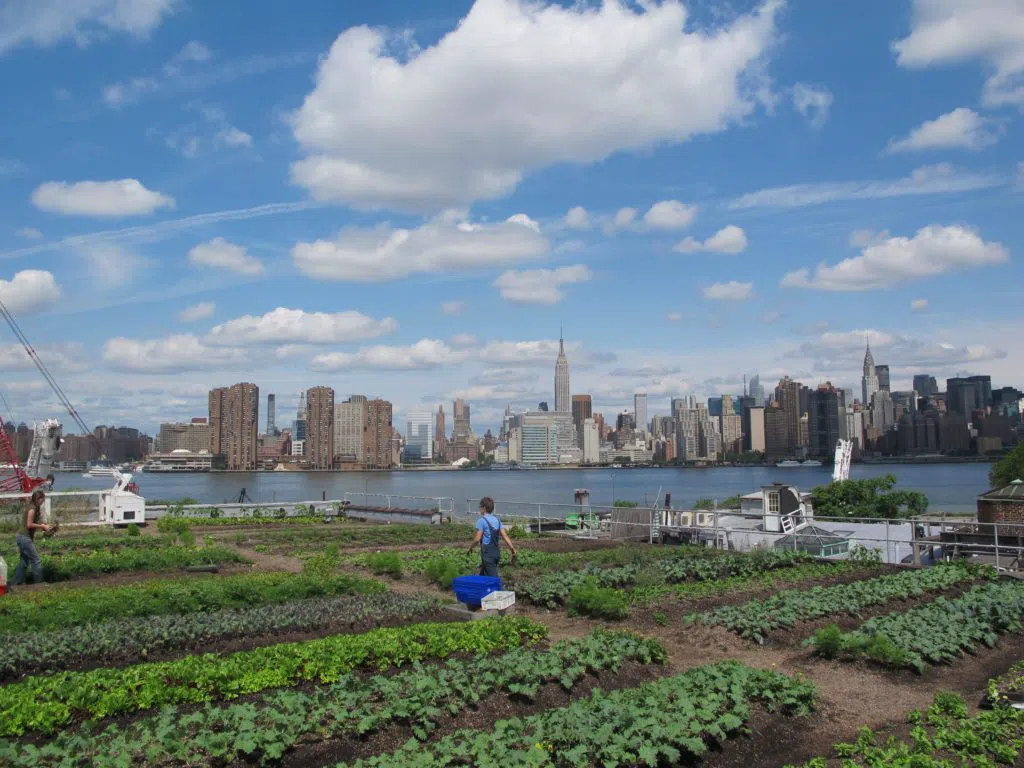
Eagle Street Rooftop Farm in Greenpoint sits on top of a warehouse roof overlooking the East River and Manhattan skyline, and it is exactly what it sounds like — a working farm, not a themed installation. It's seasonal, running April through October, and access is limited to posted volunteer days and the last-Sunday market; there's no daily open-door policy here, so check @rooftopfarmer on Instagram before making the trip out. Both the volunteer days and the market are informal, drop-in affairs and free to attend; larger groups should email ahead simply because the roof space itself is limited. It's an odd, satisfying thing to stand among rows of vegetables with the Manhattan skyline behind them, and a useful reminder that this city still grows food, even if it has to do it eleven storeys up.
Across the River: Wave Hill's View
Furthest from Midtown but arguably the most rewarding, Wave Hill in Riverdale, the Bronx, has the single best river view of any garden in New York — a public garden set on a bluff above the Hudson, roughly thirty minutes from Midtown by train and shuttle, that genuinely feels like leaving the city rather than just visiting a park within it. Admission is around $10, with free entry on Thursdays for individual visitors — though that free day specifically excludes organised groups, who need to book an advance group-visit reservation regardless of the day. Go for the pergola overlook at golden hour and you'll understand why people who live in the city keep this one to themselves.
Planning the Trip: Transport, Cash, and Timing
These thirteen spots are spread across four boroughs, so treat this less as a single day's itinerary and more as a set of detours to slot between the things already on your list. The Manhattan pocket parks (Paley, Greenacre, Tudor City) sit within walking distance of each other in Midtown East and can be strung together in an hour. The Cloisters and Conservatory Garden both sit at the top end of Manhattan and pair well with a single uptown afternoon via the A or 6 train. Long Island City's Socrates Sculpture Park and Noguchi Museum are a short walk apart and reachable by the N/W train, making them an easy half-day from Manhattan. Wave Hill, Green-Wood, and the Brooklyn Botanic Garden each deserve their own trip rather than a rushed add-on — budget half a day for any of them once transit time is factored in.
Most of what's on this list is free or close to it: the community gardens, pocket parks, Socrates Sculpture Park, and Eagle Street Rooftop Farm cost nothing. Where there's a fee — the Cloisters ($30 via general Met admission), Brooklyn Botanic Garden (~$18), the Noguchi Museum ($10), Wave Hill (~$10), Green-Wood's guided tours (~$20) — it's modest by New York standards and worth paying for what you get. Carry a card; nearly everything on this list, ticketed or not, takes contactless payment, though the informal volunteer days at Eagle Street and Liz Christy are cash-optional since nothing is actually being sold.
Timing matters more here than almost anywhere else in the city. Eagle Street Rooftop Farm and Greenacre Park are seasonal — April through October and April through December respectively — so a winter visit needs checking in advance. Liz Christy keeps genuinely limited hours (Tuesday and Thursday evenings, weekend afternoons), and the Japanese Hill-and-Pond Garden is worth deliberately avoiding during Sakura Matsuri if quiet is the actual goal, not the blossoms. If you're staying centrally and building a base for these detours, a New York hotel search around Midtown East puts you within walking distance of three pocket parks before you've even opened the subway map. For everything else the city does well beyond its gardens, the full New York guide is the place to start.