
For three days in the middle of October, several hundred doors in this city that are normally locked, badged, leased to somebody else or simply not yours swing open, and New York spends a weekend explaining itself out loud. Open House New York runs Friday 16 to Sunday 18 October 2026, and almost all of it costs nothing. The weekend splits in two: a large majority of sites you can walk into with no booking at all, and a small ticketed minority that vanishes within minutes of release on 2 October. Plan the first half properly and treat the second as luck, and you will have a far better weekend than the person refreshing a reservation page at nine in the morning.
How the weekend actually works
OHNY is citywide, across all five boroughs, which is the first practical fact to absorb. There is no central venue, no wristband, no hub to queue at. The programme goes live in early October as a map, and the listings divide into open-access sites, where you turn up during the stated hours, walk in and talk to whoever is standing at the door, and reservation sites, where capacity is tight enough that the organisers have to ration it. The ticketed ones open on 2 October. Some are gone in under five minutes, and no amount of planning changes that.
The mistake visitors make is building an itinerary around a ticket they do not have yet. Build it around geography instead. Pick one borough per day, or better, one corridor per day, and let the open-access sites form the spine. October in New York is the year's best walking weather, dry light and low sun and temperatures that let you stay outside from ten until dark, and the weekend rewards people who plan around a subway line rather than a wish list. If a reservation lands in your lap on 2 October, slot it in and rearrange around it.
One piece of negative advice, since the weekend is short: skip the paid observation decks entirely on these three days. They are open every other day of the year, they cost real money, and the point of OHNY is that it puts you inside buildings you cannot otherwise enter rather than on top of one looking at the others. Save the view for a Tuesday.
The two tickets everybody wants
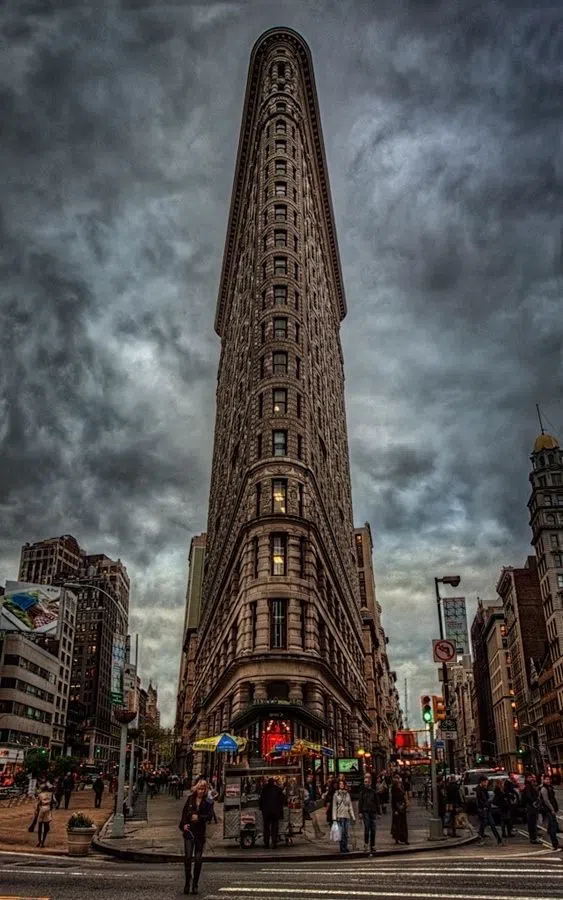
The Flatiron Building (Flatiron District, Manhattan) is the listing that breaks the reservation system every year it appears. The condo conversion has kept the interior off-limits to the public for years, so the OHNY ticket is the only way in at any price. Access is ticketed strictly for capacity: one ticket per person, no walk-ups, no group allocation, released on 2 October. Understand what that means for a party of four. You are not booking a slot for four; you are four people each trying to win the same lottery in the same minute, and the likely outcome is that one of you gets in. If it matters enough, agree in advance who goes and what the rest of you do for that hour.
620 Loft & Garden at Rockefeller Center (Midtown) is the other one. It is a private hire venue for the rest of the year, with a price list running from $3,000 to $27,500, which tells you how rarely a member of the public stands on it, and during OHNY it opens ticketed, with the same tight capacity and the same individual-booking reality. What you get for winning is unusual: a formal garden set at a height that puts you level with the spires of St Patrick's across the street rather than looking down on them. Midtown from that elevation stops being a canyon and becomes a set of objects you can read. Worth trying for, but not worth structuring three days around.
Sunset Park and the industrial waterfront
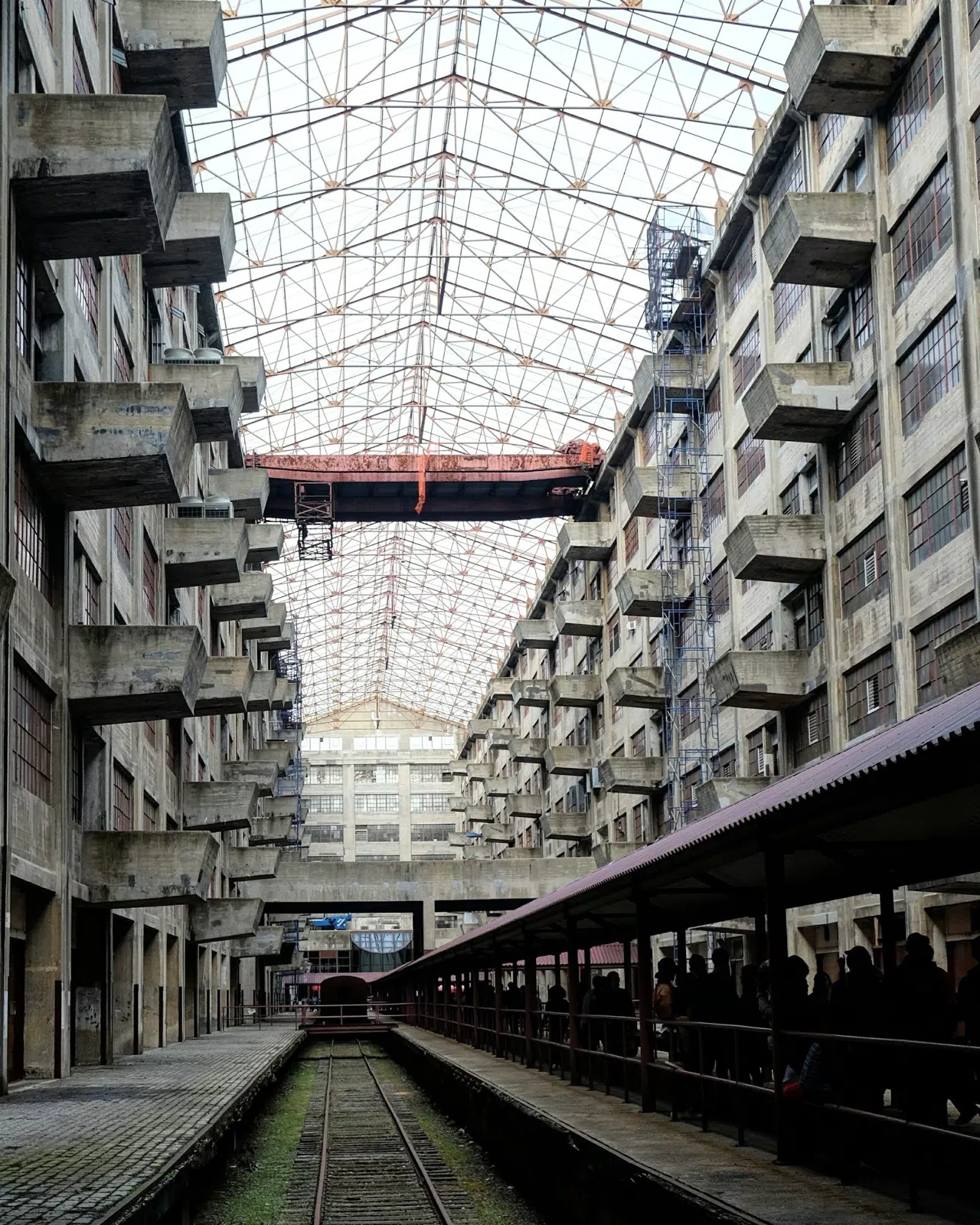
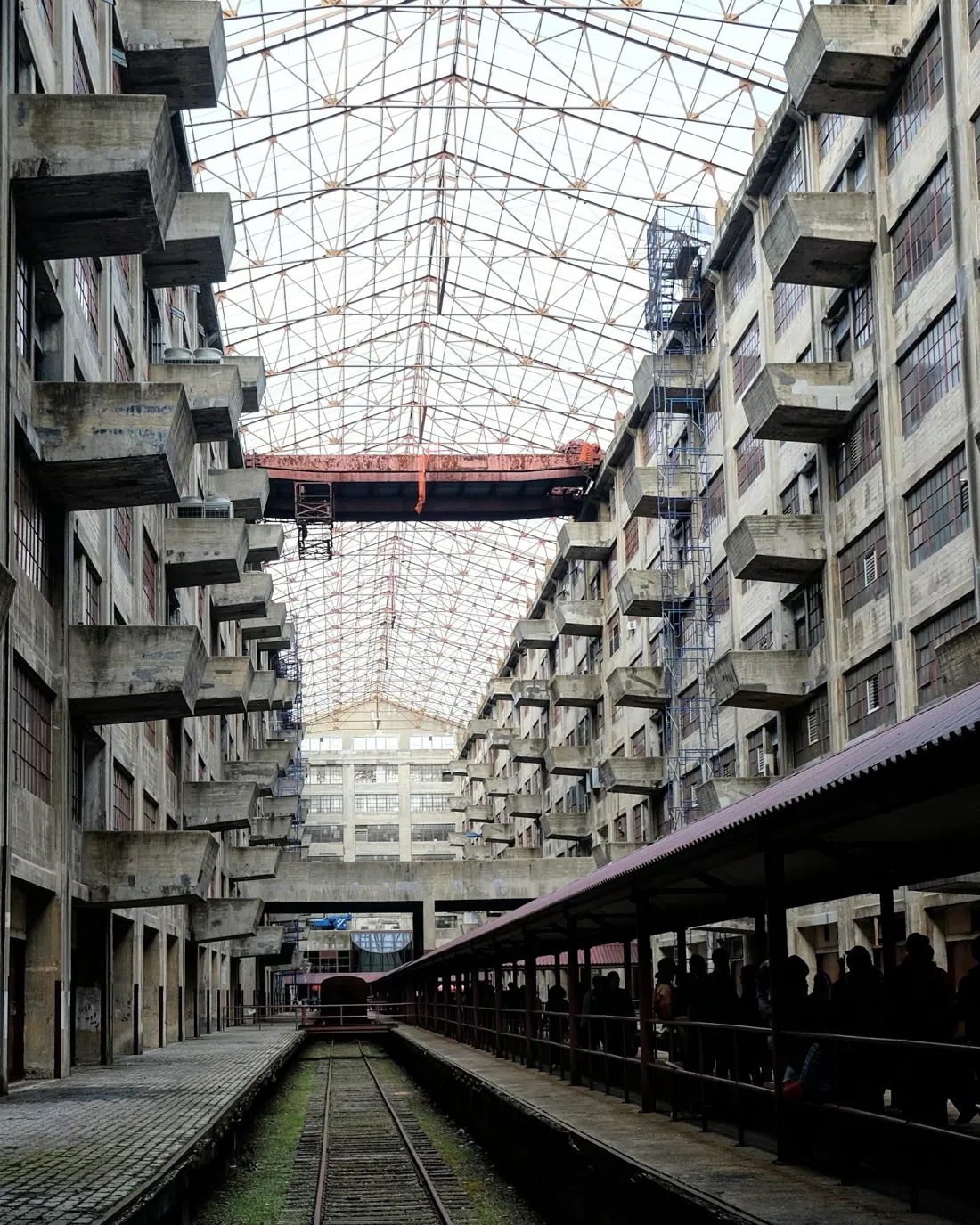
If you only make one journey for OHNY, make it this one. Brooklyn Army Terminal (Sunset Park, Brooklyn) is the most photogenic industrial interior in the city, a Cass Gilbert-designed military supply complex from the First World War, built so that railcars could run directly into the building, with a glazed atrium where the loading balconies step back floor by floor in a stagger that looks deliberate and sculptural and was purely about getting cargo off a train. The public spaces are open 365 days a year, sunrise to sunset, no booking, free. That is worth repeating: this is not an OHNY-only site. It is an OHNY 2026 listing, so the weekend brings extra programming and staff who will talk to you, but you can walk in on any ordinary Thursday. Guided history tours run with Turnstile Tours at around $30 per person, and organised groups are taken by arrangement rather than by turning up en masse.
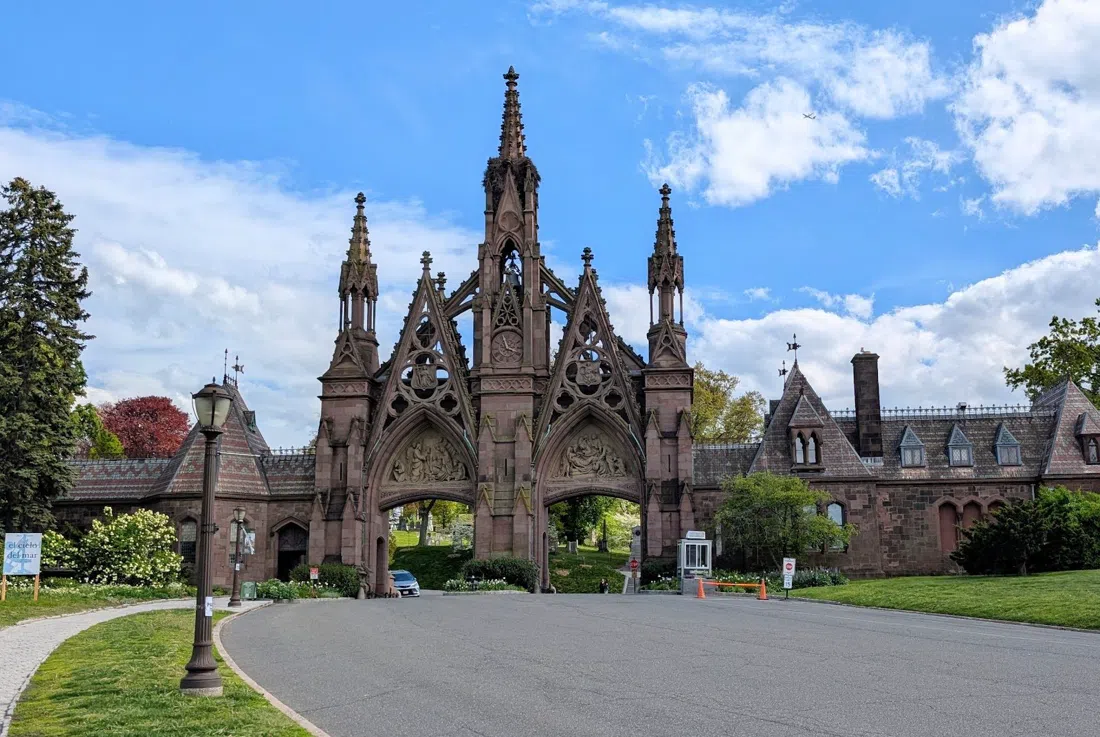
The same R line that gets you to the terminal gets you to Green-Wood Cemetery (Greenwood Heights, Brooklyn) fifteen stops' worth of neighbourhood earlier, and the two together make a full, unhurried day. Green-Wood is a 478-acre landscape from the 1830s that predates Central Park and was, for a while, the second most visited attraction in the country after Niagara: a rural cemetery in the full nineteenth-century sense, designed to be walked in rather than merely buried in. Entry is free. The specific draw is the 1850s catacombs, thirty vaults cut into a hillside, reachable only on a guided tour, and the October light on Battle Hill, the highest natural point in Brooklyn, with a straight view to the harbour, is the best the year produces. This is also the single best option on this list for a group: private walking tours take up to thirty people at $800 for a weekend date, with $10 per head above that, and private trolley tours take up to forty. Book at least two weeks ahead. Scheduled trolley tours for individuals run roughly $25 to $30 per person.
The Navy Yard and the refinery at Domino
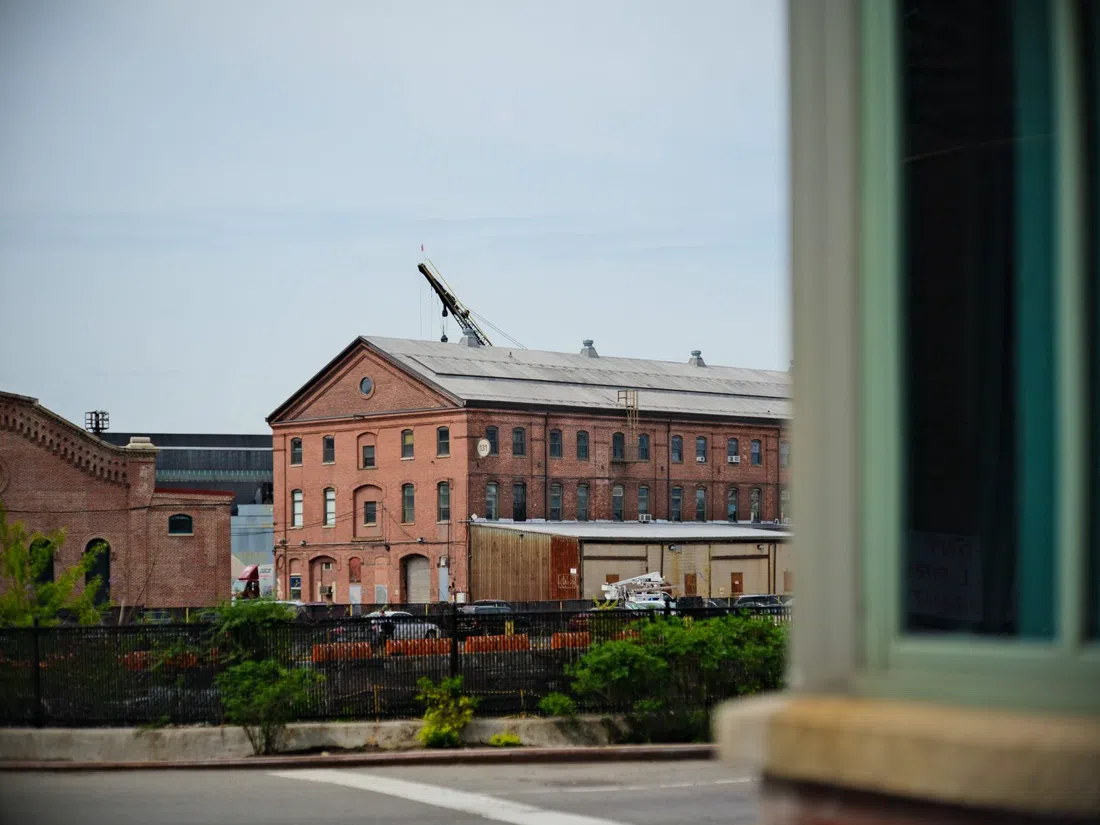
Brooklyn Navy Yard (off Flushing Avenue, Brooklyn) shows how New York recycles its industry more plainly than anywhere else in the city: a naval shipbuilding complex that built the Missouri, closed in 1966, and now houses several hundred manufacturers, film stages and workshops behind its own security perimeter. The yard is a secured campus, and that catches visitors out every year. The ground floor of Building 77 is freely open to the public from Flushing Avenue, and beyond that you need to be on a booked Turnstile Tours walk, which does take private groups. People who show up confidently at a security gate with a printout get turned away, politely and completely. Go to Building 77. Meet your guide there.
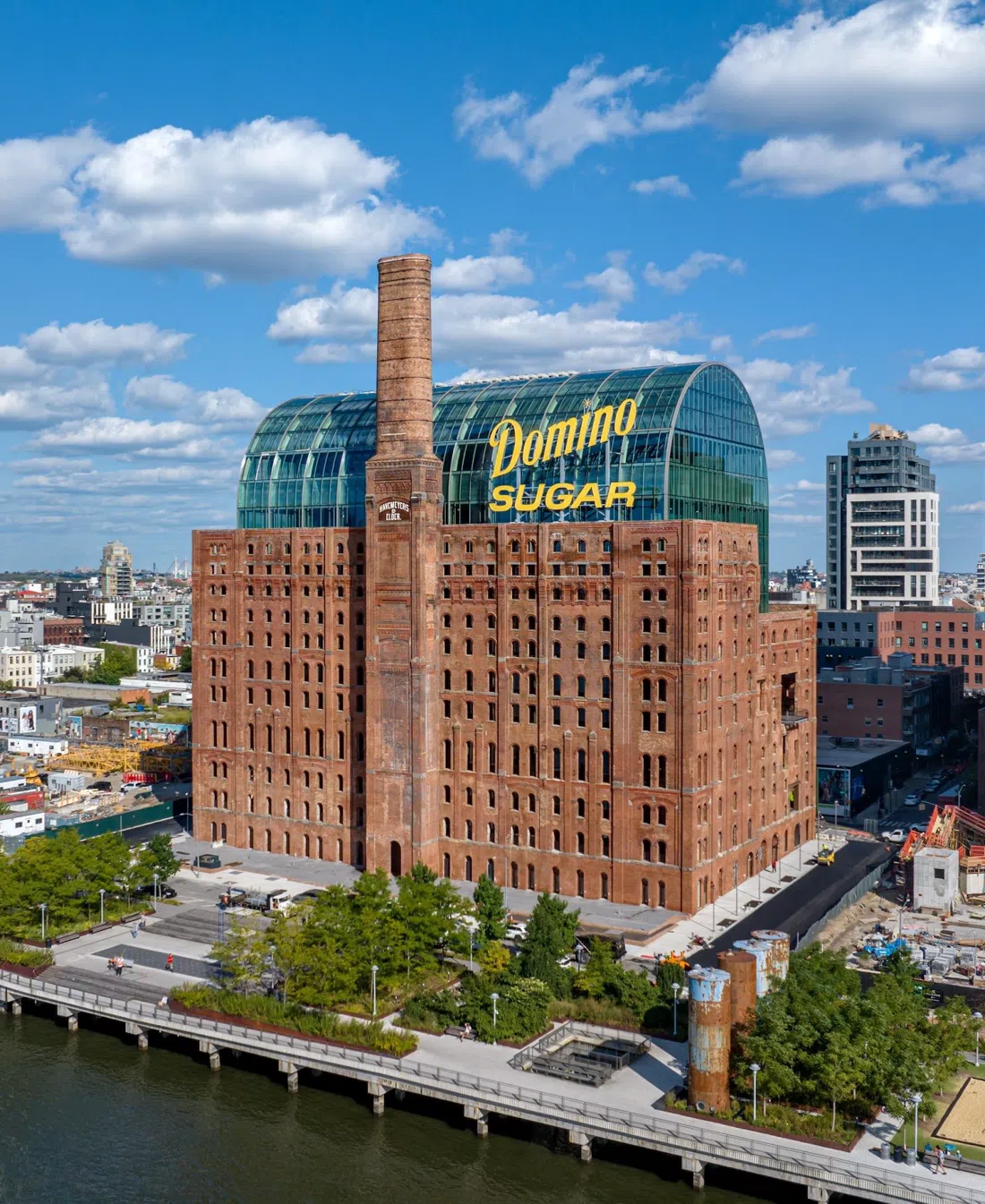
Across the water in Williamsburg, The Refinery at Domino is the adaptive-reuse project that everyone in the city argues about and almost everyone ends up respecting. The 1880s Havemeyer sugar refinery was gutted and a new glass structure inserted inside the surviving brick shell, leaving a gap between old wall and new building that reads, from the park, as a building held inside another building. The park, the square and the ground-floor retail are open and free to everyone, every day. The atrium under the glass dome is office space, opened during OHNY through programming with the architects, PAU. The six-acre park out front is the easiest place in north Brooklyn to gather a group without booking anything, which makes it a sensible start or end point for a Williamsburg walk.
The hands that actually build the skyline
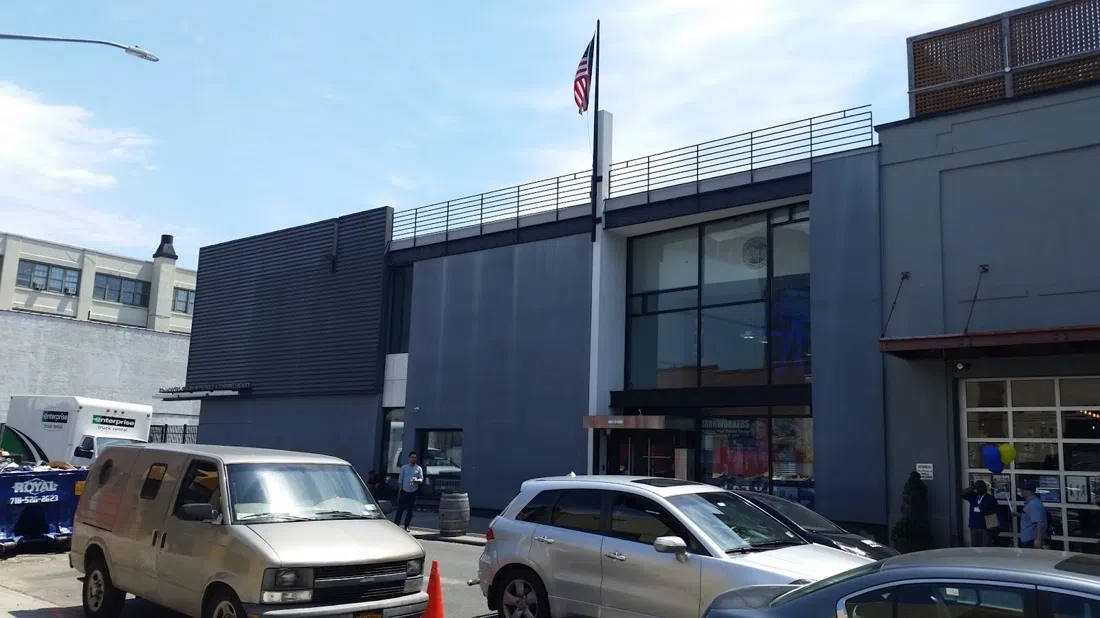
Two OHNY 2026 listings answer a question most architecture writing dodges, which is who physically makes the buildings. The Iron Workers Local 40 & 361 Training Center is an active training floor, and visitors watch apprentices walk steel. It reframes every tower you look at for the rest of the trip. The conditions are real ones: hard-hat safety rules, staff supervision throughout, escorted visits in small batches, adults only. No children, no exceptions, and do not plan to drift off and photograph something interesting.
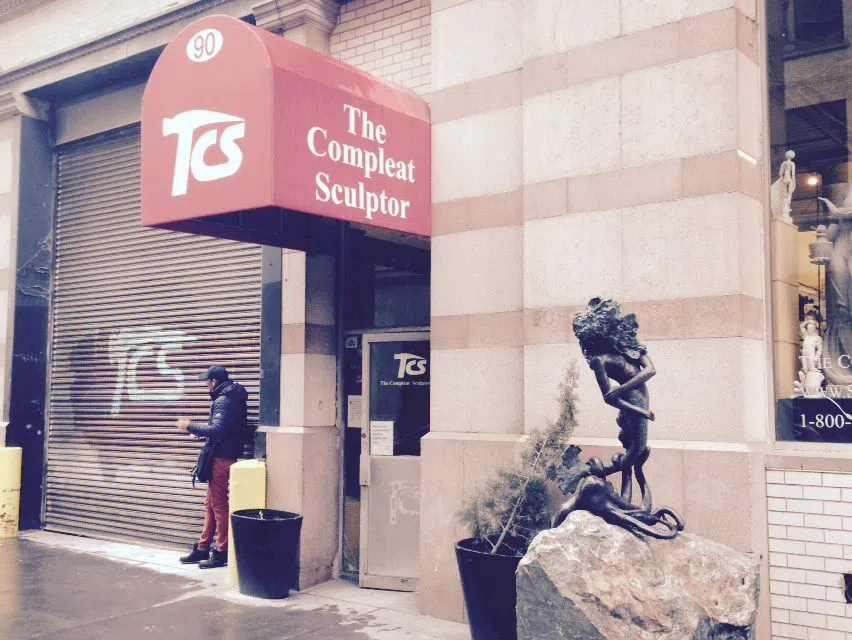
Pellettieri Stone Carvers' Academy argues the other side of the same trade, as the only place in the city still teaching architectural stone carving by hand. It occupies a single floor, so OHNY runs it in tight timed batches, free during the weekend, with carving classes charged separately if you want to come back and try. Organised groups should contact the academy directly rather than arriving together and hoping; a studio that size cannot absorb a coach party. Standing in it after a morning of glass curtain walls is a useful corrective.
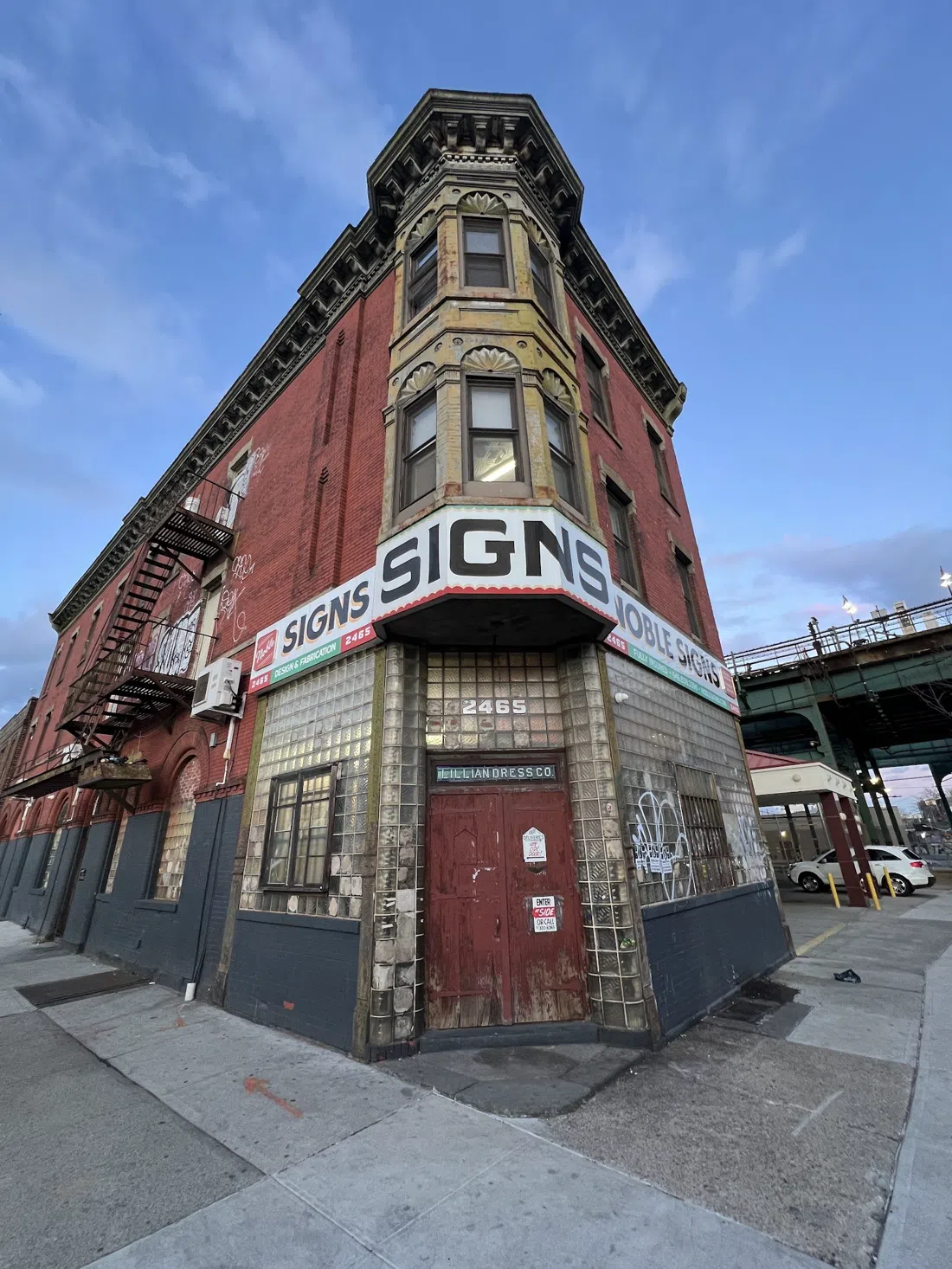
In the same spirit of things made and things saved, the New York Sign Museum (Brooklyn) lives inside the Noble Signs workshop and holds around 215 signs rescued from businesses that were demolished across the four boroughs and Long Island: neon, porcelain enamel and hand-painted gold leaf from a commercial city that mostly no longer exists. It is normally appointment-only, which is exactly why it belongs on this itinerary. Capacity is about fifteen people at a time; tours run Fridays and Sundays and are booked ahead online. Small groups only, and a genuinely good option for two people who want an hour of something specific.
Interiors you can get into any weekend of the year
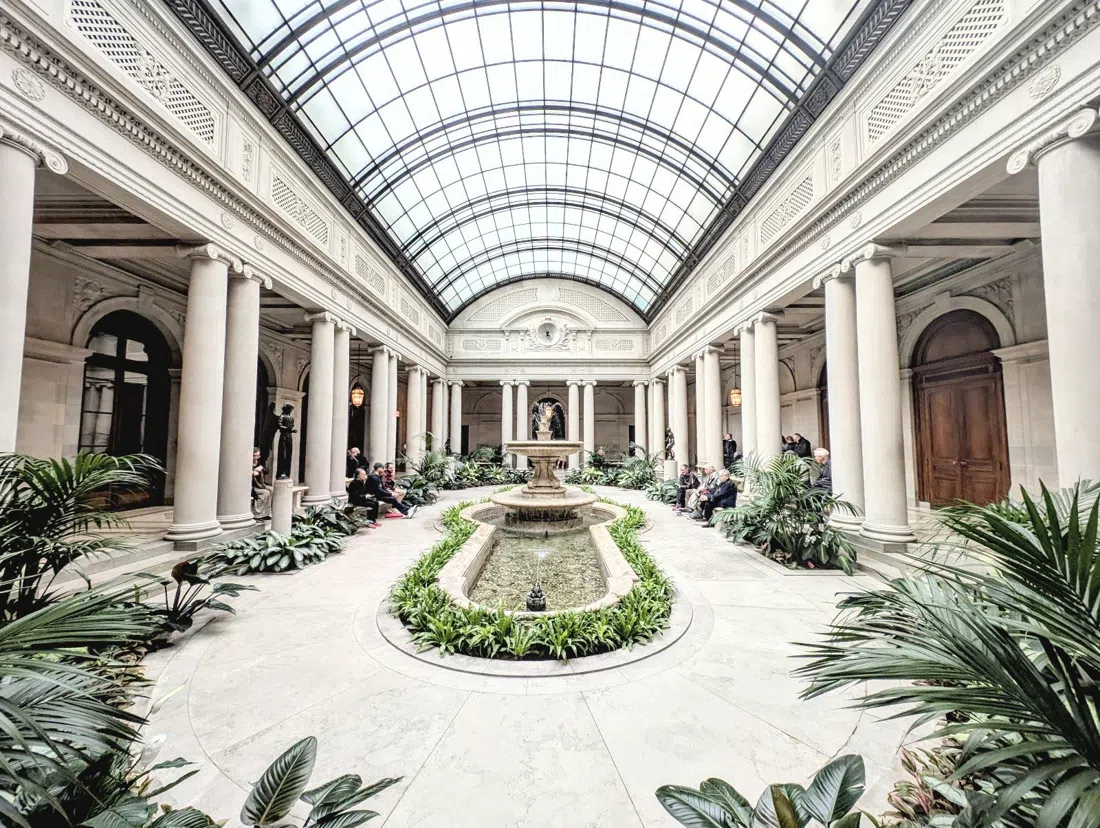
Several of the best rooms in New York do not require an OHNY reservation at all, and a visitor with three days should lean on them hard. The Frick Collection (Upper East Side) reopened in April 2025 after a $220m overhaul that finally opened the family's second-floor private rooms, and it is the best-preserved Gilded Age interior anyone can simply buy a ticket for. It is also an OHNY 2026 participant. Open Monday and Wednesday to Sunday, 10.30 to 17.30, closed Tuesdays; $30 adults, $22 seniors, $17 students, free for ages 10 to 18. Timed tickets are strongly advised and groups can be booked in advance. Note the door policy before you plan a family day: children under ten are not admitted, and that is enforced.
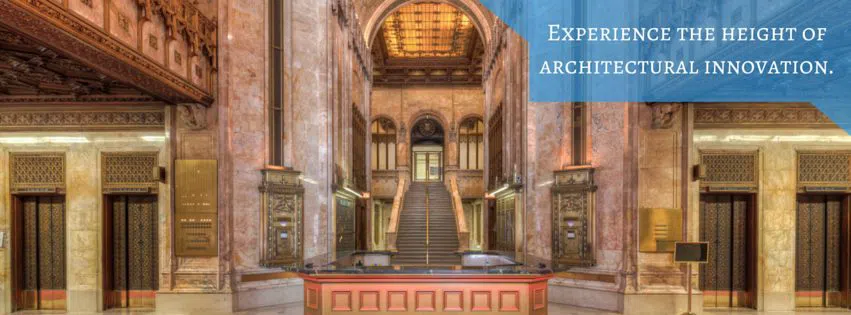
The Woolworth Building (Lower Manhattan) lobby is closed to the general public, and the security desk is not a formality. The only sanctioned way past it is the officially authorised tour, a paid, small-group format booked online, with private and corporate bookings available. Cass Gilbert's 'Cathedral of Commerce' was the tallest building in the world in 1913 and its lobby is a Byzantine-Gothic mosaic vault built to impress people who had come to ask for credit. The tour also descends to the original sub-level vault, safe deposit boxes still in place.
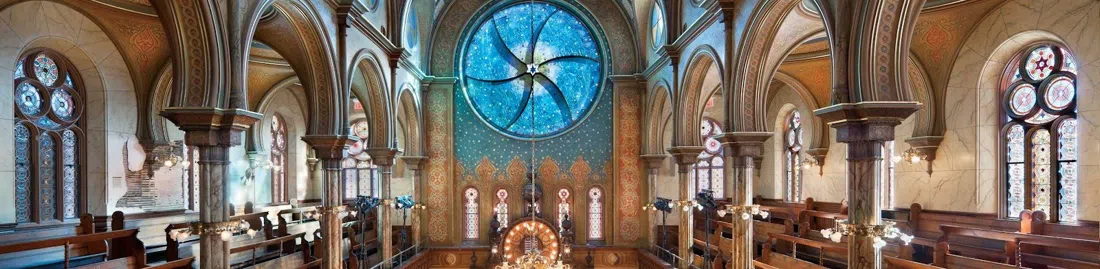
The Museum at Eldridge Street (Lower East Side) is a building the city came close to losing. The 1887 synagogue sat derelict for decades under a leaking roof while its congregation prayed in the basement, and the restoration deliberately refused to fake what had gone: the contemporary east window is unmistakably new, and the honesty of that decision is the best thing about the place. Open Sunday to Friday, 10.00 to 17.00, closed Saturdays. $15 adults, $10 students and seniors, $8 children, pay-as-you-wish on Mondays and Fridays. Docent-led tours run Sunday to Friday, there is a self-guided option through Bloomberg Connects, and groups are bookable by email in advance.
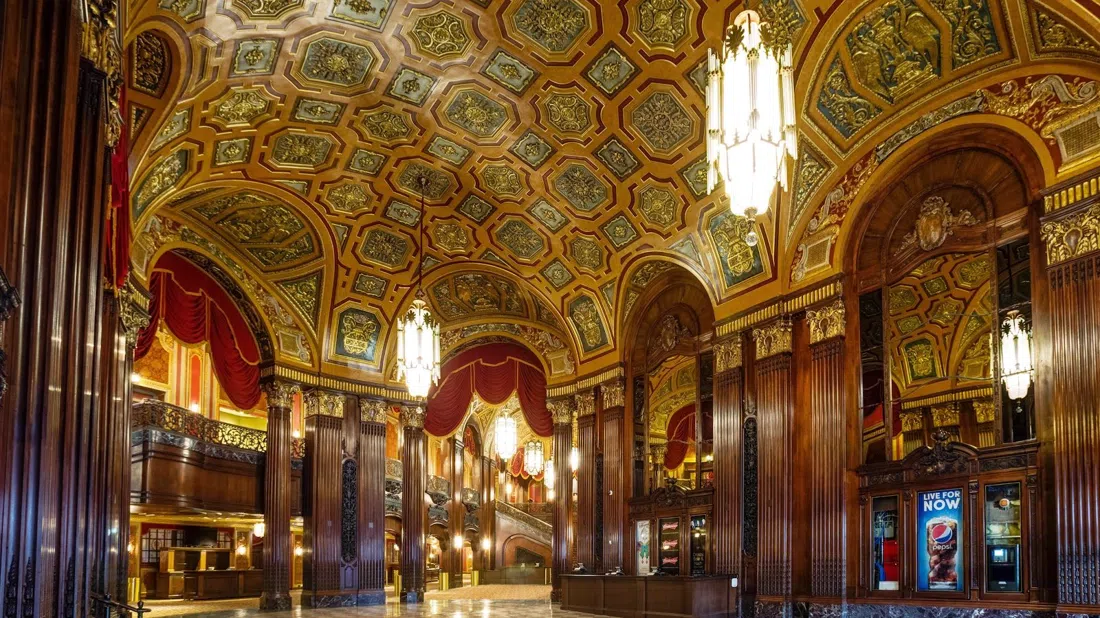
Kings Theatre (Flatbush, Brooklyn) is a 1929 movie palace that rotted for forty years before a $94m restoration brought it back in 2015. The 75-minute historic tour reaches the speakeasy lounges and both auditorium levels, and the Wonder Organ is still in place. The critical detail for anyone travelling: tours run on scheduled dates only, not daily. Check the calendar and book the date, not the day.
Reading a street that refuses to line up
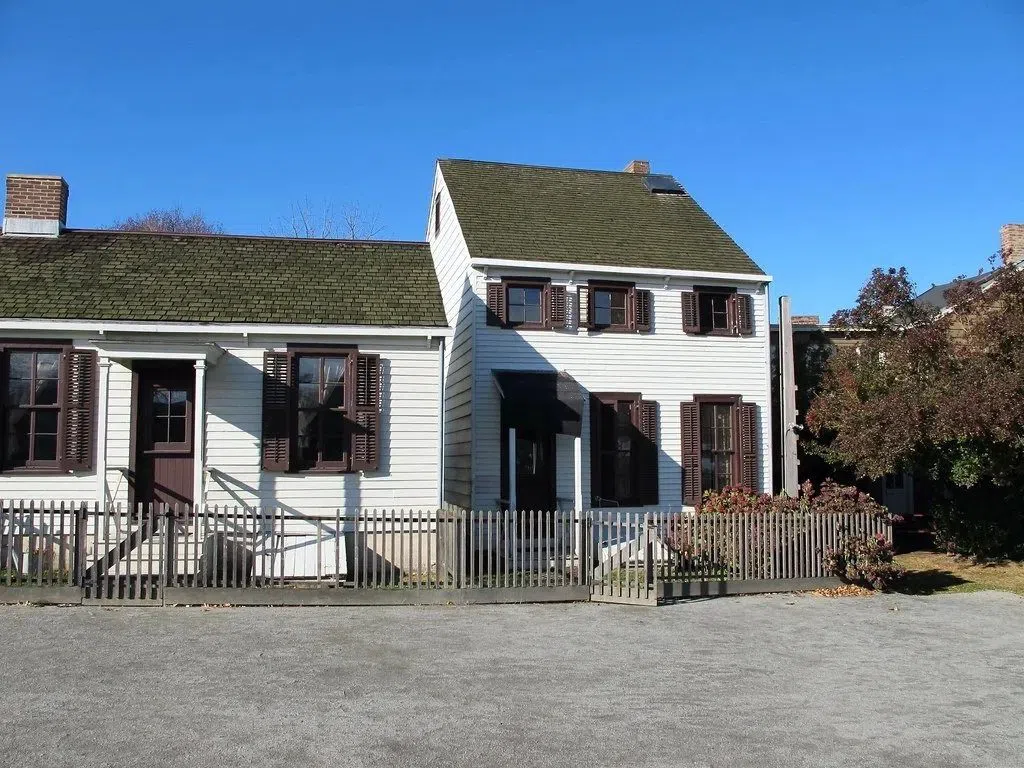
Weeksville Heritage Center (Crown Heights, Brooklyn) rewards ten minutes of attention more than almost anything else here. The Hunterfly Road Houses sit at an angle to the modern street grid because they front a road that predates it, and that diagonal carries the whole story in a single glance: they survive from one of the largest free Black communities in pre-Civil War America, a village of landowners and voters founded in the 1830s, later swallowed by the grid and nearly erased. The houses reopened in March 2026 after a $4m restoration. Open Tuesday to Friday 10.00 to 17.00 and Saturday 11.00 to 17.00, closed Sunday and Monday, with a modest ticketed house tour booked ahead; school and community groups are hosted regularly and well.
Groups, couples and the honest door situation
For a group of six or more, your reliable options are Green-Wood, Weeksville, the guided Navy Yard and Army Terminal walks, and the Woolworth tour, all of which have a real mechanism for taking a booked party. The ticketed OHNY sites, the Flatiron and 620 Loft & Garden, have no group allocation at all, and you should stop planning them as a group activity. The small-capacity sites, the sign museum at fifteen and the carving academy on one floor, are for two or three people, and an unannounced group of eight will be turned away or made to wait out the batches. The ironworkers' floor is adults only. The Frick excludes under-tens.
Couples have the easier weekend by a distance. Two people can move fast, take a returned ticket, fit into a timed batch, and cover four or five sites in a day across a single subway corridor.
If the tickets are gone
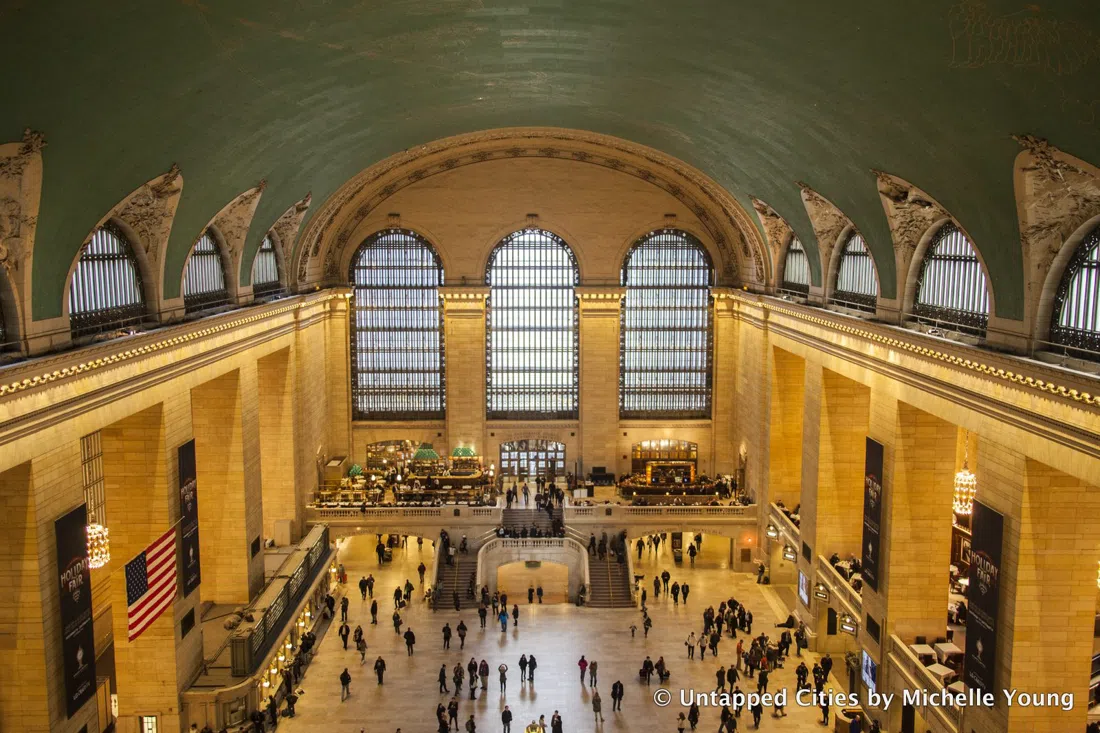
They will be. Untapped New York runs small-group, PhD-led architecture walks year-round with fixed caps, roughly $30 to $80 per person depending on the tour, and offers private and group bookings; guides meet at Track 29 in the main concourse at Grand Central. Their remit covers the parts of the city that are structurally hard to reach, the abandoned stations on the 6 line and the hidden track levels beneath Grand Central, which is the same appetite OHNY feeds, available on a date you choose. Book one for the Monday after the weekend and you have a fallback that does not depend on a release at nine on 2 October.
Practical notes
Transport. A weekly unlimited MetroCard or tap-to-pay fare capping makes sense over three days of this; you will ride far more than usual. The R runs to both Sunset Park sites: 59th Street for the Army Terminal, 25th Street for Green-Wood's main gate. The F to York Street or the G to Flushing Avenue serves the Navy Yard. The L to Bedford Avenue drops you a short walk from Domino. The Q to Beverley Road is the stop for Kings Theatre, the 6 to 68th Street for the Frick, the F to East Broadway for Eldridge Street, and the R or W to City Hall for the Woolworth. Journeys between boroughs on a weekend are slower than the map suggests, since service changes are heaviest Saturday and Sunday, so allow an hour between anything in Brooklyn and anything above 42nd Street.
Money. Most of OHNY costs nothing. Budget realistically for the paid layer: around $30 per person for a guided Turnstile walk, $25 to $30 for a Green-Wood trolley tour, $30 at the Frick, $15 at Eldridge Street, plus the Woolworth and Kings Theatre tours. A serious three-day itinerary lands somewhere around $120 to $180 per person in admissions, and considerably less if you weight it towards the free sites. Cards work everywhere; carry a small amount of cash for the food trucks and bakeries around the Sunset Park and Flatbush stops.
Timing. Put 2 October in your calendar now, because the ticket release matters more than any other date. Arrive on the Thursday if you can, so Friday morning is not spent recovering. Friday is the quietest of the three days and the best day for the small-capacity sites. Sunday afternoon is the busiest. Sunset is around 18.10 in mid-October, so the outdoor sites want the morning and early afternoon.
Staying. Base yourself for the subway rather than the view. Downtown Manhattan and downtown Brooklyn both put you within forty minutes of nearly everything on this list, and either beats Midtown for this particular weekend; compare rates and locations through New York hotel search before the October rates firm up, which they do early. For what else is worth your time in the city around the weekend, start with our New York guide.