The New York issue
Greenwich Village, New York, from the arch to the river
Washington Square, Stonewall, two basement jazz rooms and the late slice counters, with the hours, prices and door rules that decide the order you walk them.

By Femi AdeyemiWalk one more block than the map tells you to
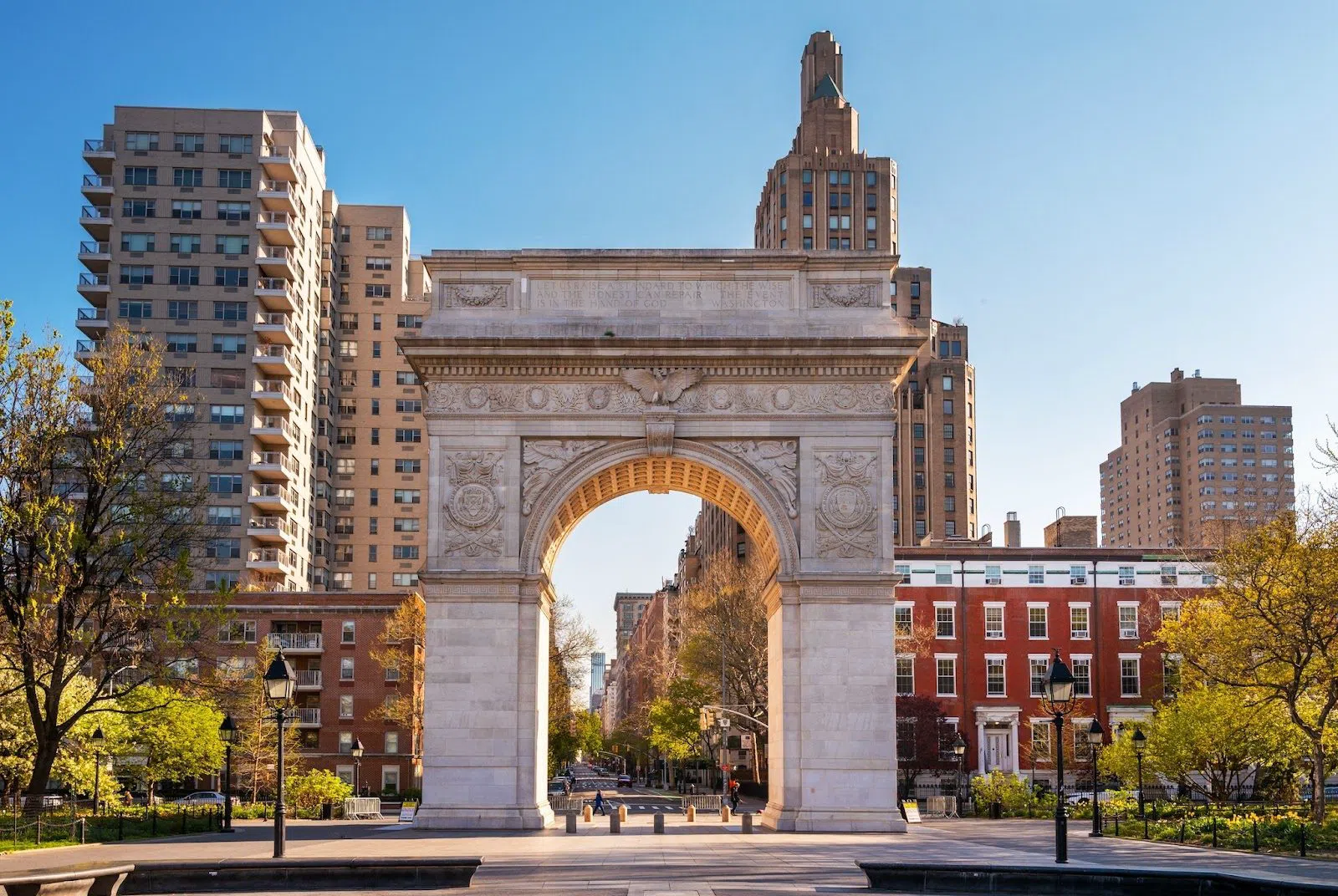
Washington Square Park covers 9.75 acres, and the white marble Washington Arch on its northern edge frames Fifth Avenue. Below it, chess players and street musicians hold the big round fountain plaza under the plane trees. The fountain is seasonal, switched off for winter and for occasional maintenance.
Washington Square Park and the arch
Washington Square Park is the Village's front room, and the arch, the fountain plaza and the chess tables all stand within one square. Red-brick NYU buildings line the south side. It is open public ground, with no door, no booking and no limit on group size.
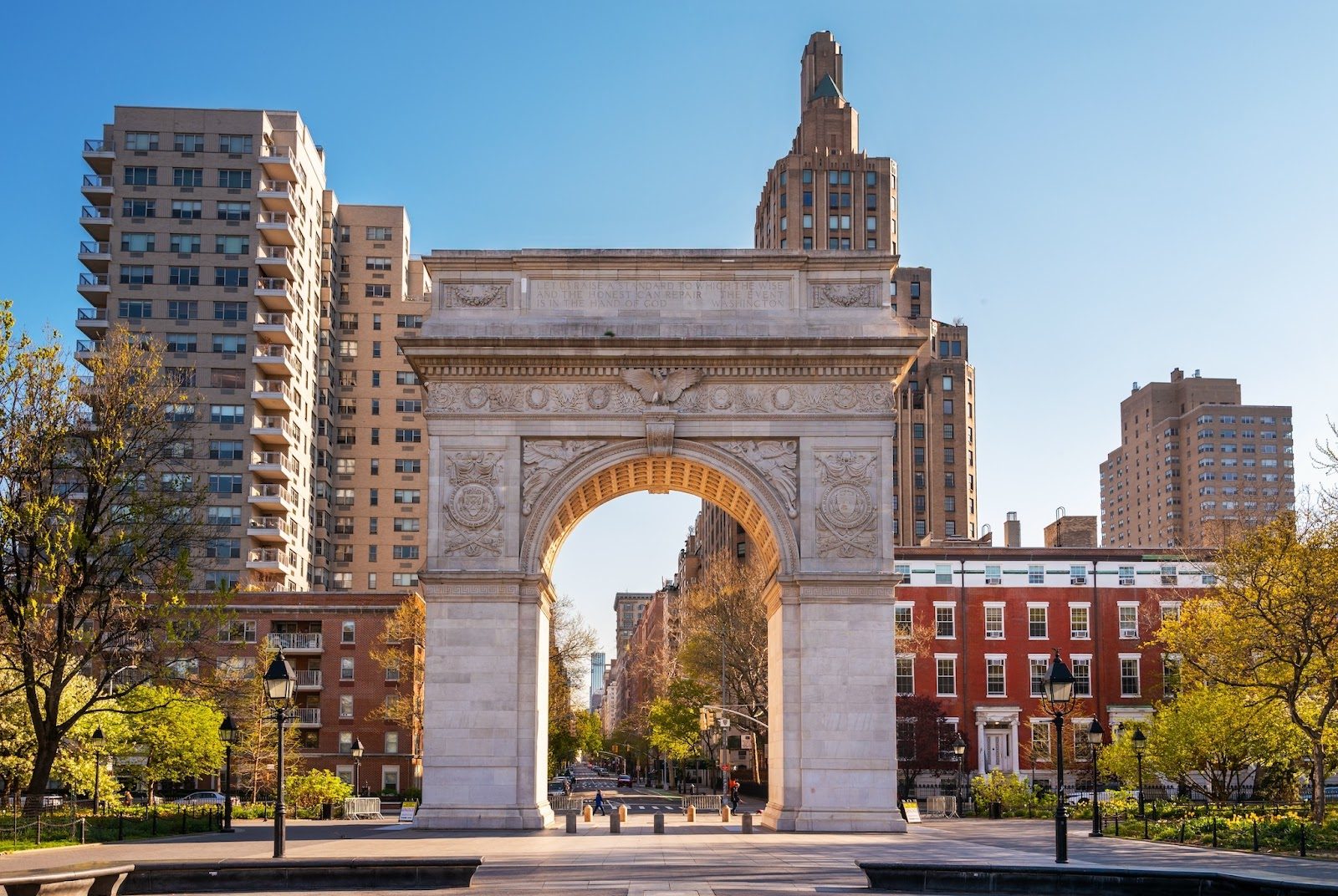
Entry is free. Walking-tour groups assemble at the arch daily, and the stretch of pavement directly beneath it is the busiest part of the square. Come early if you want the fountain plaza without a tour forming beside you.
Plan your New York trip
Live prices from our booking partners.
Free cancellation on many rooms. We may earn a commission when you book.
Christopher Park and the Stonewall monument
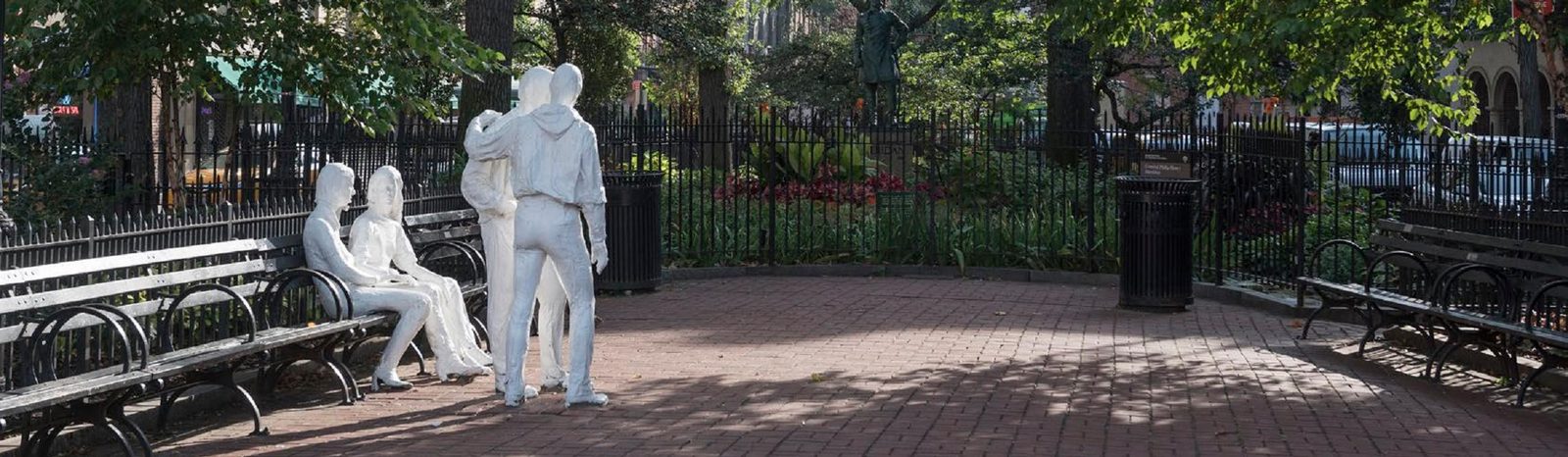
Stonewall National Monument (Christopher Park and 51 Christopher Street) was the first US national monument to LGBTQ history, and it is still the Village's best-known address abroad. Christopher Park is a small fenced triangle where George Segal's white-painted "Gay Liberation" figures sit on the benches under rainbow flags. Across the street, the low brick facade of the Stonewall Inn faces the park under its red neon sign.
The park is open-air, free and open all year. The visitor center at 51 Christopher Street is free too, open Tuesday to Sunday, 10 a.m. to 4 p.m., closed Mondays. Its rooms are small, so a large group should split into halves or email ahead.
Jefferson Market Library and the Church of the Ascension
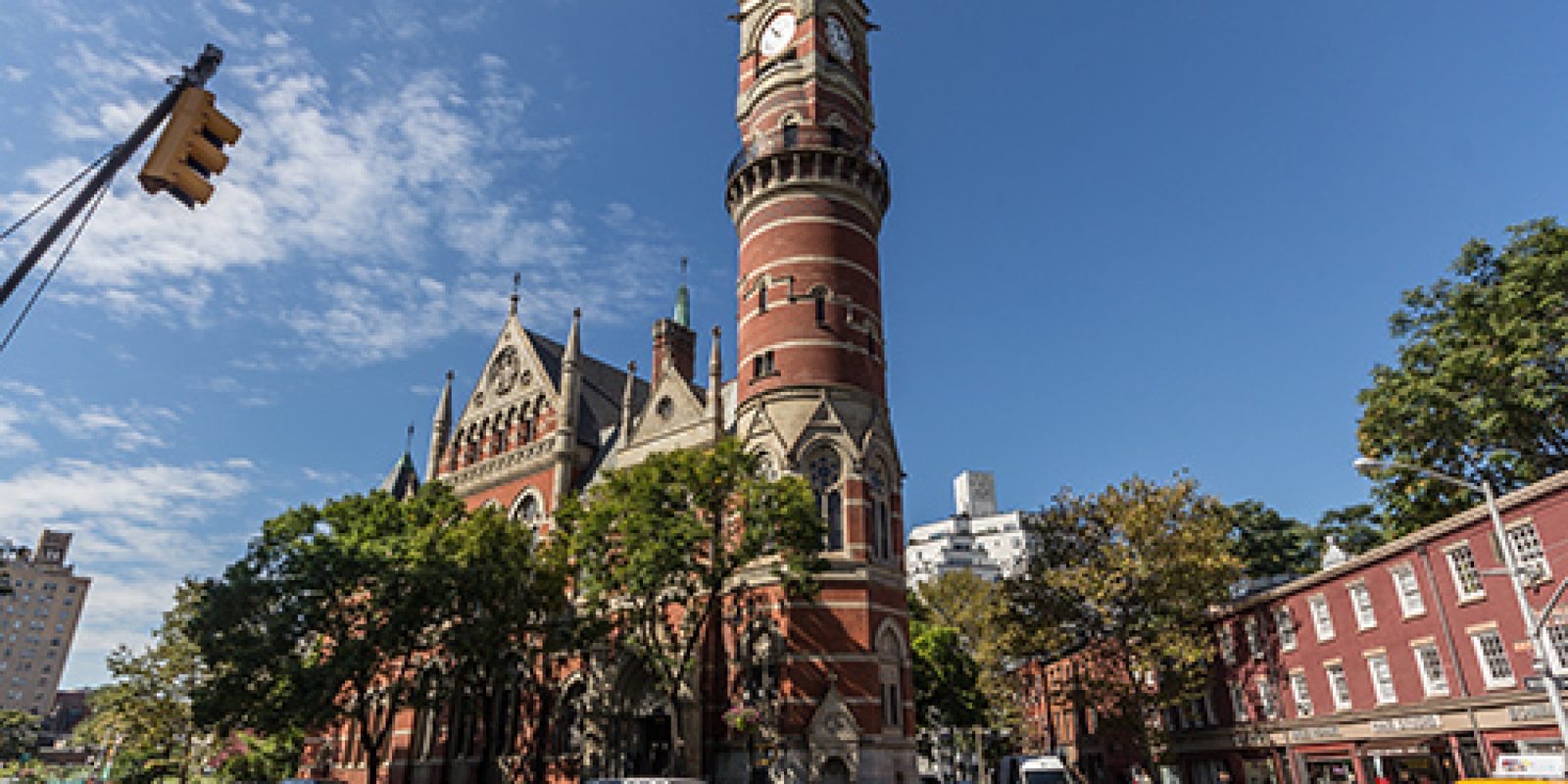
Jefferson Market Library is a red-and-black Victorian Gothic former courthouse in the Village, with pointed arched windows, a tall clock-and-bell tower and a spiral iron staircase turning up through stained glass inside. It reopened after a $10 million, three-year accessibility overhaul and now runs local-history exhibits, one of them on the 1960s fight that saved the clocktower. Walk-in visits are free.
The building is in quiet use, and the tower is not part of a casual visit; it opens only on occasional Village Preservation tours. Jefferson Market Garden, the walled flower garden behind the building, opens seasonally.
Church of the Ascension is on a Fifth Avenue corner, five minutes' walk from Washington Square, a brownstone Gothic Revival box with a dim interior. John La Farge's huge "Ascension" mural hangs over the altar, a mountain shaped like Mount Fuji rising behind the figures, with La Farge stained glass and a Stanford White chancel around it. Visits are self-guided and free, donations welcome, and docents are usually about.
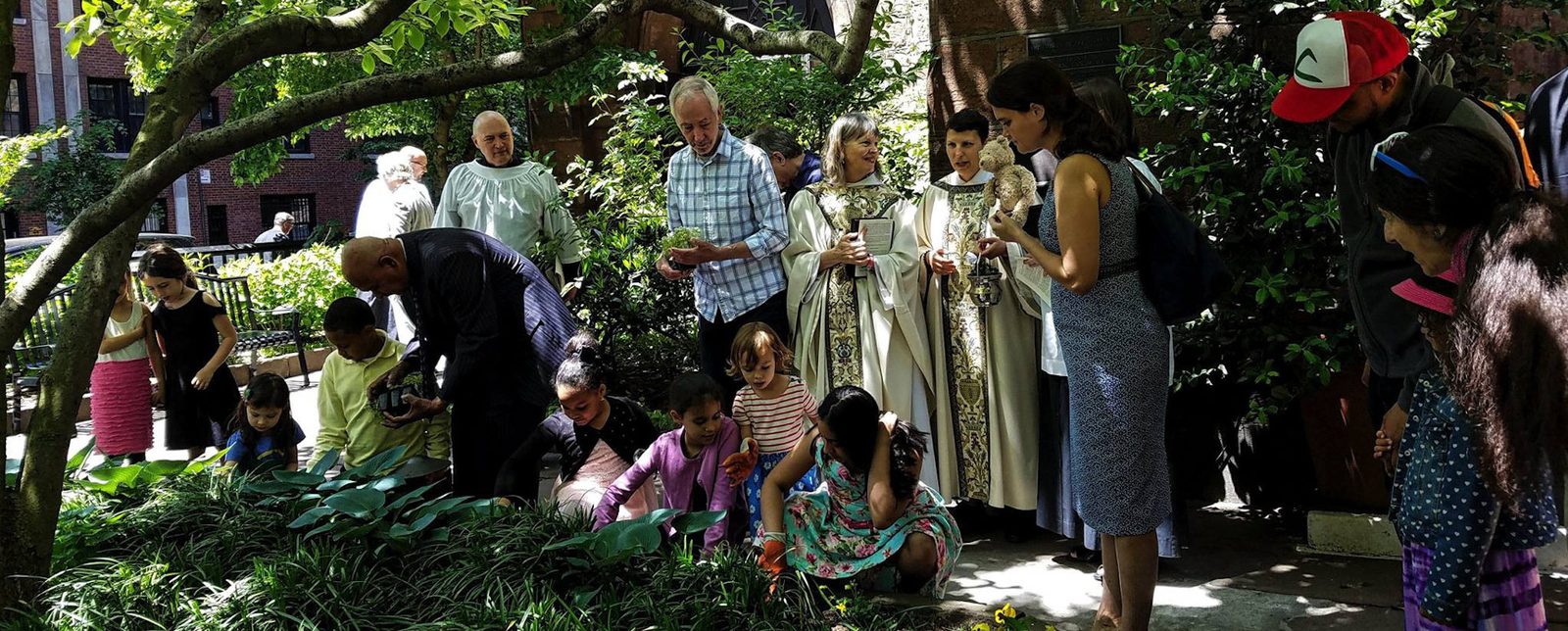
The door is reliably open on weekdays from noon to 3 p.m. Time the rest of your morning around that window, because that is the whole of the opening.
The Whitney and the Hudson waterfront
Whitney Museum of American Art (99 Gansevoort Street) is at the Village's north-west corner in the Meatpacking District, a five-minute walk from Christopher Street. Renzo Piano's building is pale steel and glass, stacked with outdoor terraces linked by external staircases, the High Line running into its northern flank and the Hudson behind it. The terraces are worth the ticket on their own.
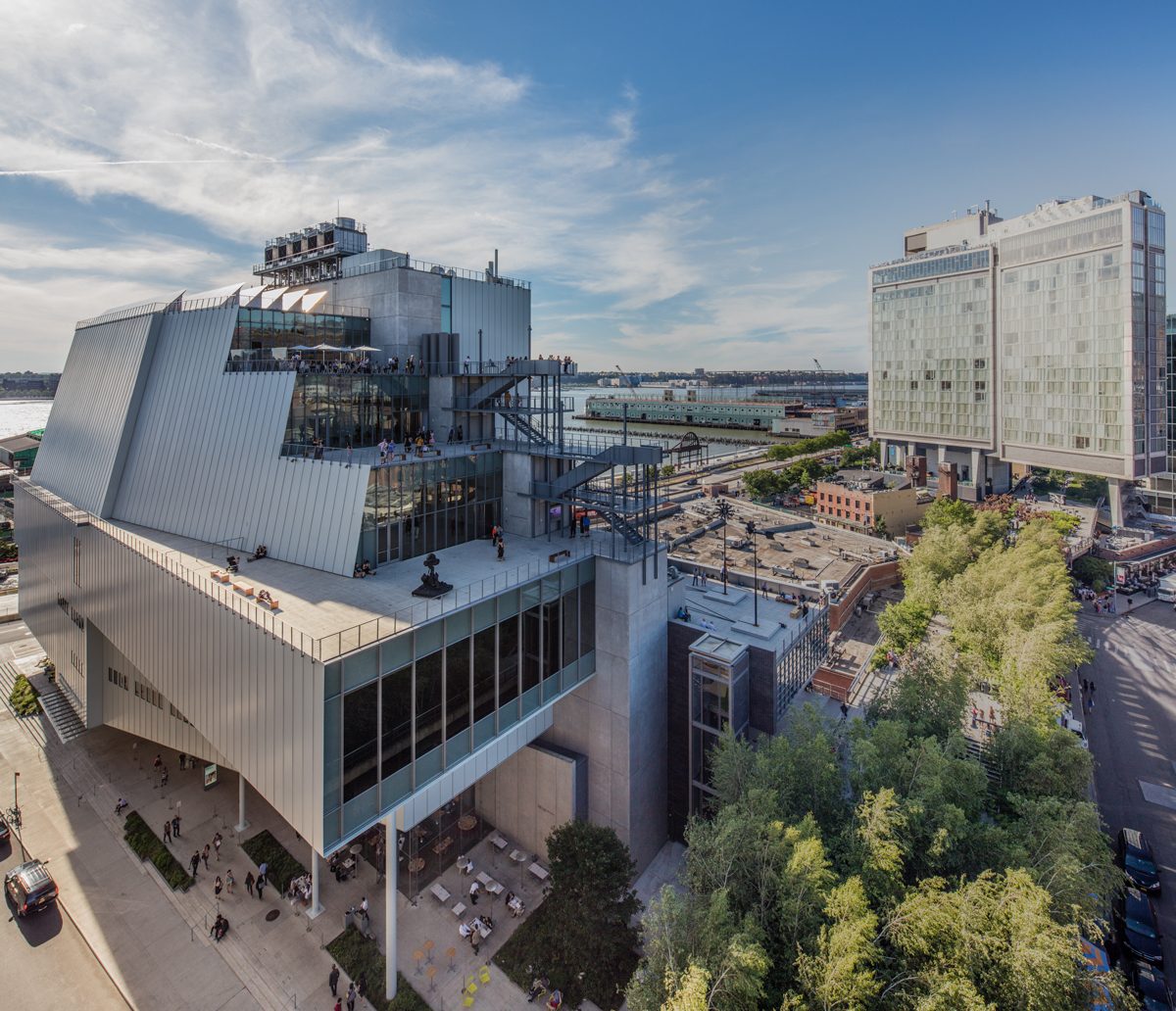
Admission is $30 for adults and $24 for seniors and students. Everyone 25 and under goes free, and the whole museum is free on Friday evenings and on the second Sunday of each month. It closes Tuesdays.
You reach Little Island (Pier 55) along the Hudson River Park greenway from the Christopher Street pier, and it is the best riverside walk off the Village waterfront. The park stands on concrete tulip-shaped piles rising out of the river, with undulating lawns, winding paths and a sunken 687-seat amphitheatre, the Manhattan skyline on one side and open water on the other.
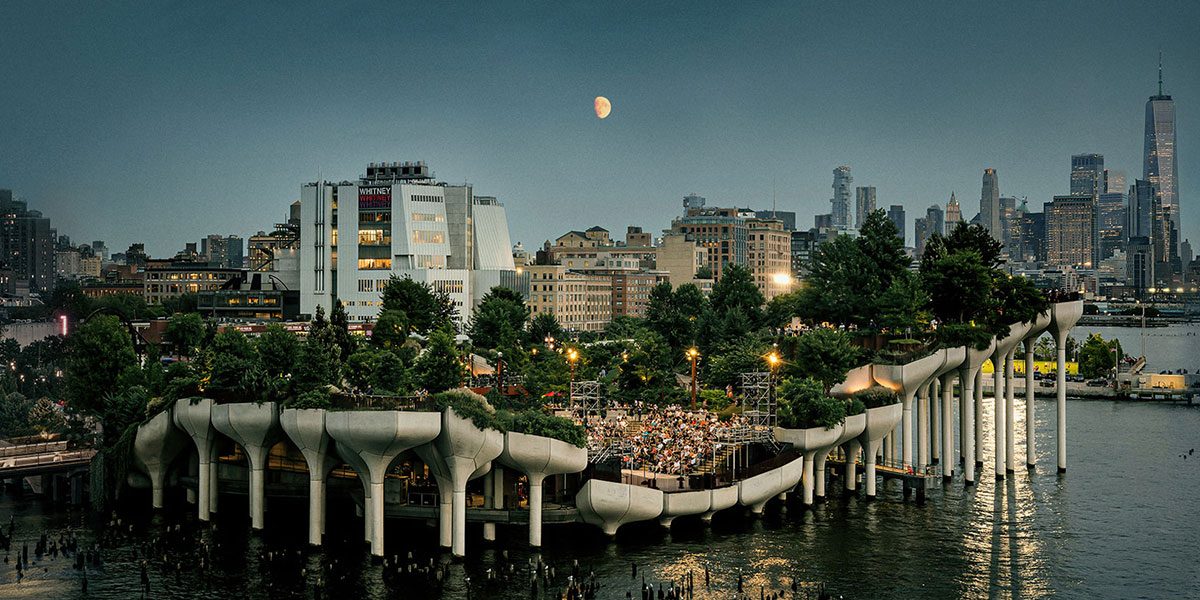
Entry is free, and free daytime programming runs through the warm months. In peak season you need a timed-entry reservation for afternoon and evening arrivals, booked per person. The ticketed evening season runs in high summer, at $15 standing and $25 seated.
Jazz at the Vanguard and the Blue Note
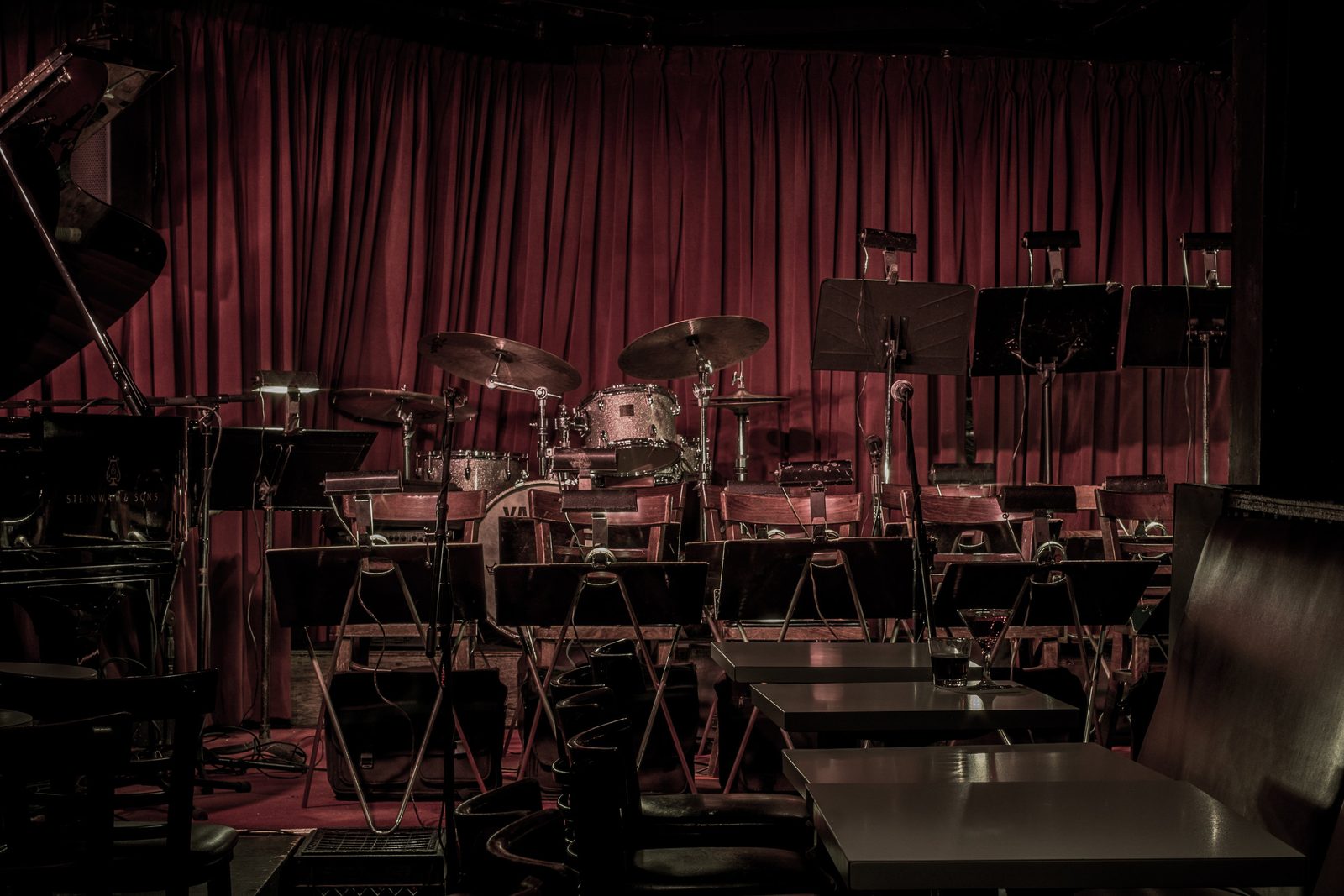
Village Vanguard (178 Seventh Avenue South) has been open since 1935 and is still the world's most recorded jazz room. A red awning marks the steep basement stairwell down into a wedge-shaped, windowless room, red walls crowded with framed photographs of jazz legends and a tiny corner stage. There are 130 seats, tickets are sold per head through the club's own system, and sets sell out; the cover comes with a drink minimum.
The Vanguard Jazz Orchestra's Monday-night residency is the easiest ticket of the week. Take it if your dates allow.
Blue Note Jazz Club (131 West 3rd Street) runs two sets a night under blue neon, in a low-ceilinged room where small round tables pack tight to a street-level stage against a brick-and-mirror back wall. The booking drifts past jazz into soul and R&B. Table seating carries a food and drink minimum, and bar seats cost less.
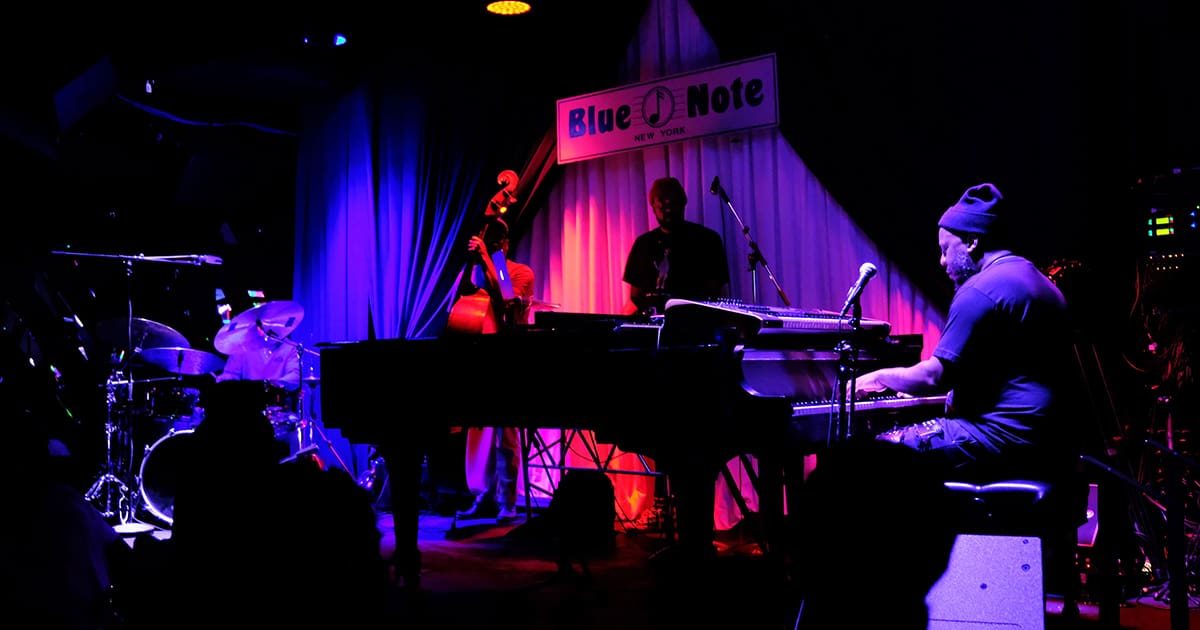
The Vanguard splits parties above six across tables. The Blue Note takes group reservations and private events alongside ordinary table bookings, so send a party of eight there.
Comedy Cellar on MacDougal Street
Comedy Cellar (MacDougal Street) runs in the basement under the Olive Tree Cafe, a vaulted room of exposed brick arches with tiny tables inches from a single mic stand. Unannounced A-list drop-ins are routine, so booking online well ahead is the only way in.
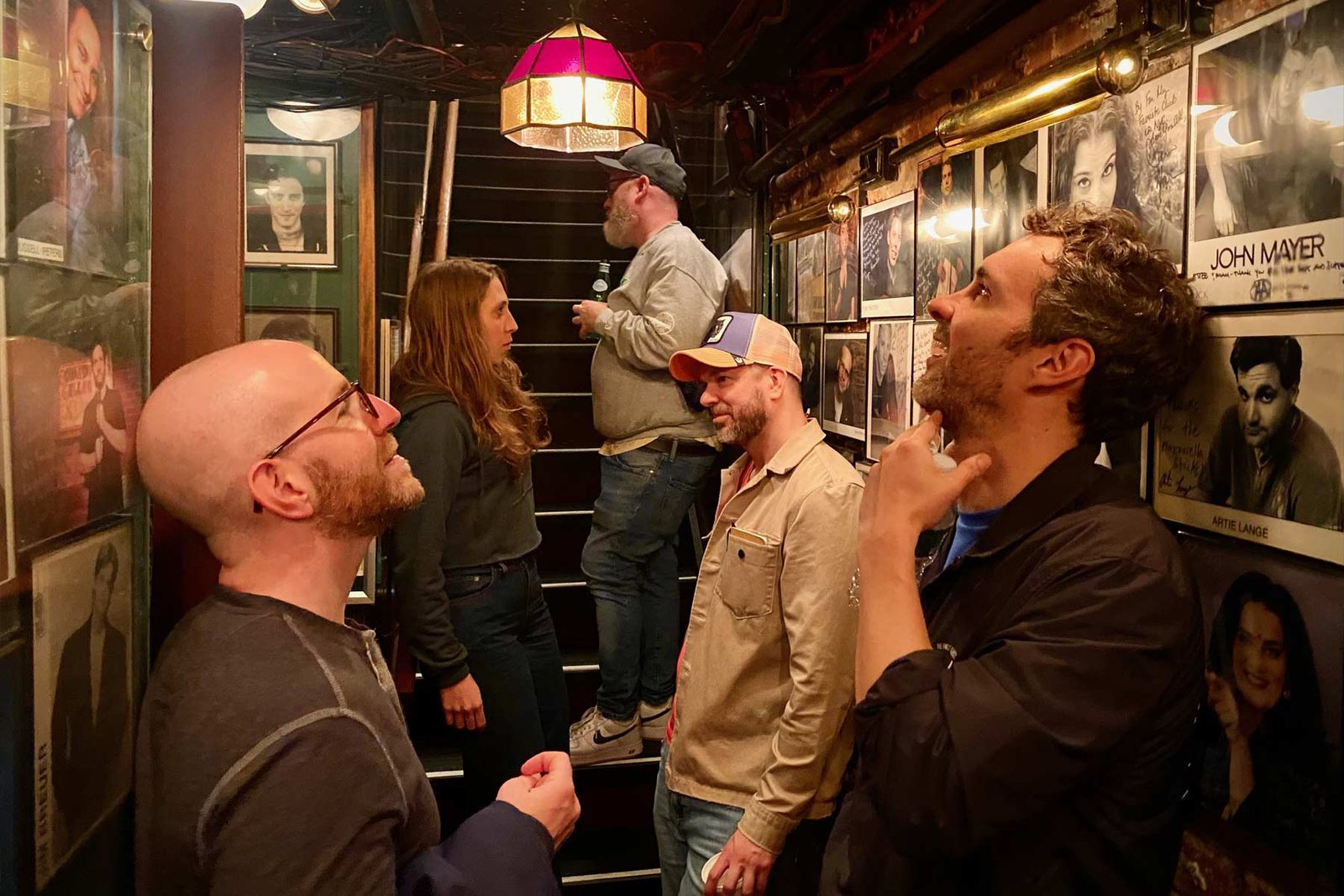
Tickets are $15 Monday to Wednesday and $18 Thursday and Sunday. Friday and Saturday are $25. A two-item food or drink minimum applies on top, per person. The room is cramped, and sister rooms around the corner absorb the overflow when it fills.
Pizza on Carmine and Bleecker streets
Joe's Pizza (7 Carmine Street) has been turning out the benchmark New York street slice since 1975. Whole plain pies slide out of the oven under heat lamps in a narrow corner storefront, there is a standing counter along the window, and a queue on the pavement most of the day. A slice and a drink land under $10.
It takes no reservations and has almost no seating. The counter runs to 3 a.m. most nights and 4 a.m. on Friday and Saturday, which makes it the default stop after a late set. Order whole pies if you are feeding several people at once.
John's of Bleecker Street works the other way, out of a 1929 coal-fired brick oven at the back running at 850°F. It sells no slices; whole blistered thin-crust tomato pies come to the table on battered metal trays, under a pressed-tin ceiling, in wooden booths carved with decades of initials. A pie stays under $40, and the place is cash-friendly.
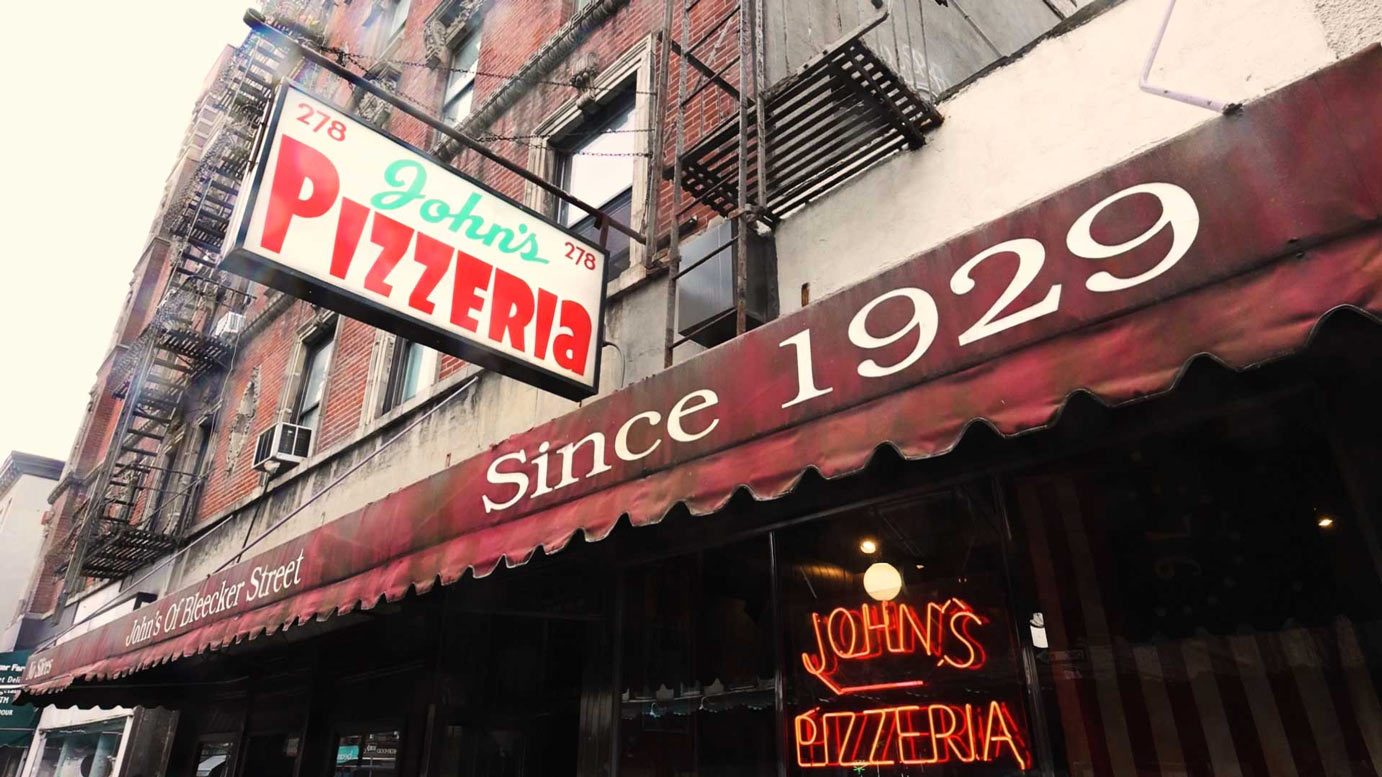
It is walk-in heavy. Arrive early or expect to wait on the pavement.
Caffe Reggio and Murray's Cheese
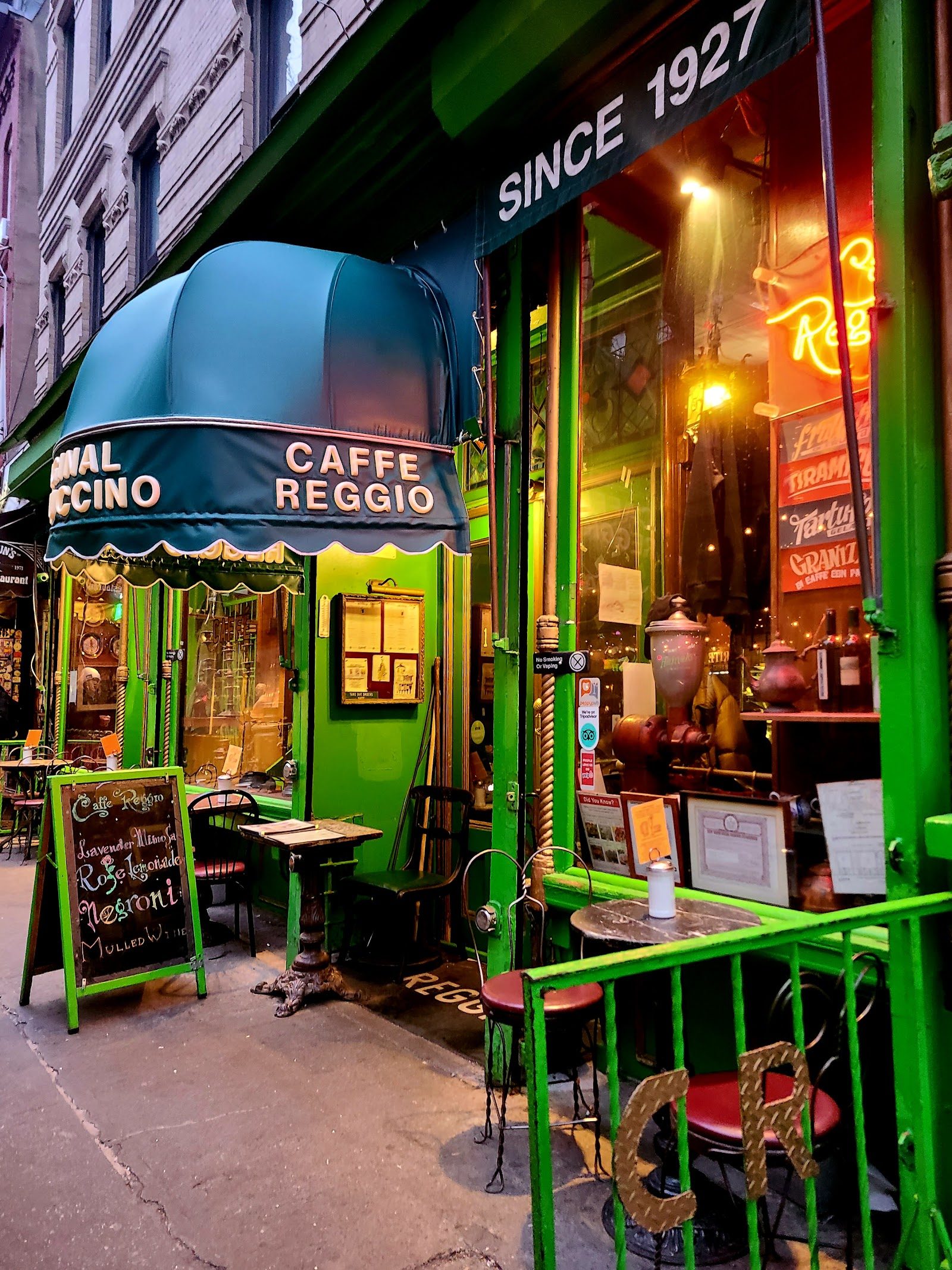
Caffe Reggio (MacDougal Street) opened in 1927 and is credited with introducing the cappuccino to America. The 1902 chrome-and-brass La Pavoni espresso machine stands by the wall like a shrine, with dark oil paintings and one large Renaissance canvas above marble-topped bentwood tables. Coffee and cake come in single figures, service is walk-in only, and the green awning stays lit until 3 a.m. most nights.
Murray's Cheese (Bleecker Street) anchors the old Italian food strip, its counters stacked with whole cheese wheels and hanging salami, the cave-aging room visible at the back. The shop opens daily, 9 a.m. to 8 p.m., and picnic shopping here is cheap.
Upstairs there are cheese-and-wine pairings and mozzarella-making classes in a wood-panelled tasting classroom. Book them ahead, because they fill. Stairs are the only way up and down, so the classrooms are not wheelchair accessible. On a wet afternoon it is the best indoor hour in the Village.
Minetta Tavern and the White Horse Tavern
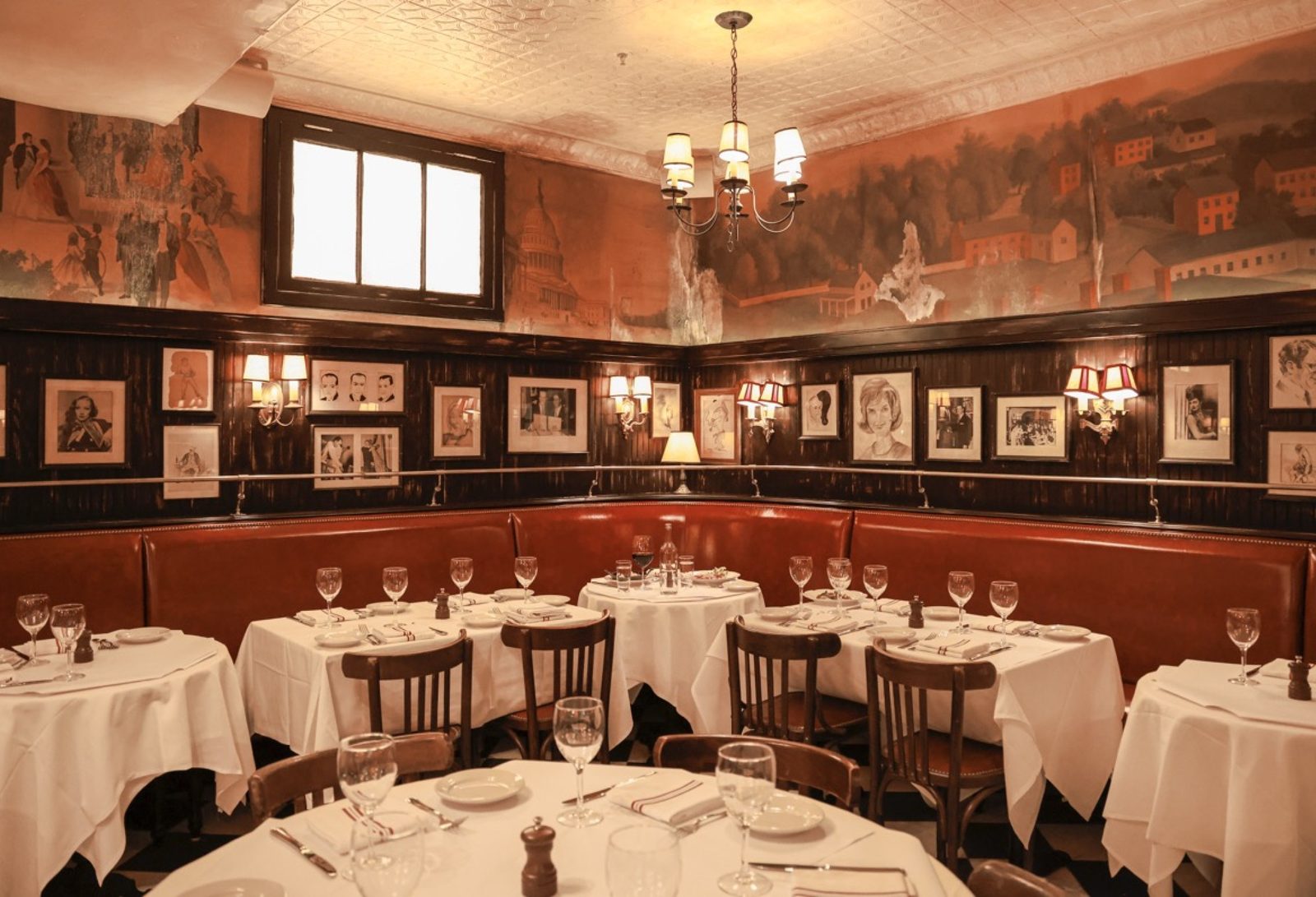
Minetta Tavern (MacDougal Street) has been serving since 1937 and now holds a Michelin star for Parisian-steakhouse cooking behind an old Village tavern front. The floor is checkerboard tile, the banquettes are red leather, and the walls carry boxing caricatures and yellowed Village photographs under a long bar of warm globe lights. The Black Label burger is $38 and the steaks run above it.
Reserve through Resy, or direct through the New York restaurant's own site, minettatavernny.com. The bar is first-come, first-served if you would rather eat without a booking.
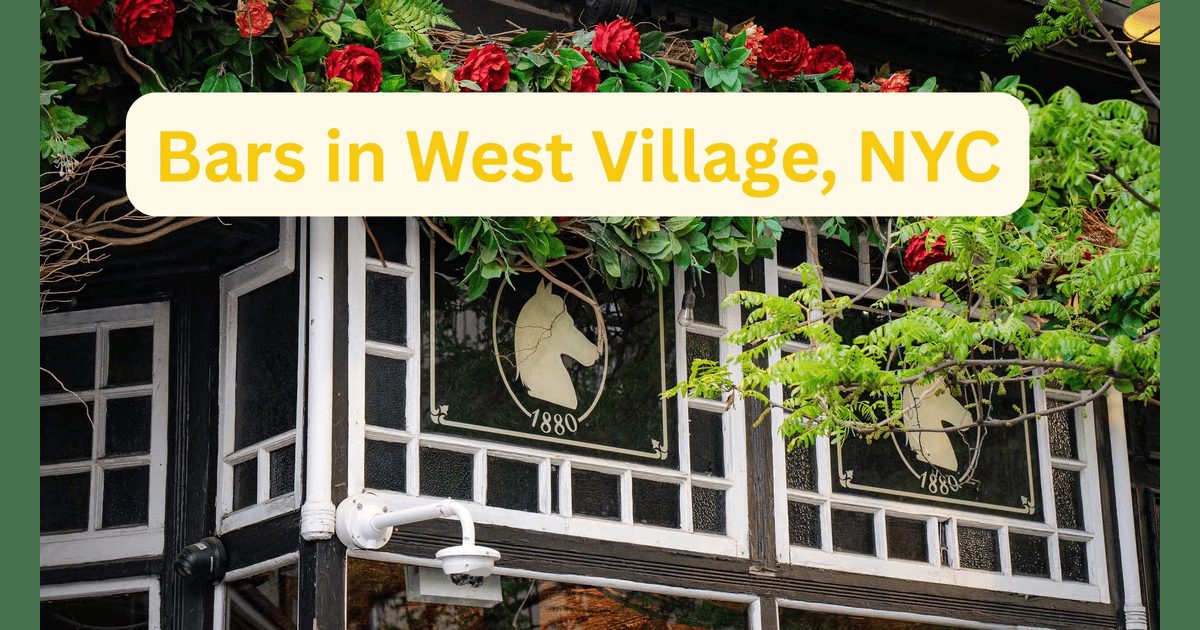
White Horse Tavern (567 Hudson Street) has poured since 1880 and is the city's second-oldest continuously operating bar, a white-painted corner building under a black horse-head sign. Inside is original dark woodwork and a pressed-tin ceiling, landmarked rather than reproduced, with a Dylan Thomas portrait and plaque on the wall; Thomas, Kerouac and Baldwin all drank here. Pints and tavern food, with pavement tables under the awning.
Capacity is around 150 and the pub handles parties, though groups of eight or more go through the private-events contact instead of a normal booking.
Staying on Washington Square
Washington Square Hotel (103 Waverly Place) is the former Hotel Earle, where Dylan and Baez stayed, and the only hotel actually on the square. The lobby is wrought-iron and gilt Art Deco over a mosaic floor with birdcage motifs, and the 152 rooms are small, some of them looking over the treetops into the park. Rates run $230 to $460 a night depending on season and room.
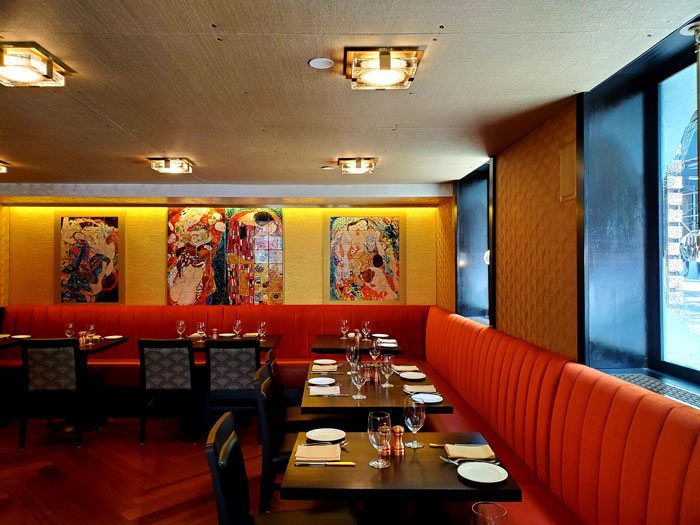
There is no large function space. Pick it for the address and the lobby. For everything else in the city, the New York hotel search covers the wider market.
Closed days and what to book
Three doors close on you: the Stonewall visitor center on Mondays, the Whitney on Tuesdays, and the Church of the Ascension outside its weekday midday hours. Book the Vanguard, the Blue Note, the Comedy Cellar, a Murray's class and a peak-season Little Island slot before you arrive, and keep Caffe Reggio, Joe's and John's for the walk-in hours.
See the New York guide for the rest of the city.
Gallery
Greenwich Village in pictures
Greenwich Village — your questions
Where should a walk around Greenwich Village start?
Washington Square Park is free public ground you can walk into without a ticket or a booking, and the arch, the fountain plaza and the chess tables all sit inside one 9.75-acre square. The fountain runs seasonally and goes off for winter and for occasional maintenance, and walking-tour groups gather at the arch every day, so come early if you want the plaza quiet.
Is the Stonewall National Monument free, and when is it open?
Both halves are free. Christopher Park, with George Segal's "Gay Liberation" figures and the Stonewall Inn facade across the street, is outdoors and open all year. The visitor center at 51 Christopher Street opens Tuesday to Sunday, 10 a.m. to 4 p.m., and closes Mondays; its rooms are small, so a large group should split up or email ahead.
How much is the Whitney Museum, and when can you get in free?
Admission is $30 for adults and $24 for seniors and students, and anyone 25 and under goes free. The whole museum is free on Friday evenings and on the second Sunday of each month. It closes Tuesdays, and it is a five-minute walk from Christopher Street.
Which Village jazz club works for a group of eight?
The Blue Note on West 3rd Street takes group reservations and books private events as well as its regular tables. The Village Vanguard has 130 seats in a wedge-shaped basement and sells tickets per head, and it splits any party above six across separate tables, since there is no large-party area.
Where can you eat late in Greenwich Village after a jazz set?
Joe's Pizza at 7 Carmine Street stays open until 3 a.m. most nights and 4 a.m. on Friday and Saturday, where a slice and a drink cost under $10 at a standing counter. John's of Bleecker Street sells no slices at all, only whole coal-oven pies under $40. Caffe Reggio on MacDougal Street serves coffee and cake until 3 a.m. most nights.