
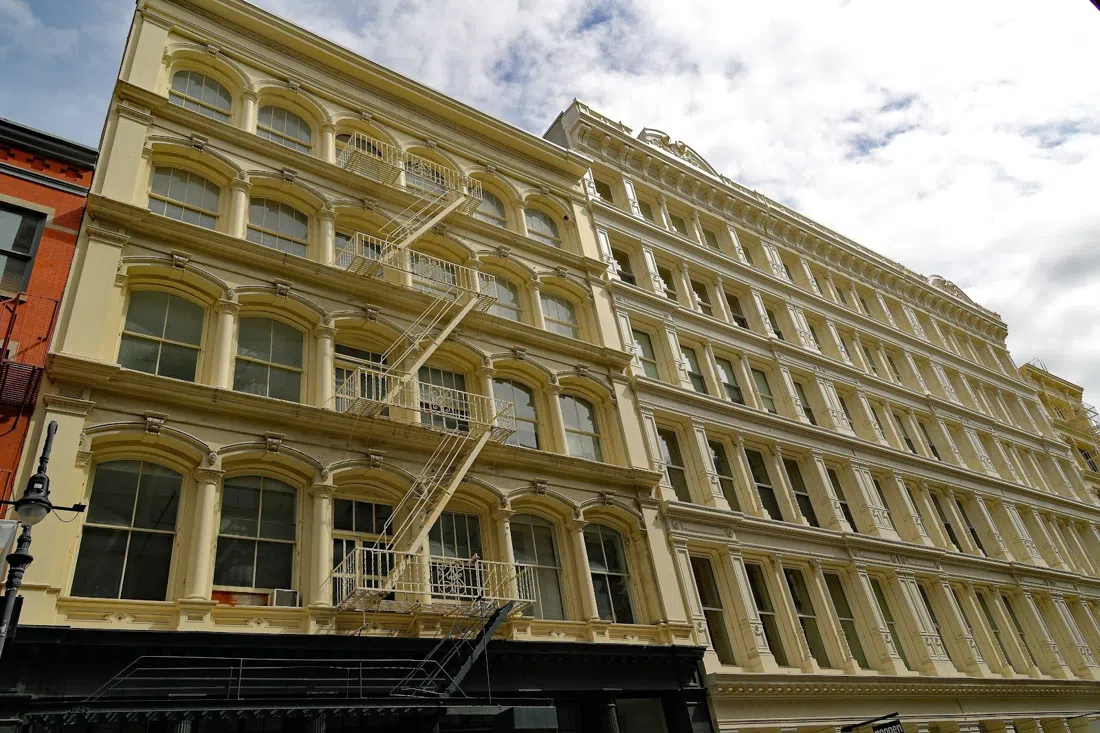
There is a moment on the downtown loop, a block or two south of Houston Street, when the top deck goes quiet without anyone asking it to. The buildings stop being backdrop and start being buildings: fluted columns, deep cornices, arched windows, whole façades cast in iron in the 1870s and bolted together like flat-pack furniture, running block after block. In September, once the August haze has lifted and the four o'clock sun starts raking low down the side streets, this is the best forty minutes of open-top sightseeing in New York. It is also the stretch most visitors ride straight through without ever getting off.
What the top deck actually shows you
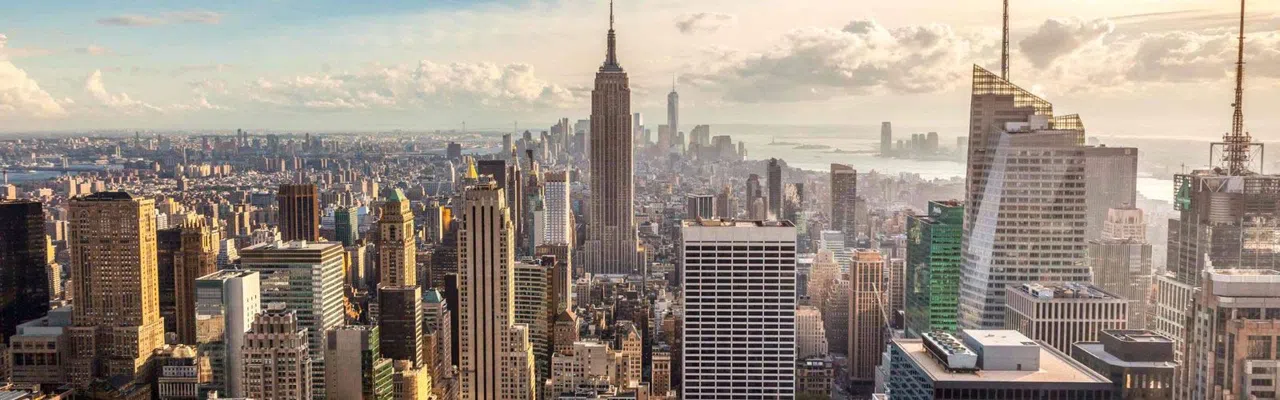
An open-top bus is a strange instrument for looking at SoHo. Most of the district's detail sits between the second and fourth floors, exactly where an upper deck puts your eye, so the height is right in a way it never is on Fifth Avenue or in the Financial District. You pass shopfronts you would not otherwise notice, you get a clean view over the parked delivery trucks that clutter the pavement at street level, and the recorded commentary gives you the outline of how a neighbourhood of textile warehouses became artists' lofts and then became the most expensive retail rents in the country.
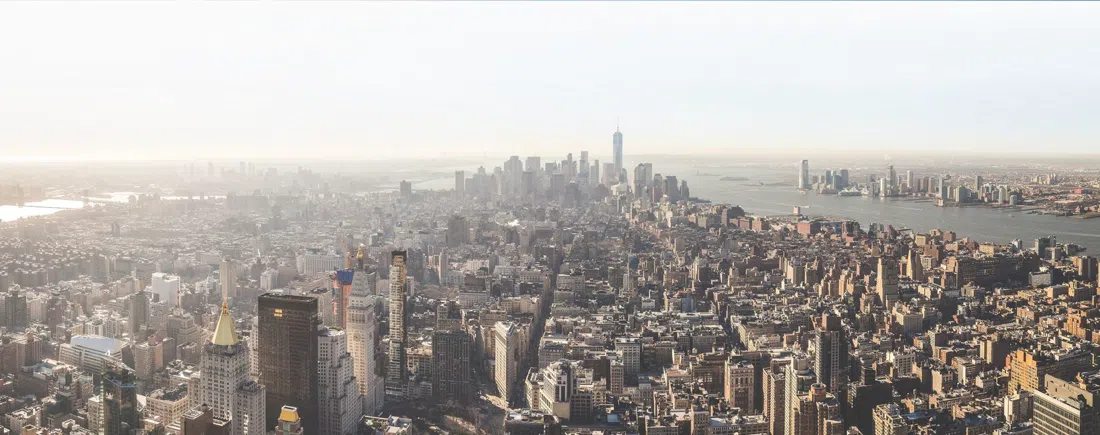
What the bus cannot do is make you look up. At fifteen miles an hour with a soundtrack in your ear, the cast iron flattens into scenery, a pleasant grey-and-cream blur. Every honest version of this day treats the bus as transport and orientation rather than the attraction itself. You ride it to understand the shape of Manhattan, you get off in SoHo, and you spend an hour on foot. Ride it without hopping off and you have essentially paid for a slow taxi with commentary.
The cast-iron blocks only work on foot
The SoHo–Cast Iron Historic District (Greene Street, two minutes from the bus stop) is the reason the route bothers coming down here. It is the densest concentration of cast-iron architecture anywhere in the world, and Greene Street is its spine, including the two buildings known as the 'Queen' and the 'King' of Greene Street, both by the same architect in 1872. Walking is free, there is no booking, no gate and no opening hour, and guided walking groups are a common sight at weekends. Stand in the middle of the block, look up to the roofline, and the whole thing resolves: identical columns repeating because they were cast from moulds, ornament that was ordered from a catalogue, a nineteenth-century mass-production system hiding in plain sight.
Two minutes in the other direction, at the corner of Broadway and Broome, the E. V. Haughwout Building (SoHo) is the single most consequential structure in the district. It went up in 1857, and inside it Elisha Otis installed the world's first successful passenger elevator, the invention that made every tall building that followed possible. There is no public interior access, so this is a look-up-from-the-pavement stop of five minutes. The pavement there is narrow and genuinely busy; if you are moving as a group, keep everyone back from the crossing rather than spreading across it.
Choosing between the open-top operators
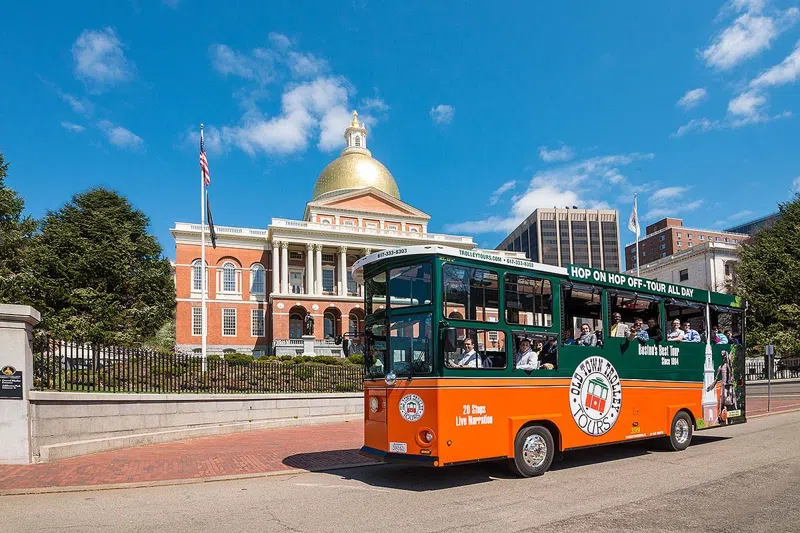
Four operators matter for this stretch, and they are not interchangeable. Big Bus New York runs the tightest downtown circuit: roughly 90 minutes for the full loop, buses every 20 to 30 minutes, and in autumn they run from about 09:30 to 16:30. Passes run around $60 to $100 per adult for one or two days, with lower child fares. Boarding is open, with no per-stop reservation, so families and coach parties get on freely; the caveat is that a large group will not reliably all get upper-deck seats on the same bus during peak hours.
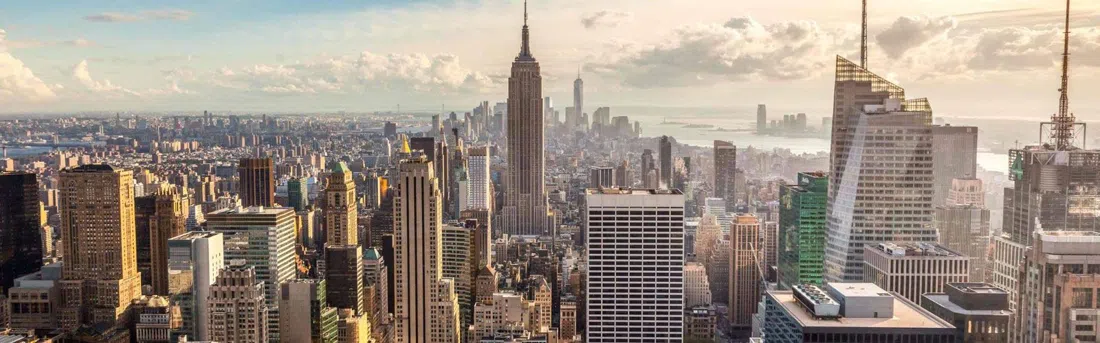
TopView Sightseeing has the bigger fleet and the one that also runs the after-dark tour, which makes it the simplest choice if you want a daylight SoHo hop-off and a lit-skyline run from the same operator. Passes are around $39 to $90 per adult depending on length, with the night tour priced separately. Buses come every 20 to 25 minutes, so a group that misses one waits a short while rather than rebuilding the afternoon. The cost of that is real: its downtown loop is longer and slower than Big Bus's, closer to 2.5 hours for a full circuit, which eats a large piece of a short day.
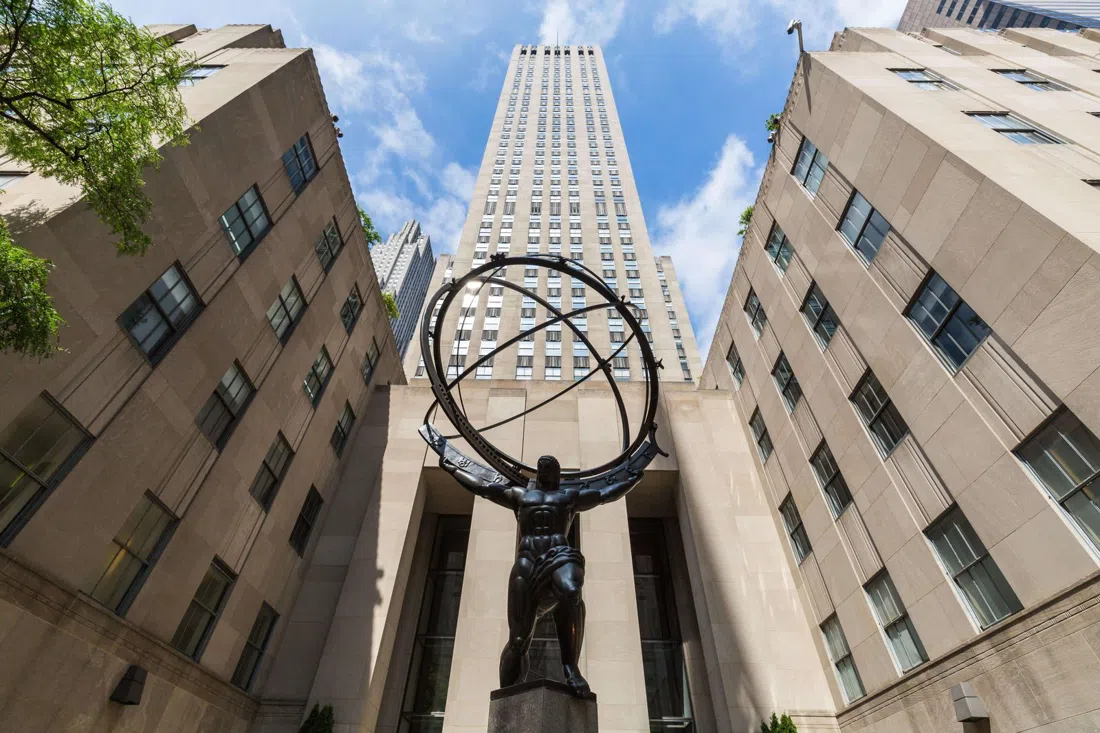
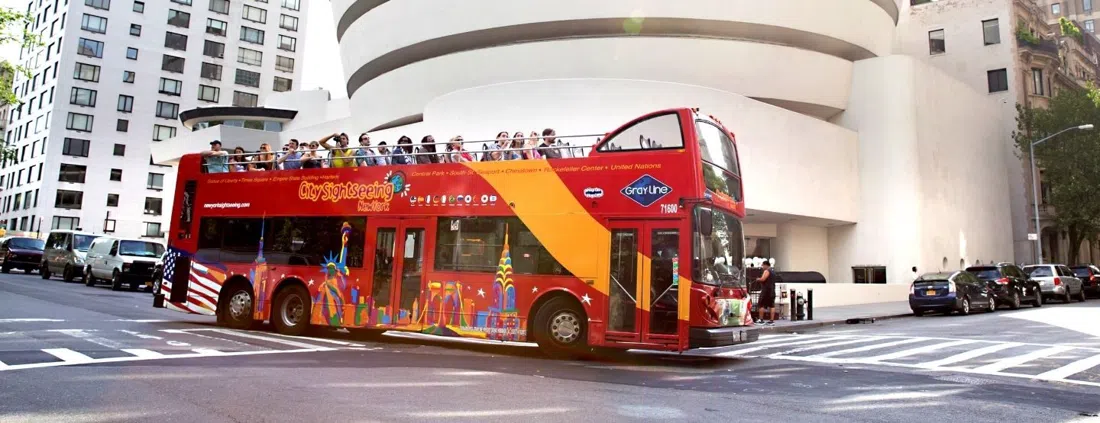
Gray Line New York, trading as CitySightseeing New York, is the oldest name in the business here, still running uptown, downtown, Brooklyn and night loops, and it goes out rain or shine. Loop passes are roughly $60 to $110 per adult. It is explicitly set up for groups, selling all-loops passes, escorted motorcoach tours and combination packages, and it handles pre-booked parties properly. Its escorted coach tours are a different product from the open-top loops, and priced higher.
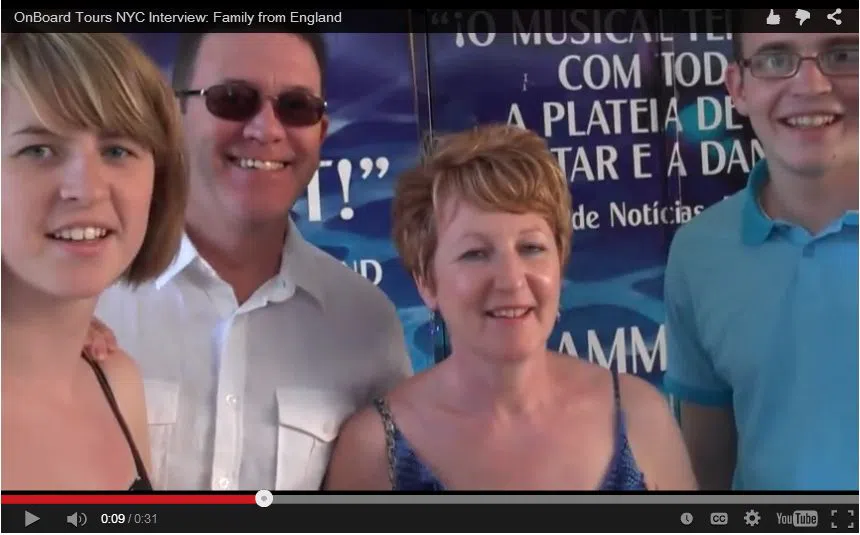
If what you actually want is someone to explain SoHo rather than drive you past it, OnBoard New York Tours is the genuine alternative: a guided half-day coach format where the guide gets off the bus with you at each stop instead of handing you to a recording. Its See It All itinerary runs through SoHo and Tribeca, it is small-group by design, private bookings are available on request, and it costs around $65 to $120 per adult depending on length. For a first-time international visitor this is usually the better purchase, and I would say so even though it is the less famous option.
Finding the stop without the landmark everyone still cites
The SoHo stop on the Big Bus Downtown (Red) Loop is Stop 5, Broadway at Spring Street. Almost every printed route map and half the online ones still describe it as standing 'in front of the Nike Store'. That flagship at 529 Broadway closed in January 2026 and the building is being converted for IKEA, so the swoosh you are looking for is not there. Find the red stop pole instead, and ignore the shopfronts entirely. This catches out a surprising number of people who spend ten minutes walking the wrong block with a map in their hand.
How long a SoHo hop-off really takes
Budget more than you think. A bare minimum SoHo stop, off the bus, up Greene Street, across to Broome for the Haughwout and back to the pole, is 45 minutes and leaves you rushing. An hour and a half is the honest figure if you want a coffee or a small museum in it, and half a day if you intend to eat properly. Then add the wait: at 20 to 30 minute headways you should assume a quarter of an hour standing on Broadway before the next bus arrives, more at weekends.
The number that actually constrains the day is the last bus. With autumn service finishing around 16:30, a 15:00 hop-off is fine and a 16:00 one is a decision to walk or take the subway back. SoHo's art venues close at 18:00, which sounds generous until you realise the buses have stopped an hour and a half earlier.
Tickets at the door versus booking ahead
You can buy at the kerb from a seller on most days, but the open-top tours here start from 62 USD per person when booked ahead, and booking ahead is the only way to guarantee a specific day at a specific price rather than whatever the street seller has. The loops run seven days a week, Monday through Sunday with no dark day, so September dates are a question of price and weather rather than availability.
Be realistic about what you are buying. Across the bookable tours at this attraction there are 11,352 traveller reviews, and the top-selling hop-on hop-off tour sits at 3.5 out of 5 from 4,958 of them. That is not a bad product; it is the normal score for open-top sightseeing anywhere, and it reflects the two complaints that recur in every city: waiting for buses, and commentary that skips the thing you cared about. Go in expecting a transport pass with a view rather than a curated experience, and the rating stops being a surprise.
The hop-offs worth an hour
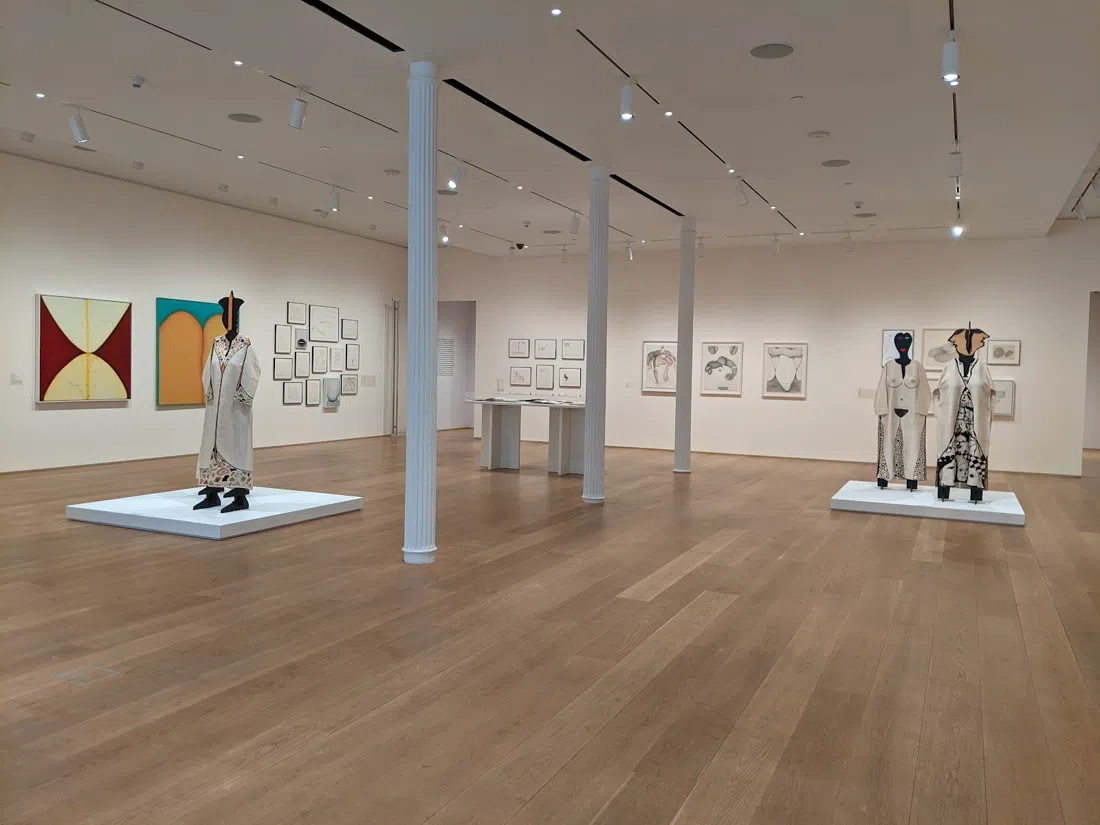
On Wooster Street, two free-or-nearly-free museums share a block and pair neatly into a single stop. The Drawing Center (SoHo) is the only US non-profit devoted solely to drawing, free to enter, open Wednesday to Sunday 12:00 to 18:00, and the best wet-weather bolt-hole from the bus stop, though the galleries are compact and anything above a small group should contact them ahead. A few doors along, the Leslie-Lohman Museum of Art (SoHo) is the world's only museum dedicated to LGBTQ+ art, also Wednesday to Sunday 12:00 to 18:00, and choose-what-you-pay from about $1, which removes the ticketing bottleneck entirely. Book ahead for more than about a dozen people.

The New York Earth Room (SoHo) is the district's strangest survivor: Walter De Maria's 1977 loft filled with 250 cubic yards of earth, unsigned from the street, open Wednesday to Sunday with a 15:00 to 15:30 closure in the middle of the afternoon that catches people out. The viewing space is tiny, so go in ones and twos, and do not bring a coach party. If it grabs you, Dia's companion piece The Broken Kilometer is a few minutes away on West Broadway.
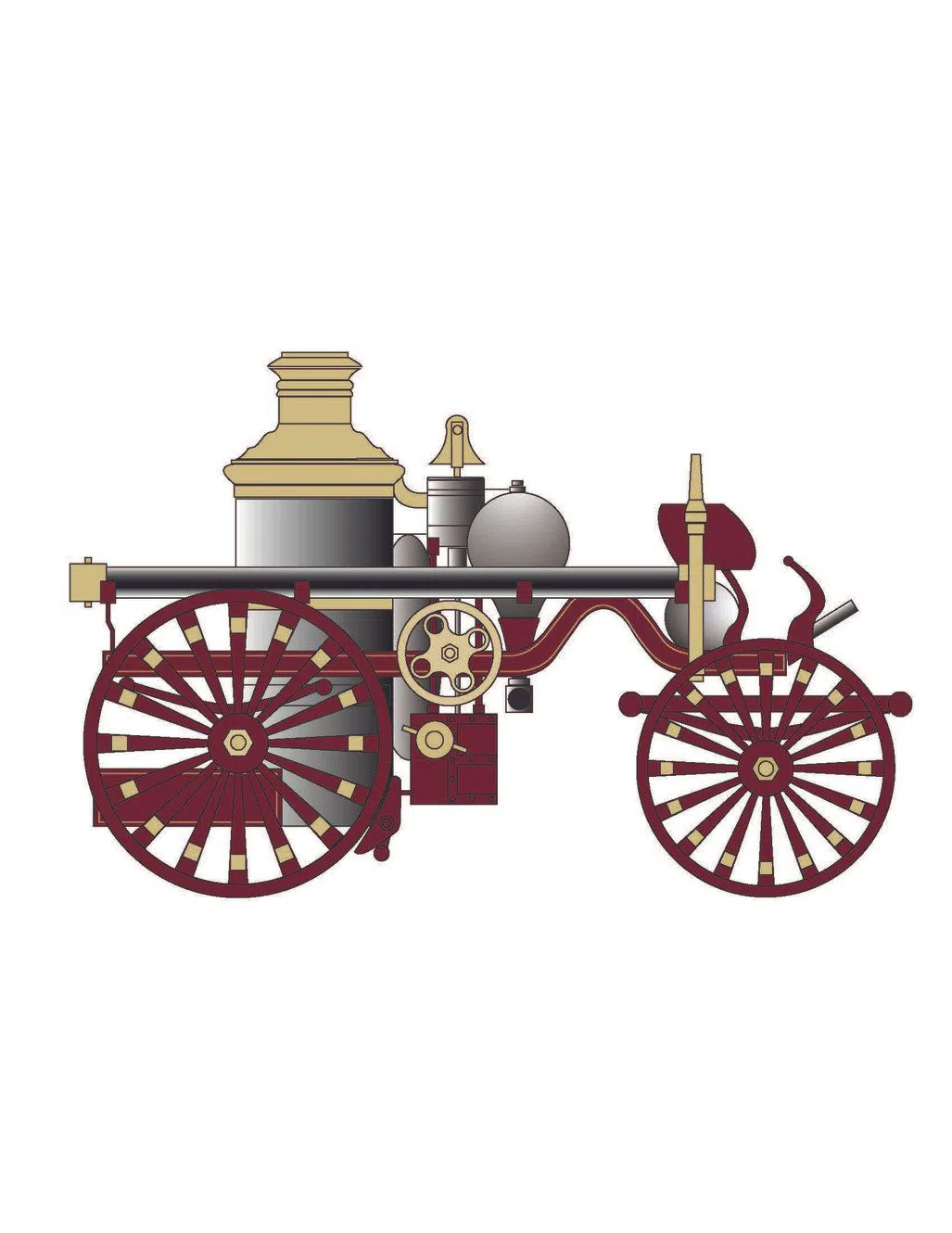
For mixed ages, the New York City Fire Museum (western SoHo) is the reliable one: open seven days, 10:00 to 17:00, housed in a working-era firehouse with room to move, modest admission of roughly $10 to $20 per adult with concessions, and home to the city's 9/11 memorial to the FDNY. Arrange group visits in advance. The Museum of Ice Cream (Broadway, SoHo) reopened at 558 Broadway on 4 February 2026 with thirteen reworked installations and sits directly on the bus route; it runs on timed entry at roughly $48 to $68 per person, under-twos free. Book a slot before you board, because turning up at the door without one is how you end up queuing on Broadway instead of riding.

Eating between buses
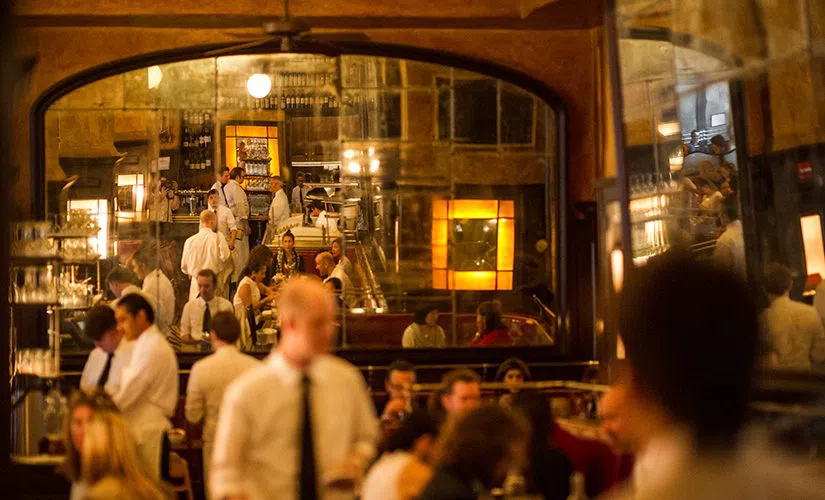
Balthazar (Spring Street, SoHo) has anchored this neighbourhood since 1997 and remains the room people mean when they say they want lunch in SoHo. Mains run roughly $30 to $55, breakfast considerably less, and breakfast or early lunch are the only realistic windows on a bus-tour day; weekend brunch and dinner are the hardest tables in the district to walk into. It takes group bookings but not walk-in crowds, so reserve well ahead for more than four, and call rather than book online for a large party.
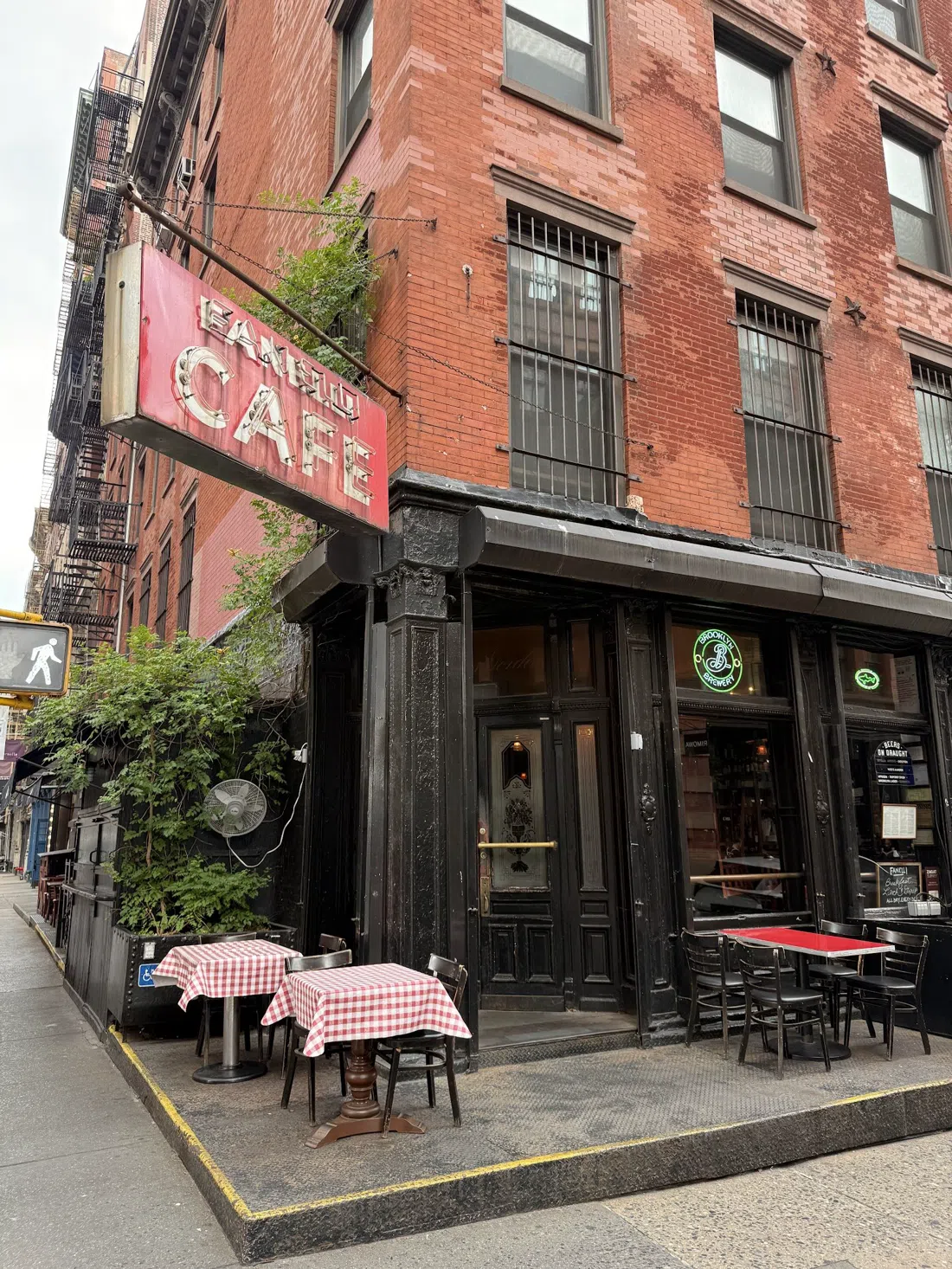
For the opposite of that, Fanelli Cafe (Prince Street, SoHo) has been trading at number 94 since 1847 and is the least polished thing left in SoHo. Burgers and sandwiches are roughly $18 to $28, it is walk-in only with no reservations, fine for four or five and awkward for more, and the small rooms fill fast at lunch. It also stays open to midnight, and to 01:00 Thursday to Saturday, so it catches you long after the last bus has gone.
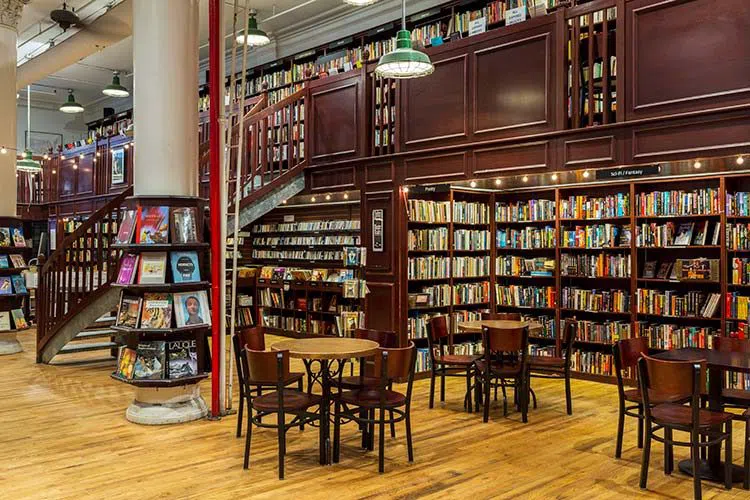
Dominique Ansel Bakery (Spring Street, SoHo) is the Cronut's home at 189 Spring Street, open 08:00 to 19:00 daily, pastries roughly $7 to $14. The monthly flavour sells out by mid-morning; the official pre-order system (minimum two, maximum twelve per person per week) lets you collect without queuing, and it is the single most useful queue-avoidance trick in the neighbourhood. There is no group booking, since it is a counter with a small courtyard, so split up rather than queue as a block. When you simply want to sit down and stop paying for things, Housing Works Bookstore Cafe (Crosby Street, SoHo) is a volunteer-run charity shop whose takings fund services for New Yorkers facing homelessness and HIV/AIDS, open 11:00 to 19:00 Monday to Saturday and 11:00 to 17:00 Sunday. Books are $5 to $15, coffee a few dollars, and the mezzanine is the easiest free seat in SoHo.

One rooftop, and only three or four evenings a week
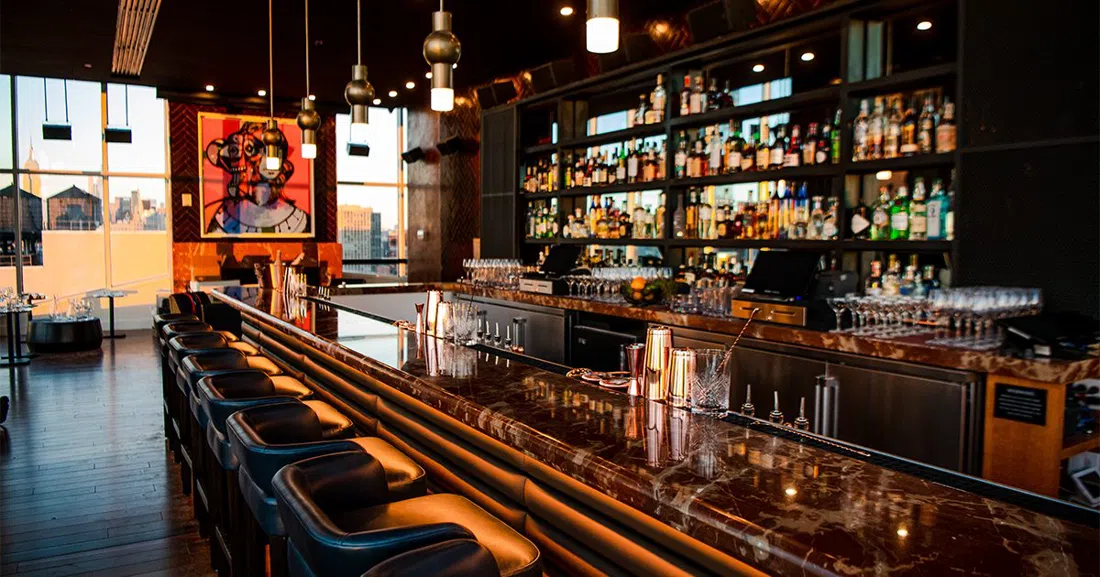
JIMMY SoHo (Thompson Street, SoHo) is the only real high viewpoint inside the district, on top of the hotel formerly called The James, with cocktails around $20 to $26. The catch is the calendar: it opens Wednesday to Saturday evenings only, which strands a lot of visitors who planned a Sunday sundowner. The door is selective at weekends, dress is smart-casual, large stag-type parties are turned away, and groups should be pre-booked. Check the day before you build an evening around it.
Best time to go in September
September is the strongest month of the year for this particular ride. The humidity that makes a July top deck unpleasant has broken, the light is low and warm on the iron façades from about 16:00, and the summer crowd has thinned before the autumn half-term wave. Mornings can still start cool enough on an open deck that a jacket is not optional: take one even if the forecast says 26°C, because wind on a moving upper deck subtracts several degrees.
For day of week, aim for Wednesday to Friday. The art venues on Wooster Street are shut Monday and Tuesday, so a Tuesday hop-off leaves you with the street architecture and little else, while Saturday brings the heaviest pavement traffic in SoHo and the longest bus waits. For time of day, board the loop early, ride the full circuit for orientation, and come back to Spring Street between 13:30 and 15:00, late enough for the museums to be open and early enough to catch a bus back before service ends around 16:30. If rain is forecast, do not cancel: the loops run seven days a week and the operators go out in bad weather. Ride the lower deck, hop off at Wooster Street, and spend the shower indoors.
Is it worth it
As a way of seeing SoHo specifically, no: a subway ride and an hour on foot costs almost nothing and shows you more. As a way of seeing Manhattan with SoHo as one well-chosen stop on it, yes, clearly, and it suits three groups in particular: first-time visitors with three or four days who need the city's geography to click; families, because the top deck solves the problem of children who will not walk twelve blocks; and anyone travelling with limited mobility who wants to reach the cast-iron blocks without a long approach on foot. It suits confident repeat visitors and independent walkers much less. If you are in the second camp and still want the commentary, buy a guided half-day tour where someone gets off the bus with you, and skip the loop pass entirely.
Practical notes
Getting here without the bus is easy: Spring Street and Prince Street subway stations sit on the edges of the district, and from most of lower Manhattan SoHo is a fifteen-minute walk. Cards and phones are accepted everywhere named here; carry a small amount of cash only for tips. Budget roughly $62 upward for the loop pass, $10 to $20 for the Fire Museum, nothing at all for the Drawing Center, the Earth Room or the cast-iron streets themselves, and $20 to $60 a head for a proper sit-down lunch. Pavements in SoHo are cobbled in places and genuinely uneven, so wear the shoes you would walk in, not the ones you would shop in. Plan your sleeping end of things from the New York hotel search, and if you are building the rest of the trip around this afternoon, the wider New York guide covers the neighbourhoods either side of the loop.