 In this area
The New York issue
Harlem, New York: Where the City Still Sings on 125th Street
A street-level walk through Harlem’s soul-food counters, brownstone jazz rooms, gospel pews and newly reopened museum, where the history is still being lived block by block.
By Sol AbramowitzNew York from the deli counter out
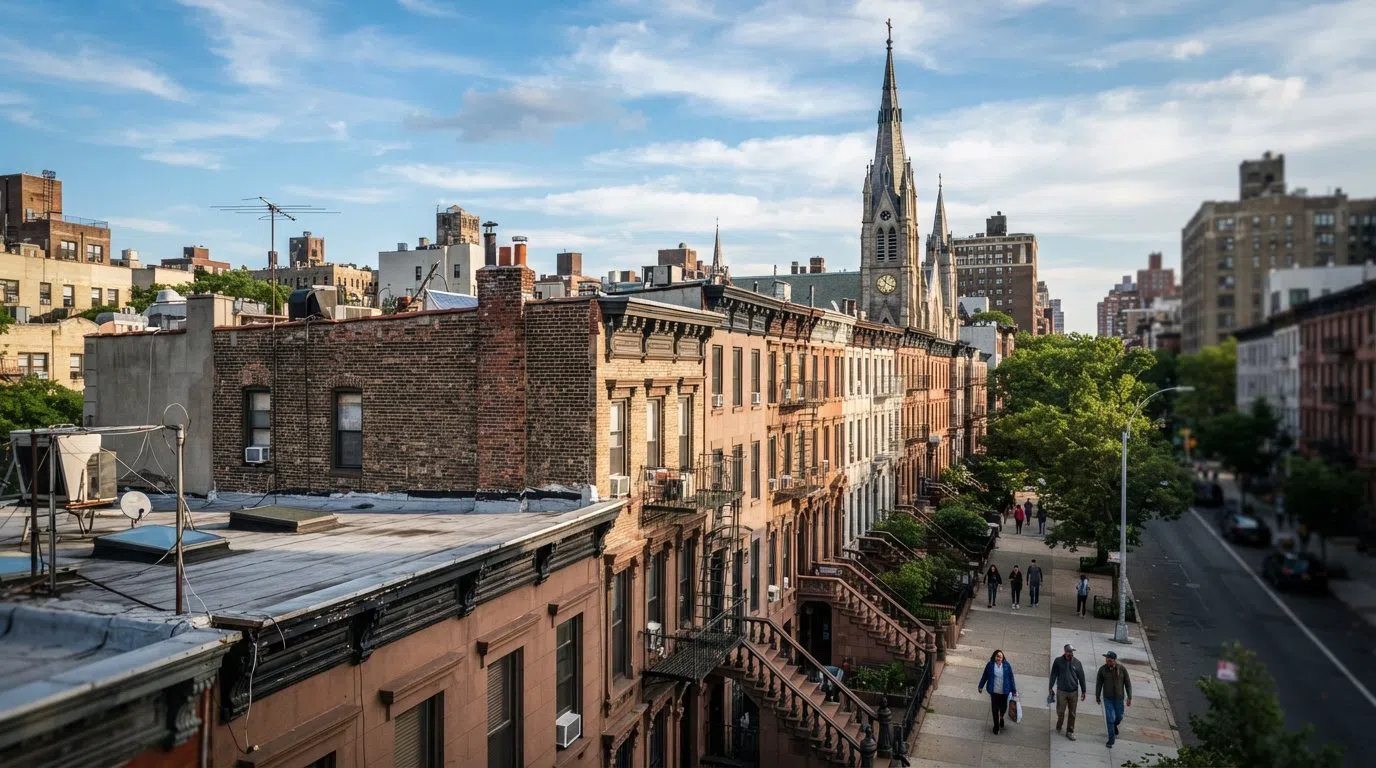
125th Street still comes at you with a preacher’s cadence and a fry basket’s perfume. The corner rooms are loud, the sidewalks are busy, and somewhere off Lenox a saxophone is warming up like it has all the time in the world. Harlem has always had a way of making a case for itself without raising its hand. It does not perform heritage so much as keep working it, meal by meal, set by set, Sunday by Sunday.
What Harlem is known for
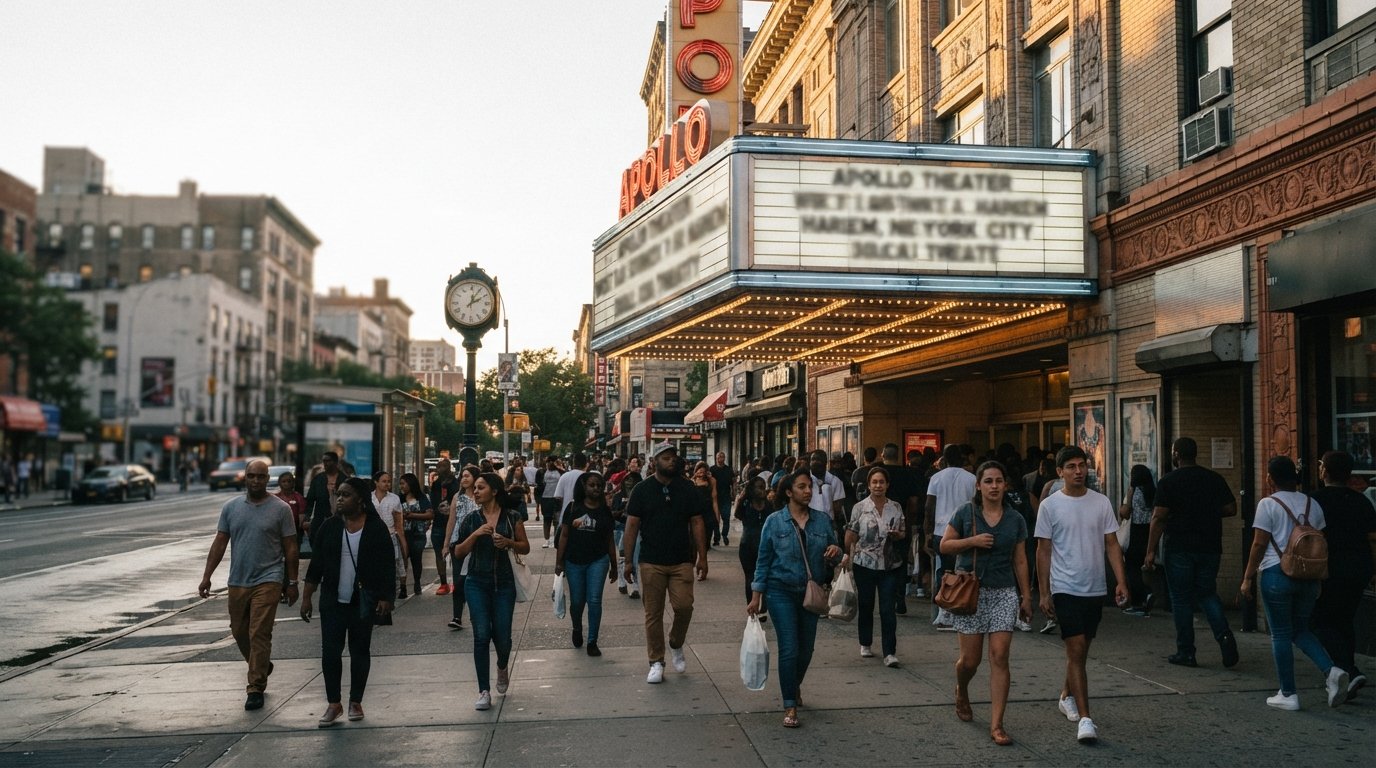
Harlem is the cultural capital of Black America, and it wears that title the way a good old-timer wears a fedora: not for show, but because it fits. The Harlem Renaissance of the 1920s still hangs over the place — Langston Hughes, Duke Ellington, the whole bright, unruly company of writers and musicians who made this part of Manhattan feel like the centre of the world. You can still read that story in the streets if you know where to look: the Apollo Theater on 125th Street, where Ella Fitzgerald and James Brown were discovered; Strivers’ Row on West 138th and 139th Streets, where McKim, Mead & White had a hand in the brownstones; and the Mount Morris Park Historic District around Marcus Garvey Park, where the row houses get grand enough to make you slow down and stare.
But Harlem is not a museum piece. The neighborhood’s latest argument is the Studio Museum in Harlem, which reopened on 15 November 2025 in a seven-storey David Adjaye-designed building after nearly eight years and more than $300 million of construction. It is a serious place for work by artists of African descent — Basquiat, Faith Ringgold, and new commissions — and the lower level has a café by Harlem’s own Settepani. That matters here. So does Sunday gospel, the old Wednesday amateur-night tradition, and the fact that some jazz still happens in front rooms rather than in glossy rooms with velvet ropes.
The wide boulevards — Malcolm X, Frederick Douglass and Adam Clayton Powell Jr. — are named for people who mattered here, which feels about right. Harlem is a working neighborhood with a century of cultural weight on its back, but it carries the thing lightly. On one block you get a $6 happy-hour margarita bar; two doors down, a fish-fry counter that has been feeding the block for 60 years. That kind of uneven gentrification is the Harlem special. It changes by inches, not by decree.
Plan your New York trip
Live prices from our booking partners.
Guests & rooms
Free cancellation on many rooms. We may earn a commission when you book.
Where to eat & drink
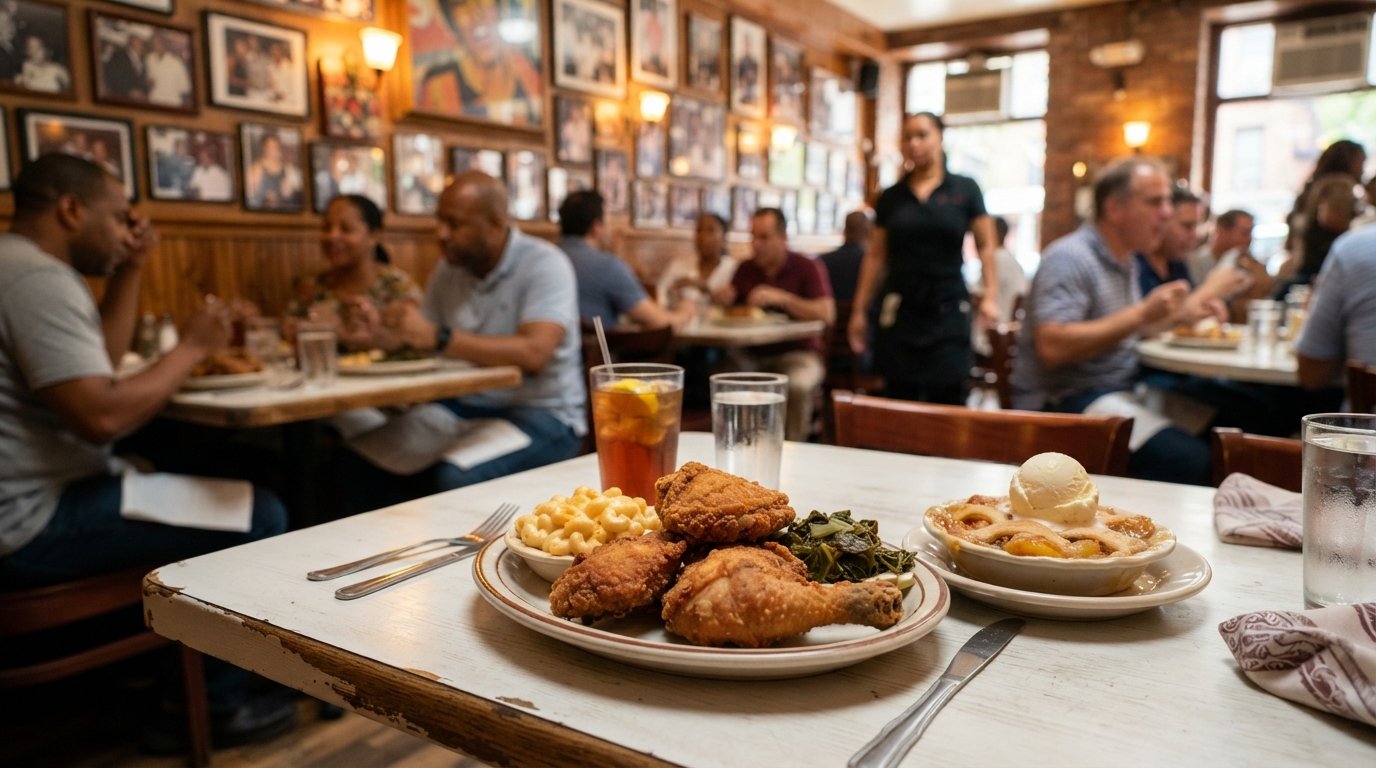
If you want to understand Harlem properly, start with a plate and a line. Sylvia’s at 328 Malcolm X Blvd has been the queen of the local soul-food table since Sylvia Woods opened it in 1962, and it still knows exactly what it is doing: fried chicken, smothered pork chops, catfish, peach cobbler, and a Sunday gospel brunch that can rattle the cutlery. Midweek there’s live music, which is a nice way of saying the room never really sits still. Sylvia’s is not some nostalgic fantasy of Harlem; it is one of the reasons people came here in the first place.
A few blocks away, Amy Ruth’s at 113 West 116th Street keeps the chicken-and-waffles benchmark honest. The dishes are named for Black New Yorkers, which is the sort of move that sounds cute until you realize it is also a form of local memory. Order the famous “Rev. Al Sharpton” if you want the signature. It is the kind of plate that arrives with a grin and a warning: you are not leaving hungry.
Melba’s at 300 West 114th Street feels a little more intimate, but the cooking doesn’t play shy. Melba Wilson learned from her aunt Sylvia, and the lineage shows in the room’s confidence. Short ribs, eggnog waffles — this is the sort of place that reminds you Harlem’s classics are not frozen in amber. They are still being cooked by people who know exactly whose shoulders they stand on.
Then there is the modern side, which Harlem has earned without asking permission. Red Rooster at 310 Lenox Ave is Marcus Samuelsson’s loud, DJ-fuelled Southern flagship, the kind of room that put contemporary Harlem dining on the map and did not apologize for the volume. It buzzes because it wants to. If you prefer your dinner with a little swagger and a bar scene that has actual pulse, this is your stop.
Vinatería at 2211 Frederick Douglass Blvd goes a different way: Spanish-Italian small plates, oxtail ragù, octopus, saffron risotto, and a wine list that has won a Wine Spectator award every year since 2017. That’s the sort of detail that tells you the room knows its business. It is polished, yes, but not in a way that erases the neighborhood around it.
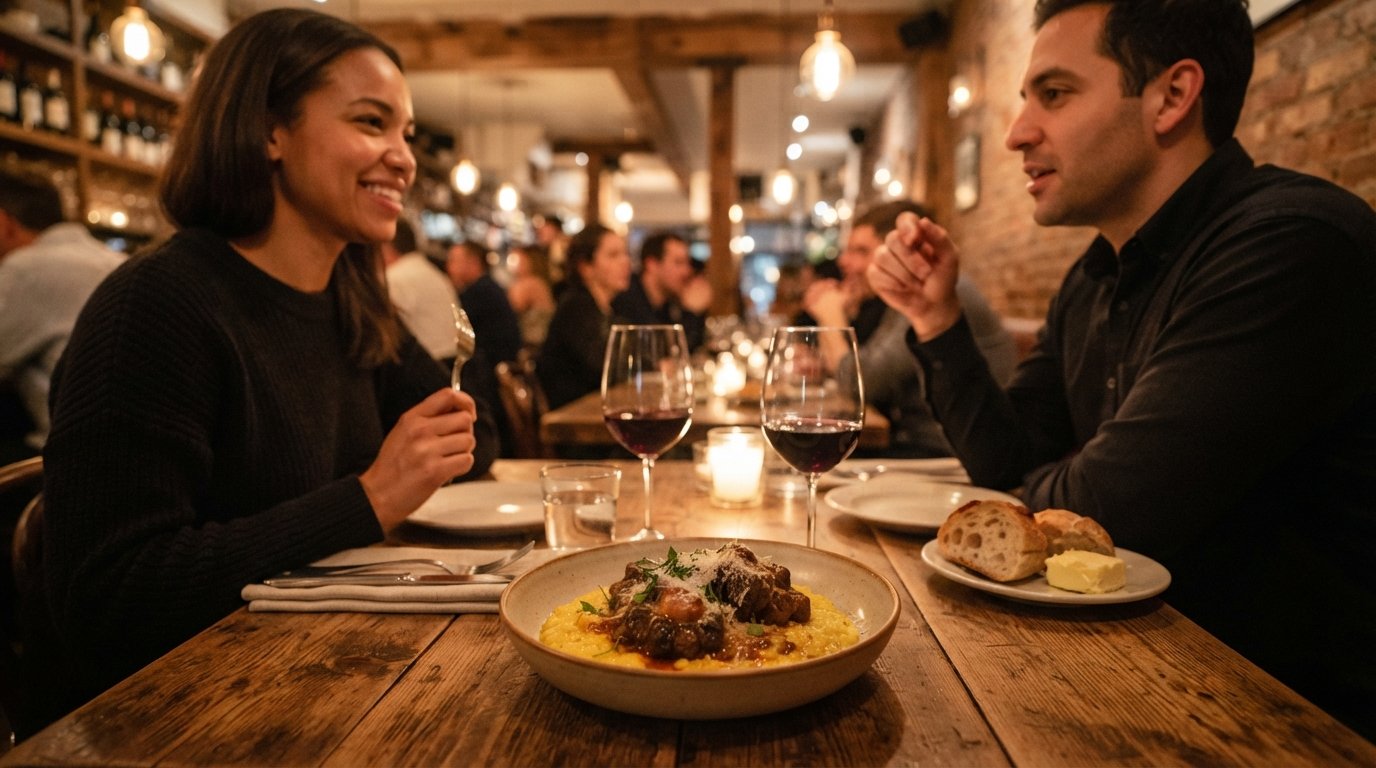
Harlem’s range is part of the point. The Edge at 101 Edgecombe Ave does Jamaican-British-American cooking, including jerk chicken and daily brunch. Abyssinia at 268 West 135th Street handles Ethiopian with the seriousness it deserves. Maison Harlem at 341 St Nicholas Ave is the proper French-bistro play, with escargot, duck confit and cassoulet. And Harlem Shake at 100 West 124th Street is the retro burger counter for smashburgers, chili dogs and red-velvet shakes — proof that a neighborhood can be historically loaded and still have room for a good burger.
Going out
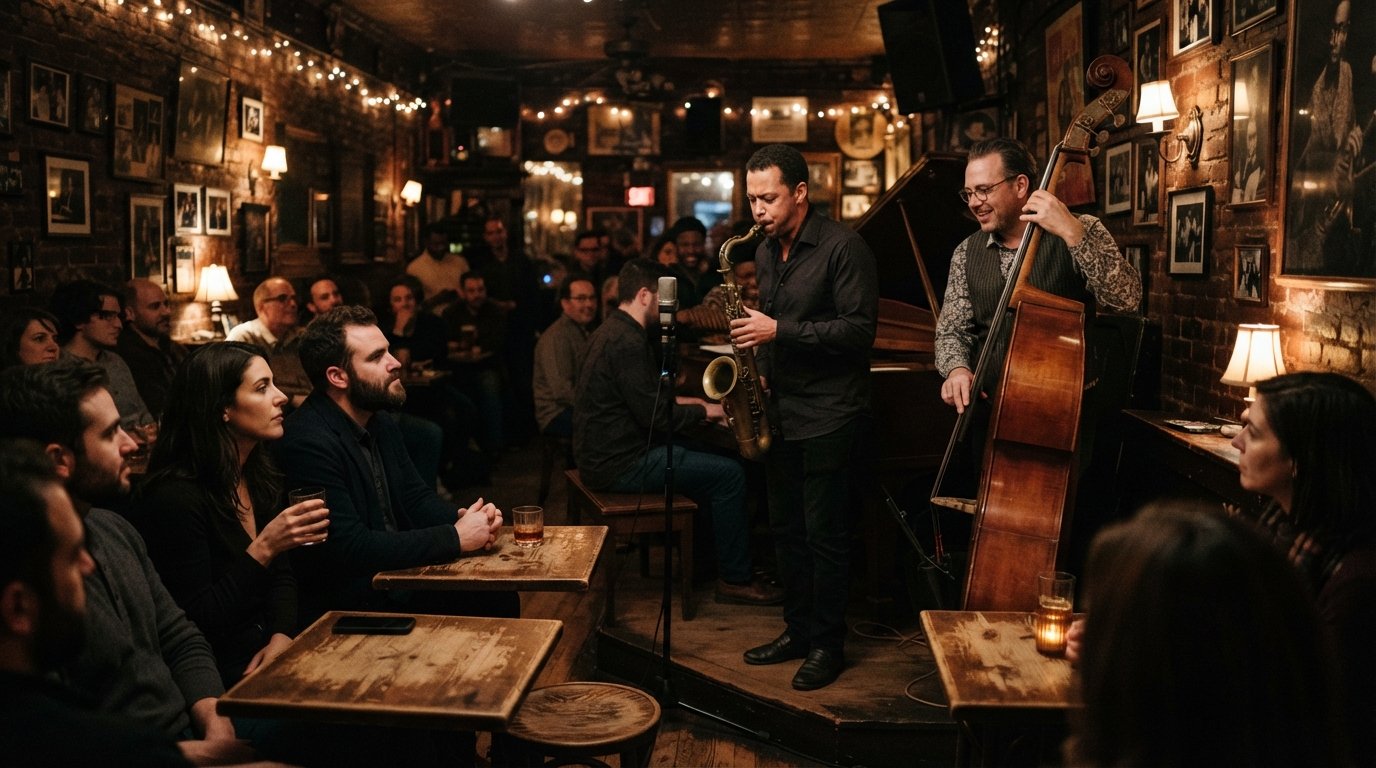
Harlem’s nightlife is not a club crawl. It’s a music crawl, and the best rooms are the ones you have to know to book. Bill’s Place at 148 West 133rd Street is the one to prioritize: a 30-seat brownstone jazz parlour on old Swing Street, where saxophonist Bill Saxton and the Harlem All-Stars play at 7pm and 9:30pm every Friday and Saturday. It is reservation-only through the venue’s website, it asks for roughly a $20 donation, and you bring your own drinks. That last part feels right. No one comes here for bottle service. They come because the room is small enough to hear the horn breathe.
Shrine at 2271 Adam Clayton Powell Jr Blvd is the looser, freer option — free entry, world music and jazz, something on most nights. Silvana at 300 West 116th Street hides a nightly live-music basement below a Middle Eastern café, which is exactly the kind of layered Harlem move that makes you feel like you’ve found three places in one. And on Sundays, American Legion Post 398 at 248 West 132nd Street opens its bar for one of the most authentic jam sessions uptown. If you want the real thing, not the brochure version, that’s where to go.
For cocktails, Angel of Harlem pours strong and turns Sunday brunch into a bottomless party. Cove Lounge, the bi-level spot from Harlem native Alyah Horsford-Sidberry, mixes classic and tropical tipples in a 75-seat room. Harlem has its share of places that are happy to sell you a night out. The better ones let the neighborhood do the talking.
Things to do / what to see
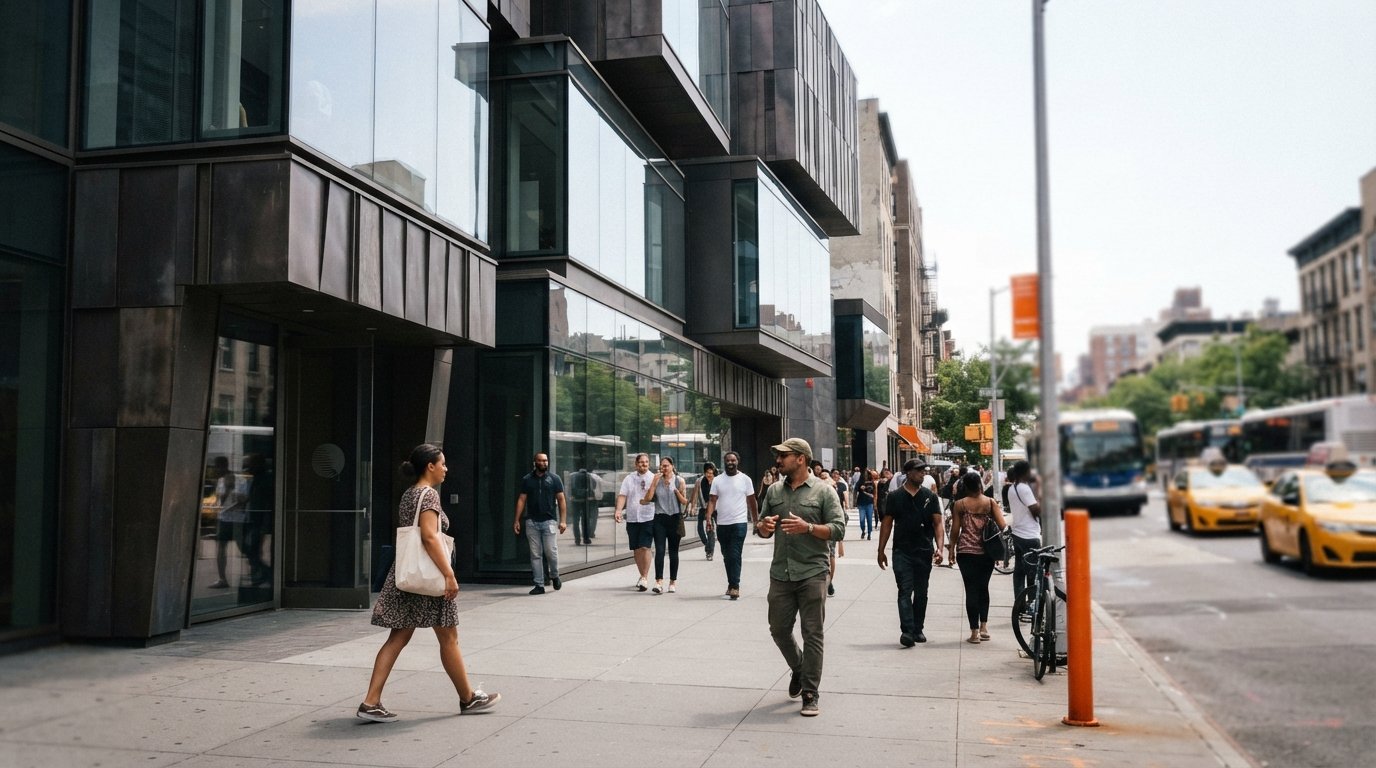
Start at the Studio Museum in Harlem at 144 West 125th Street. It reopened in November 2025 in its new Adjaye-designed home and is free to enter on Sundays. That alone makes it worth building a day around, but the larger reason is simpler: this is where you go to see work by artists of African descent in a setting that belongs to the neighborhood rather than borrowing its name. The museum’s reopening gives Harlem a fresh landmark, but the spirit behind it is old business.
A few doors along, the Apollo Theater is mid-way through a $65 million restoration that keeps the historic auditorium dark into summer 2026. That’s the bad news, if you were hoping for a seat inside the old room. The good news is that programming, including the famous Amateur Night, continues at the Apollo Stages at the nearby Victoria Theater. So yes, go see the building. But check the schedule first if you’re planning your evening around a show.
Sunday morning belongs to gospel, and Harlem is still one of the places where that sentence means something. Abyssinian Baptist Church at 132 Odell Clark Place / West 138th Street has been at it since 1808 and welcomes respectful visitors to services. First Corinthian Baptist Church on Adam Clayton Powell Jr Blvd does the same. Arrive an hour early to queue, dress modestly — no shorts, tank tops or backpacks — and understand what you are entering. This is worship, not a performance.
For air and a little motion, Marcus Garvey Park between 120th and 124th Streets gives you a rare cast-iron fire watchtower, an amphitheatre that hosts summer concerts, and drum circles on most warm-weather Saturdays. It is one of the neighborhood’s best resets: a place to hear Harlem’s volume outdoors, with the skyline peeking over the trees.
Then walk Strivers’ Row on West 138th and 139th Streets, the St. Nicholas Historic District’s grand 1890s row houses and the most photographed brownstone blocks uptown. This is the part of Harlem that makes developers dreamy and locals suspicious, because the architecture is so elegant it can be mistaken for a mood board. Better to take it as it is: a street of ambition that outlived the people who first imagined it.
Don’t miss in Harlem
The Apollo Theater
Studio Museum in Harlem
Marcus Garvey Park
Shopping
Harlem’s signature buy is a hat, which feels exactly right for a neighborhood where style has always been part armor, part declaration. Flamekeepers Hat Club at 273 West 121st Street is a much-loved men’s headwear shop, and owner Marc Williamson fits you for a fedora or flat cap with the patience of a tailor. This is not a place that rushes the mirror check. Good hats need a little ceremony.
Harlem Haberdashery at 245 Malcolm X Blvd takes the fashion story further. It sells custom pieces from the family behind the 5001 Flavors label, the people who dressed the Notorious B.I.G. and LeBron James, and it does so out of the brownstone that once housed Malcolm X. That’s Harlem in one sentence: style, memory and commerce all sharing the same address.
For color and bargaining, the Malcolm Shabazz Harlem Market at 52 West 116th Street is the open-air bazaar to know — African textiles, carvings, jewelry and drums, run largely by Senegalese, Nigerian and Ghanaian vendors, open daily until around 8pm. It is a browse-and-chat district, not a mall run. Better for it. The 116th Street and 125th Street corridors also mix the usual chains with independent bookshops, record stores and Black-owned boutiques, and on weekends Strivers’ Row artists sometimes sell work from their stoops. That kind of commerce feels properly Harlem: personal, a little improvised, and not in a hurry.
Where to stay in Harlem
Harlem is one of Manhattan’s better-value bases, which is a polite way of saying you can still get some breathing room without giving up the city. The most convenient pocket sits around 125th Street between Malcolm X and Frederick Douglass Boulevards, close to the Studio Museum, the Apollo and the express subway lines. If you want quieter streets and a little more green, South Harlem — roughly 110th to 120th Streets — borders the top of Central Park and gets you within a short walk of the park’s north end.
The historic side streets around Mount Morris Park and Marcus Garvey Park are lined with brownstone B&Bs and guesthouses that trade chain polish for character and a residential feel. That is the trade here: boutique hotels, aparthotels and B&Bs rather than big-brand towers. It suits travelers who want a neighborhood to come home to, not just a bed to crash in.
Hotels in Harlem
Our best-rated stays in this neighbourhood. Prices are approximate “from” rates — confirmed at the provider when you continue. We may earn a commission if you book through our partners — at no extra cost to you.
In this area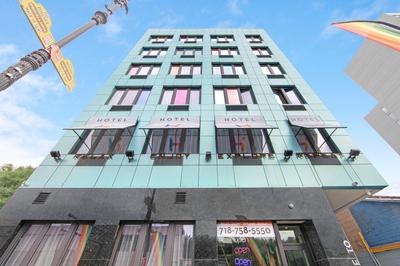 In this area
 In this area
Getting around
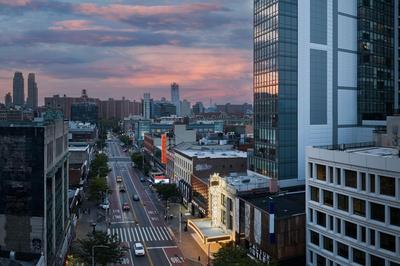
Harlem is exceptionally well connected, which is part of why it works so well as a base. On the west side, the A, B, C and D trains stop at 125th Street, with the A and D running express, about 10–15 minutes to Columbus Circle and Midtown. Down the middle, the 2 and 3 run under Lenox Avenue. On the east side, the 4, 5 and 6 trains and Metro-North meet at the Harlem–125th Street station at Park Avenue, the fastest route to Grand Central. Most of Harlem is a five-minute walk from a train, which is handy because the blocks are long and the neighborhood rewards walking in pieces rather than trying to conquer it in one go.
It is a flat, grid-friendly place, so you can wander between the boulevards without feeling like you’ve signed up for a hike. Still, pair your wandering with the subway. That’s how Harlem works best: a few blocks on foot, a train for the long stretch, then a table, a pew or a music room waiting at the end of it.
Gallery
Harlem in pictures
Harlem — your questions
Is Harlem a good area to stay in New York?
Yes, if you want character and value over being steps from the big sights. Room rates are typically lower than downtown, the subway gets you to Midtown in 10–15 minutes, and Central Park’s north end is walkable. It suits culture-minded and returning visitors more than first-timers who want to fall out of the hotel into Times Square.
Is Harlem safe for tourists?
Broadly yes. Harlem today is a busy residential neighbourhood that has changed a great deal, and the main corridors around 125th Street, Lenox and Frederick Douglass are lively and safe by day and into the evening. Use the same common sense you would anywhere in a big city: stay aware on quieter side streets late at night and keep valuables discreet.
Can I still see a show at the Apollo Theater right now?
The Apollo’s historic 125th Street auditorium is closed for a major restoration until summer 2026, so you cannot see a show inside it at the moment. Programming, including Amateur Night, continues at the Apollo Stages at the nearby Victoria Theater on 125th Street, so check the Apollo’s schedule before you plan a visit around it.
What is Harlem best for?
Live jazz and gospel, soul food, Black American history and culture, and better-value stays than downtown Manhattan.